
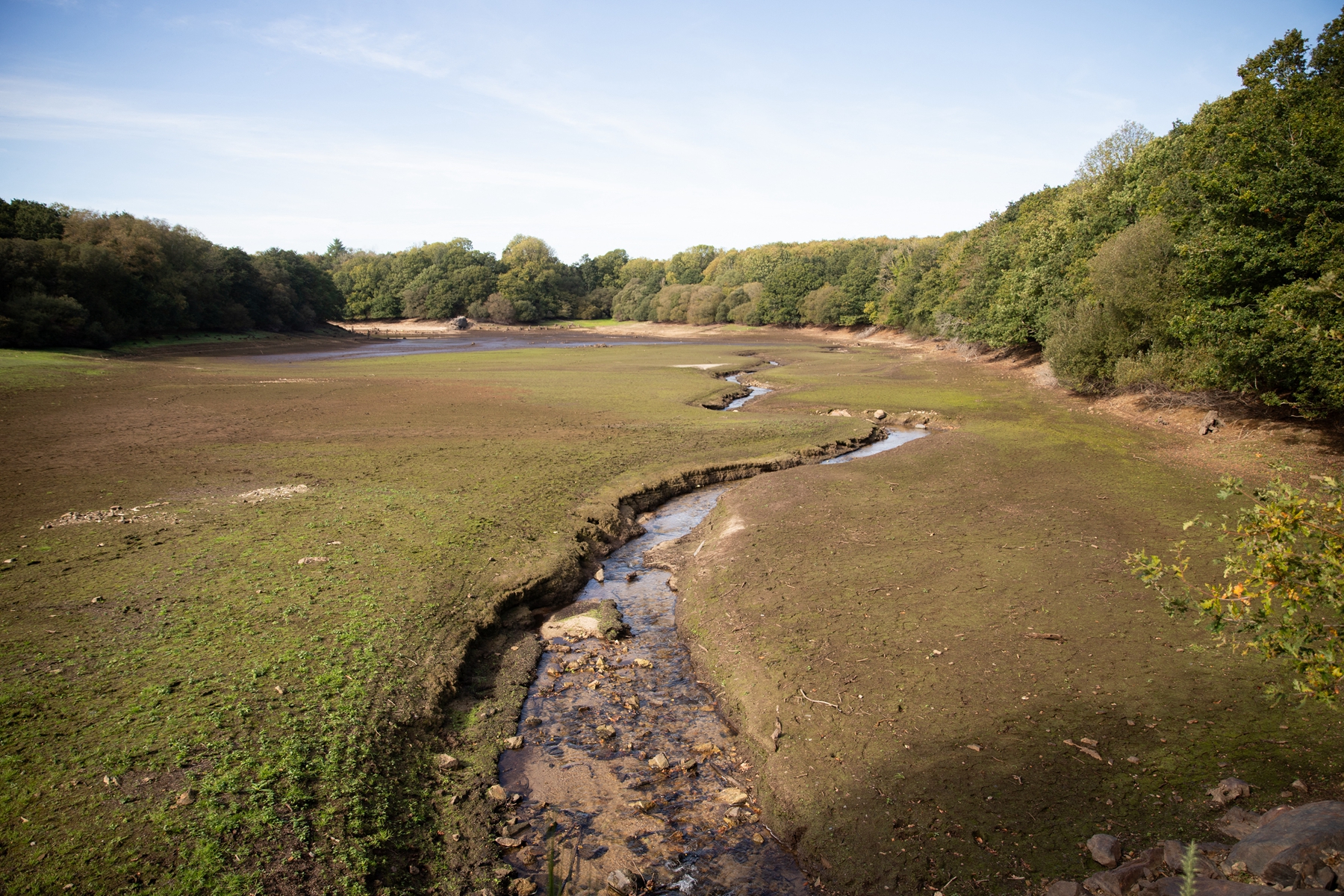
During this summer, France has been hit by a historic extreme drought and consecutive heatwaves, leading to abnormally low water levels in several important lakes and rivers across the country. Some areas have even broken historical records of water scarcity. Particularly in the Finistère department in the northwest, Lac du Drennec is currently facing a historic extreme drought crisis. Due to severe lack of rainfall over the past few months, the region has issued a “scarlet alert,” warning of the risk of water supply depletion.
Reports from various media outlets indicate that the region has experienced a rainfall deficit of over 60% in the last three months. As of now, the water storage capacity of Lac du Drennec is only around 30% to 32% of its total capacity.
As a crucial source of drinking water in the area, Lac du Drennec primarily supplies water to the Pont-Ar-Bled water treatment plant, catering to the daily water needs of 310,000 residents in the Brest and other northern Finistère areas.
Brest has urgently issued the highest level of “scarlet alert,” warning that if residents, industries, and agricultural sectors do not immediately reduce their water usage by about half, the region may face a total water cut-off in less than a month.
With water levels at historically low levels, old buildings and trees that were once submerged are now exposed on the surface. More alarmingly, the lake has been hit by a severe cyanobacteria (blue-green algae) contamination, causing large green fluorescents in the water. Due to its high toxicity, local authorities have issued emergency ordinances, strictly prohibiting bathing, swimming, and all water-related recreational activities in the lake.
Currently, water supply institutions like Eau du Ponant and local governments have issued urgent appeals, calling on all residents, businesses, and agricultural sectors to immediately implement extreme water-saving measures (such as banning car washes, ceasing irrigation, and shortening shower times) to address the rare water resource crisis in the region.