
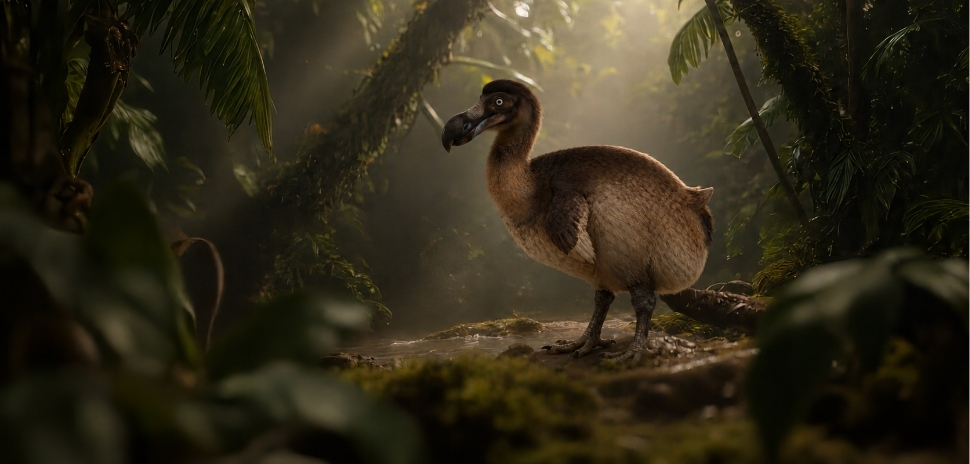
On Wednesday, October 14, 2026, the US biotechnology company, Colossal Biosciences, announced a significant progress in their project to revive the dodo bird, a famous flightless bird known for its large hooked beak that went extinct in the 17th century.
Colossal Biosciences is recognized as the world’s first “de-extinction” company. In a press release issued on Wednesday, the company claimed that their recent achievements will expedite the process of resurrecting the dodo bird.
“In continuation of the progress made last year in obtaining original pigeon reproductive cells, gene-editing using chicken surrogates, and avian comparative genomics, Colossal today launched its artificial intelligence platform, GenoMorph, designed to identify potential gene-editing targets from limited genomic data,” the announcement read.
The Colossal project involves introducing the characteristics of the dodo bird into the cells of its closest living relative, the Nicobar pigeon, also known as the green pigeon. The Nicobar pigeon is native to certain Southeast Asian islands and is known for its shimmering green and copper-colored feathers. However, unlike the dodo bird, the Nicobar pigeon can fly.
Colossal stated that they are in the final stage of analyzing the dodo bird genome, with genome completeness now reaching 95%. The company also announced a breakthrough that could shorten the time needed to test whether gene editing can produce the desired traits. However, they did not disclose a specific timeline for hatching the dodo bird.
Last year, the company genetically engineered the terror wolf by editing genes of the gray wolf to include characteristics of the dire wolf, an extinct predator from the Ice Age and a relative of the gray wolf.
In addition to the dodo bird and terror wolf, Colossal’s de-extinction list includes four other animals: woolly mammoth, thylacine, bluebuck antelope, and moa.
Colossal CEO and co-founder Ben Lamm said in a statement on that day, “De-extinction is both a data problem and a biological problem.”
“Due to the extremely limited surviving dodo bird genome, we cannot rely on population-level comparisons available for many existing species. Our GenoMorph platform offers a new approach: it identifies gene switches that could lead to the unique anatomical features of the dodo bird by learning how DNA shapes modern birds,” he said. “This is not just a solution for the dodo bird, but also a reproducible method for extinct species with similarly limited genome records.”