
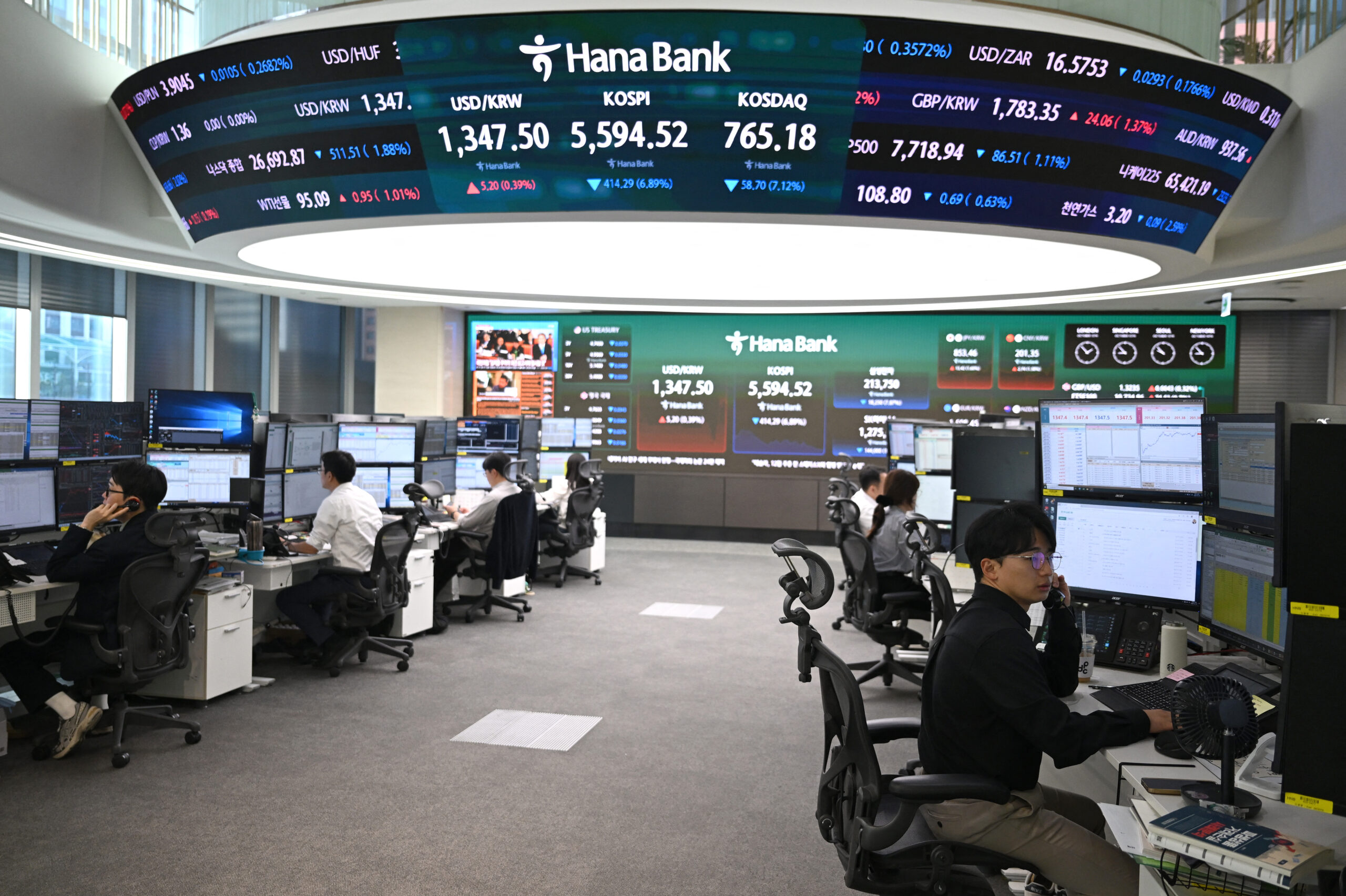
On October 15, 2026, according to Epoch Times, the US September inflation exceeded expectations, causing concerns about interest rate hikes and financing risks in artificial intelligence (AI) to lead to a sharp drop in Wall Street tech stocks on Wednesday, October 14. On Thursday, the downward trend of Asian tech stocks further expanded, with the South Korean KOSPI index falling by over 7.7% in early trading, Taiwan stocks plummeted by over 1,470 points at one point, SK Hynix dropped by over 10%, and Japanese chip-related stocks also declined.
The latest US Consumer Price Index (CPI) shows a renewed acceleration in inflation, leading to market expectations of a rate hike by the Federal Reserve. With the rise in government bond yields, investors are increasingly worried that the continuous financing needed for the vast AI data centers and chip investments could impact the borrowing costs and potentially disrupt corporate expansion plans.
During early trading on Thursday, the selling pressure on Asian tech stocks continued to grow. The South Korean KOSPI index plummeted by 7.7% at one point, with SK Hynix dropping by 11% and Samsung Electronics by 9%. The Korea Exchange initiated the Sidecar mechanism (trading restrictions) for the KOSPI and KOSDAQ markets, suspending programmatic sell orders for 5 minutes.
Taiwan stocks also faced intense selling pressure. The weighted index opened at 48,382.75 points on Thursday, dropping by 243.08 points, with the largest weighted stock, TSMC, opening down by 70 NT dollars to 2,420 NT dollars. The decline widened, reaching over 1,470 points in the early trading session, down by over 3%. However, some losses were recovered later, with the index standing at 47,418.61 points, down by 2.48% as of 9:41 am Taiwan time.
The Nikkei 225 index in Japan saw its decline widen to 4.2% at one point, with SoftBank Group falling by nearly 10% and storage chip manufacturer Kioxia dropping by 11%.
According to reports by the Associated Press, on Wednesday, the S&P 500 index dropped by 1.11% to close at 7,718.94 points, marking the largest single-day decline since July. The Nasdaq Composite Index fell by 1.88% to 26,692.87 points, while the Dow Jones Industrial Average slightly decreased by 0.09% to 51,621.48 points.
The decline in US semiconductor stocks was even more pronounced. The Philadelphia Semiconductor Index dropped by 4.3%, marking the sixth consecutive day of decline. AI cloud computing company CoreWeave plunged by 15.5%, Oracle by 8.8%, AMD by 5.7%, and Nvidia by 3.2%.
In September, the US CPI rose by 3.7% year-on-year, higher than the 3.4% in August and surpassing economists’ forecast of 3.6%. The recent acceleration in inflation is partly attributed to the surge in fuel prices due to the Iran conflict. On Wednesday, Brent crude oil rose by 0.4% to $106.06 per barrel.
Following the inflation data release, the yield on the 10-year US Treasury briefly rose above 5.32% from below 5.17%, before retracing. According to the CME Group’s FedWatch tool, the market’s probability of a 25 basis points rate hike by the Federal Reserve on October 28 increased from 22.1% to 31.6%.
According to CNBC, Broadcom and Intel CEOs warned on Monday that financing could become a significant hurdle for the expansion of AI. Broadcom CEO Hock Tan believes that the challenges posed by financing could be greater than chip or power shortages.
However, Yorkville Ives tech analyst Dan Ives believes that the demand for AI computing remains robust. He stated, “Interest rates involve funding issues, not demand issues.”
He pointed out that signals that could truly change his views include large-scale cloud service providers cutting capital expenditure plans, related contracts being canceled, or a decline in GPU rental prices.
The market will be closely watching TSMC’s third-quarter earnings report to be released on Thursday afternoon, as well as the US Producer Price Index (PPI) and retail sales data to be announced later, while also paying attention to Federal Reserve officials’ discussions on interest rate policy.