
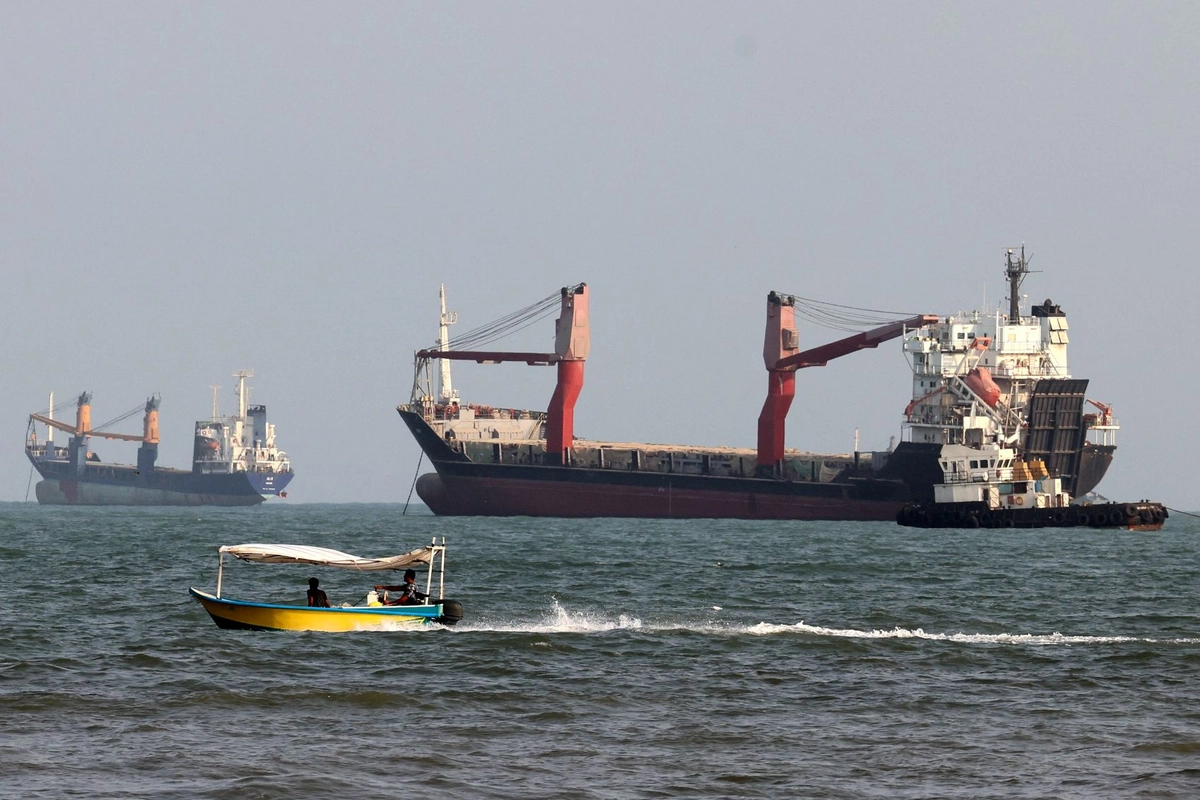
Near the Hormuz Strait, a series of attacks on merchant ships have occurred recently, resulting in the sinking of two cargo ships and damage to another vessel. With the ongoing conflict between the United States and Iran, the security risks for commercial shipping in this region have escalated further.
Singapore’s Maritime and Port Authority stated on October 14 that the Singaporean container ship “GFS Pride” was hit by an unidentified flying object while passing through the Hormuz Strait on October 13. The ship sustained damage, caught fire, and ultimately sank. All 21 crew members on board were safely evacuated with no injuries reported.
According to a report by Reuters on October 14, another bulk carrier, the “Cape Dao,” flying the flag of Antigua and Barbuda, sank near the Hormuz Strait. The vessel was struck by unidentified projectiles on September 23 in the waters near the Musandam Peninsula in Oman, resulting in the death of one crew member. The rest of the crew evacuated after the attack. The UK maritime risk management agency Vanguard indicated that the ship was reported to be “sinking” after unsuccessful rescue efforts.
Iranian media outlet IranWire reported on October 14 that the Iranian Islamic Revolutionary Guard Corps Navy claimed that a cargo ship carrying over 2,500 containers hit a mine and exploded, sinking while passing through what they referred to as an “unpermitted” route. However, the Maritime Security Agency MARISKS stated that there is currently no independent evidence confirming that the ship sank due to hitting a mine. The Singapore Maritime and Port Authority confirmed that the vessel was damaged and caught fire after being attacked, eventually leading to its sinking.
According to the accident records of the International Maritime Organization (IMO), since the outbreak of the US-Iran war on February 28, three commercial vessels have sunk in the Hormuz Strait and its surrounding waters. In addition to the “Cape Dao” and “GFS Pride,” the Maltese container ship “Safeen Prestige” was hit by unidentified projectiles on March 4 about 2 nautical miles north of Oman. The crew abandoned ship and evacuated without any casualties.
Aside from the two sunken ships, the Singapore Maritime and Port Authority also reported that another Singaporean container ship, the “GFS Giselle,” was hit by an unidentified flying object on October 14. The vessel sustained damage but managed to reach a safe anchorage under its own power, and all 22 crew members on board were unharmed.
The United Kingdom Maritime Trade Operations Office (UKMTO) has issued consecutive alerts recently, reporting that multiple merchant ships have been hit by unidentified flying objects in the Hormuz Strait and surrounding waters, resulting in damage to some vessels.
Citing relevant incident reports, US financial media CNBC stated that since October, over 20 ships, mostly oil tankers, have been attacked in the Hormuz Strait, the Persian Gulf, and the Gulf of Oman. An analysis by the UK’s Financial Times indicated that by October 11, a total of 24 ships had been attacked in the preceding two weeks.
Reuters recently reported, citing two senior Iranian officials, that Iran has been expanding the scope and frequency of attacks on merchant ships in an attempt to prevent the US and its allies from lowering international oil prices and influencing the US midterm elections in November.
The Hormuz Strait, connecting the Persian Gulf and the Gulf of Oman, is a crucial global energy transport route. Before the outbreak of conflict, approximately one-fifth of global oil and liquefied natural gas trade passed through this sea lane.
Data from the shipping intelligence agency Kpler indicates that as of the week ending on October 12, an average of around 8.5 million barrels of oil were transported daily through the Hormuz Strait, nearly 40% lower than pre-war levels. With the increase in attacks on merchant ships, uncertainties remain regarding the safe navigation of the strait and the normalization of energy transport.