
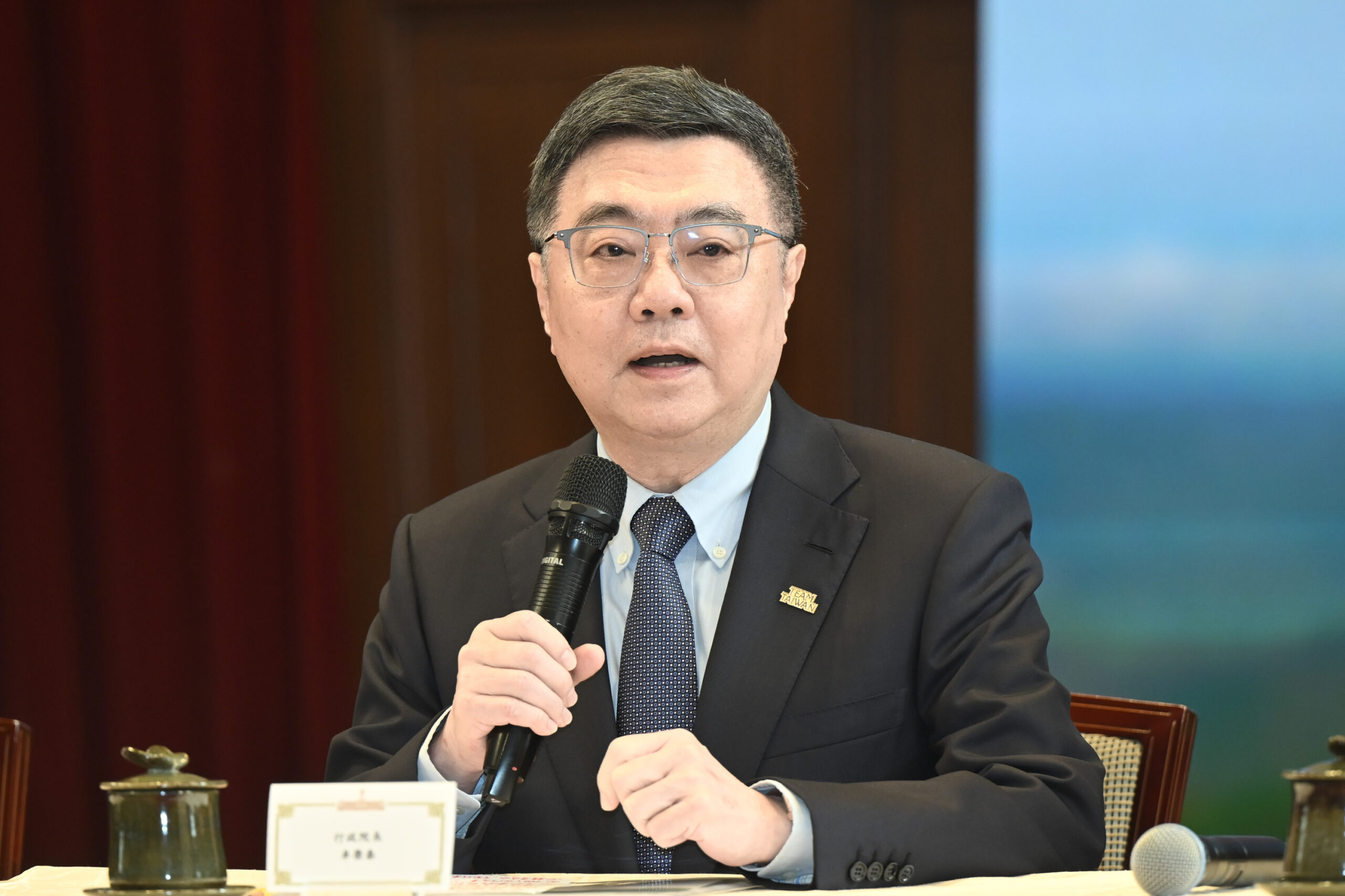
Members of the Legislative Yuan expressed concerns today regarding the frequent cases of cross-border suppression by the Chinese Communist Party against Taiwan, advocating for legal amendments to strengthen the legal system. Premier Cho Rong-tai stated that regulations would be enhanced in the Anti-Infiltration Act to hold accountable those engaging in cross-border suppression activities such as surveillance, harassment, and threats under the instruction, commission, or funding of hostile foreign forces. The Premier hopes for swift passage of the proposed amendments after they are presented to the Legislative Yuan.
The Legislative Yuan of the Republic of China continued its session of government policy inquiries today. Legislator Lin Yi-jin raised questions about the ongoing cases of cross-border suppression by the Chinese Communist Party against Taiwan. This includes the case of Zhang Wan-ying, a 34-year-old Chinese naturalized American of Chinese descent accused of monitoring President Lai Ching-te’s family in the United States, drawing significant attention from the American public. Recently, there have been reports of Taiwanese private investigators receiving compensation from individuals in Hong Kong for conducting 24-hour surveillance on the family members of Democratic Progressive Party Taipei mayoral candidate Shen Po-Yang, posing a significant threat to Taiwan’s democracy, human rights, and rule of law.
Lin Yi-jin pointed out that the Mainland Affairs Council has acknowledged the inadequacy of Taiwan’s legal framework in addressing cross-border suppression and should actively amend the Anti-Infiltration Act. She proposed the addition of a dedicated section in the Criminal Code to punish all forms of assistance in cross-border suppression, making it clear that providing assistance in terms of technology, accounts, equipment, manpower, or funding should be penalized.
In response, Cho Rong-tai expressed regret over the continued display of hegemonic attitudes by the Chinese Communist Party, which has evoked strong backlash from countries worldwide and significantly encroached upon the jurisdiction of various legal systems, directly interfering in the internal affairs of other countries. He stressed that numerous recent incidents at home and abroad cannot be met with silence any longer.
Cho Rong-tai stated that the Executive Yuan aims to enhance relevant regulations in the Anti-Infiltration Act, specifying that activities involving surveillance, harassment, and threats under the instruction, commission, or funding of hostile foreign forces must incur legal accountability, which will be incorporated into the Anti-Infiltration Act.
He expressed hope that following the Executive Yuan’s proposal of amendments, the Legislative Yuan would expeditiously pass the amendments based on considerations of safeguarding public safety, maintaining the integrity of the judiciary and prosecutorial system, and resisting inappropriate interference from hostile foreign forces against Taiwan.