
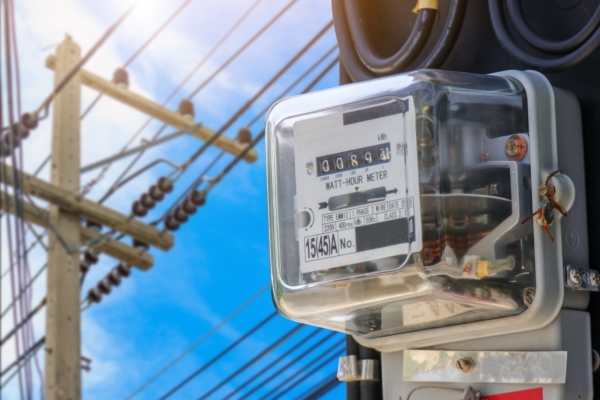
According to federal energy statistics and the Empire Center for Public Policy analysis, residential electricity prices in New York have risen to the third highest in the United States, averaging 29.93 cents per kilowatt-hour (kWh), just below Hawaii (52 cents) and California (33.25 cents), a 62% increase above the national average and nearly double that of Florida.
The report indicates that New York’s residential electricity prices increased by 12% compared to the same period last year, which is about twice the national average increase, pushing the state’s ranking from eighth place at the end of last year to third place in May of this year.
Zilvinas Silenas, Executive Director of the Empire Center for Public Policy, stated that New York’s energy policy is one of the factors driving up electricity prices, coupled with increasing electricity demand and insufficient expansion of generating capacity, leading residents to face an increasingly heavy burden of electricity costs. He bluntly stated, “If this is what affordability looks like, New Yorkers simply cannot afford it.”
Energy industry players believe that high electricity prices mainly stem from transmission and distribution costs, various taxes, and surcharges related to green energy policies. Gavin Donohue, Chairman of the Independent Power Producers of NYS, mentioned that taxes are the biggest factor pushing up electricity prices, with transmission and distribution costs, taxes, and costs associated with green energy policies accounting for about 70% of people’s electricity bills.
Former New York Public Service Commission (PSC) Commissioner John Howard pointed out that New York City real estate taxes, public utility gross receipts tax, franchise taxes, sales taxes, and the “Systems Benefit Charge” used to support clean energy initiatives such as solar energy, all ultimately reflect on people’s monthly electricity bills.
Analysis shows that in recent years, New York has shut down several traditional power plants, including the Indian Point Nuclear Power Plant that ceased operations in 2021. The plant used to supply about a quarter of New York City’s electricity, but the new generating capacity is insufficient to compensate for the retired plants, leading to further increases in energy costs amid continued growth in electricity demand.
In addition to electricity prices, residential natural gas prices in New York are also 15% above the national average, ranking 19th in the United States.
According to billing data from Consolidated Edison (Con Edison) and New York State Electric and Gas (NYSEG) in recent years, from 2022 to 2025, average distribution charges in northern New York via NYSEG increased by 75%, while Con Edison saw a 25% increase. In comparison, similar fees during the tenure of former Governor Andrew Cuomo from 2016 to 2021 only increased by 25% and 9% respectively.
In response to public discontent over high energy costs, the Hochul administration earlier this year postponed some of the green energy policy deadlines set by the “2019 Climate Leadership and Community Protection Act” and allocated $1 billion in the state budget to issue utility cost refund checks of $100 to $200 per person this fall to alleviate household burdens. However, the checks will be distributed based on residents’ 2024 incomes, regardless of whether they actually paid utility costs, leading to some questioning.