
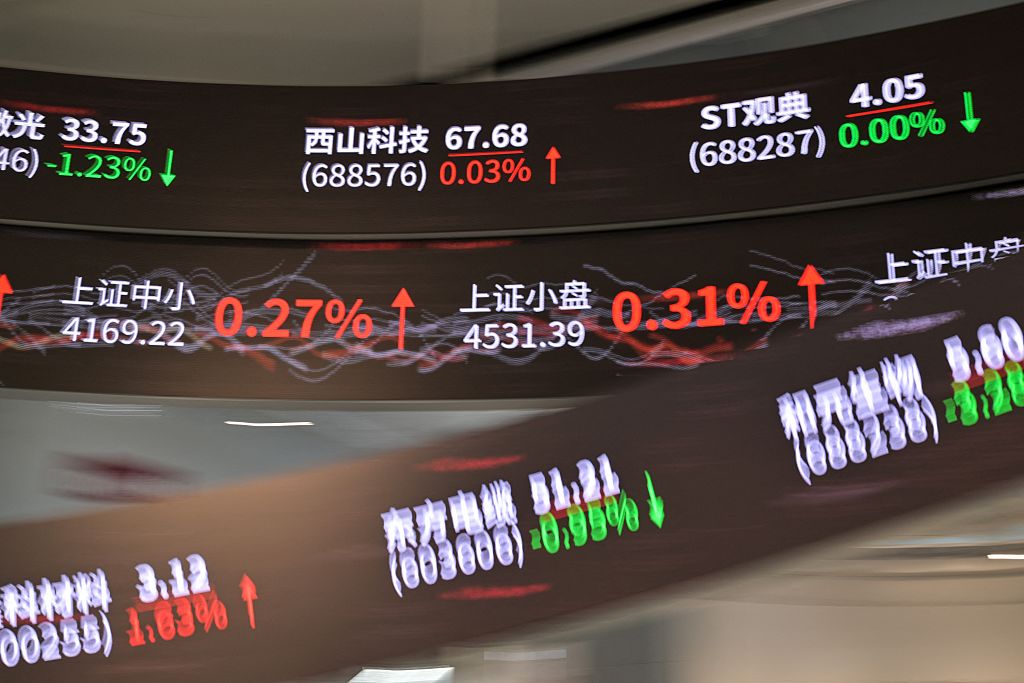
On October 12, 2026, A-shares market generally weakened, with major stock indices collectively falling. The Shanghai Composite Index fell below 3800 points, while the Shenzhen Component Index and the ChiNext Index both dropped by over 2%. More than 4,300 individual stocks declined, with the trading volume in the Shanghai and Shenzhen markets reduced by 362.7 billion yuan compared to the previous trading day. The AI sector’s attempted comeback failed, and technology growth stocks faced pressure.
At the close, the Shanghai Composite Index fell by 0.43% to 3797.24 points, breaking through the 3800-point mark. The Shenzhen Component Index dropped by 2.03% to 12,384.87 points, and the ChiNext Index fell by 2.61% to 2963.82 points. The ChiNext 50 Index fell by 2.10%, with the overall technology growth sector under pressure.
In terms of trading, the total trading volume in the Shanghai and Shenzhen markets was approximately 1.54 trillion yuan for the day, a decrease of 362.7 billion yuan from the previous trading day. The market saw 1,167 stocks rise and 4,325 stocks fall, indicating a clear trend of more declines than gains.
The substantial decrease in trading volume, with a total volume of 1.54 trillion yuan in the Shanghai and Shenzhen markets, down by 362.7 billion from the previous trading day, shows a decreased market trading activity and a strong sense of caution among investors. With more stocks falling than rising, out of the 1,167 stocks that saw gains, 4,325 stocks experienced declines, highlighting the loss-making effect.
On the market front, the rebound in AI-related sectors was not sustained. According to market information, the ChiNext 50 Index briefly turned positive in the morning, leading the Shanghai Composite Index to a temporary rebound. However, the buying interest could not be sustained, leading to a renewed weakening of major stock indices in the afternoon. Funds flowed into defensive sectors, with banking stocks showing strength against the market trend, while computing hardware stocks underwent adjustments, with stocks like Jinan Guoji and Huazheng New Materials hitting limit down.
The trend in the A-shares market once again became a focal point for financial bloggers.
Financial blogger “SugarStreet Alligator” pointed out that with a total trading volume of 1.54 trillion for the day, a direct decrease of 362.7 billion from the previous day, the enthusiasm for trading has significantly cooled, signaling typical cautious sentiment among investors. The key indicator to watch for in the future remains the trading volume.
The blogger believes that in order to reverse the current weak trend, it is necessary to increase trading volume and stabilize the technology growth sector. In a low-volume environment, it is advisable to minimize short-term chase operations, be more observant and patient in waiting for a clearer indication of market sentiment.
Financial blogger “Shenzhen Bay XiaoGe” analyzed in a blog post, saying that the significant decrease of 362.7 billion in trading volume is the most authentic signal in the market. While banking sector weight held the Shanghai index near 3800 points, the Shenzhen Component Index and ChiNext Index both fell by over 2%, with over 4,300 stocks in the market showing losses. This “low-volume negative decline” is more draining of patience compared to a rapid decline with high volume, as it doesn’t involve concentrated panic selling but rather a complete withdrawal of sideline funds.
“Where did the funds go? Exiting high computing power and CPO sectors, some flowed into state-owned large banks that hit historical highs for hedging, while others exited directly. This is a classic game of stalemate: without fresh inflows, only mutual bloodletting occurs within the market. The stronger the dividend sector, the more severe the blood loss in the growth track, amplifying the seesaw effect to the extreme.” The blogger stated, “Before the trading volume returns to the 2 trillion level, the bottoming out process will continue. Restrict trading activities, manage positions well, and wait for clear bullish signals.” ∼