
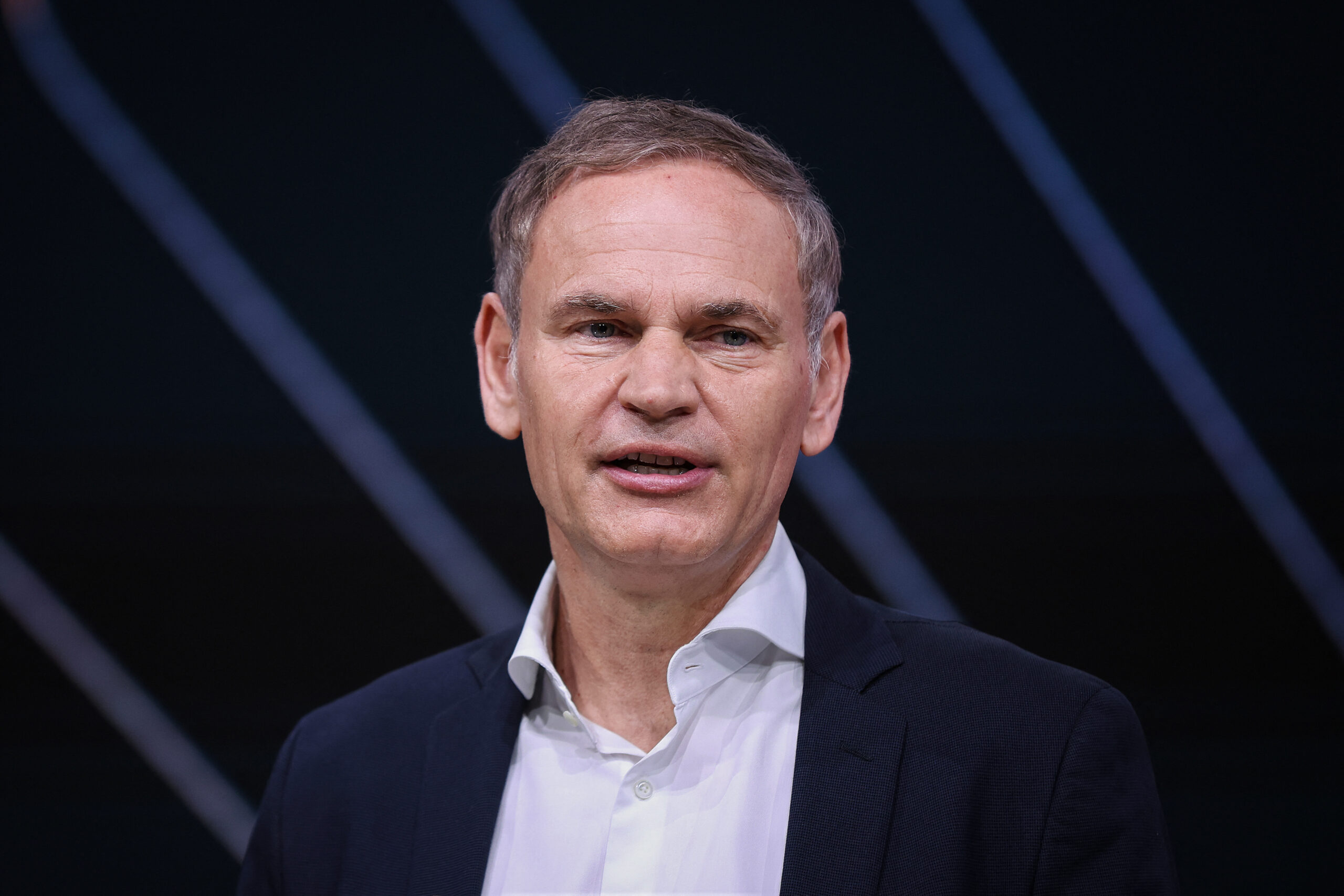
On October 12, 2026, Volkswagen CEO Oliver Blume stated on Sunday at the Paris Motor Show that France and Germany should enhance cooperation to jointly tackle the challenges posed by the Chinese automotive industry.
According to a report by the Financial Times on Sunday, Blume emphasized the importance of France and Germany working together to boost the competitiveness of the European automotive industry. Taking action now to address the pressure brought by Chinese competitors is crucial, he mentioned.
“At crucial moments, we have jointly found solutions. France and Germany need to do this again. Our future is not yet determined,” Blume said.
The 91st Paris Motor Show (Mondial de l’Auto 2026) is being held from October 12 to 18, with October 12 designated as media day, at the Paris Expo Porte de Versailles in France.
This edition of the auto show focuses on the global automotive industry’s competition and transformation in the fields of “electrification” and “small/economical electric vehicles,” attracting over 60 automakers and 150 exhibitors.
Blume emphasized that companies selling products in Europe should compete under comparable conditions while also creating job opportunities and value within Europe.
He believes that Europe can tackle the challenges from China through proposals like “European manufacturing,” more flexible climate policies, and reducing energy costs.
The so-called “Industrial Accelerator Act” rules under “European manufacturing” will restrict subsidies and public procurement to specific products that must have a certain proportion of materials input and production completed within the EU.
Blume highlighted that high energy costs and subdued demand due to inflation are significant issues facing Europe, impacting the continent’s technological independence.
Recently, Chinese car manufacturers like BYD are rapidly entering the European market. These companies are looking to address overcapacity issues and gain higher profits through exports, as the domestic Chinese market is sluggish.
After the EU imposed tariffs on electric vehicles manufactured in China, Chinese car companies swiftly expanded sales of plug-in hybrid vehicles in the EU.
According to the European Automobile Manufacturers Association (ACEA), in the first half of 2026, Chinese car companies held a 25% market share in the EU’s plug-in hybrid vehicle market, compared to just 2% in 2024.
Recently, Brussels and Beijing reached an agreement where China limited exports of hybrid cars to the EU to half or lower predictions for EU exports in the next four years.
Blume welcomed progress in trade negotiations between both sides but stressed the importance of ensuring a fair competitive environment in the European market.
As Europe’s largest car manufacturer, Volkswagen has initiated a historic restructuring plan to share more components and technology among its brands and cut up to 100,000 jobs, while also launching new affordable electric vehicles to maintain its market position against growing Chinese competition.
Despite his optimistic view on competition between European and Chinese car companies, Blume called for regulations to support enterprises with significant business layouts in Europe.
According to the Financial Times, France and Germany have been negotiating for months on the content of the EU’s “Industrial Accelerator Act” proposal, including gradually phasing out internal combustion engines and incentivizing production within the EU.
However, progress in the negotiations has been slow, with disagreements on how to define “European manufacturing” between the two countries.
French Minister of Industry Sébastien Martin reiterated on Sunday that any “European manufacturing” proposal favorable to production within the EU must strictly be limited to the 27 EU member countries and not include countries like the UK, Turkey, Japan, and South Korea, despite having car factories.
“If Europe refers to the 27 EU countries and includes a few countries from the other end of the world, Europeans will not understand this,” he stated.
Meanwhile, Martin acknowledged the joint efforts taken by European countries, aiming to establish a “protective barrier” to assist European car companies in facing challenges from China.