
Recently, one of the “Six Gentlemen of Wantong”, Feng Lun, a former real estate tycoon in China, has had his company placed on a restricted consumption list by the court due to a private lending dispute. Feng Lun, as the legal representative of the company, is also subject to restrictions. Feng Lun responded by attributing the dispute to unauthorized borrowing by minority shareholders, which has brought to light ongoing internal strife within the company for many years.
According to Tianyancha App, Sanya Wantong Health Development Management Co., Ltd. added a consumption restriction order on September 15th, with case number (2026) Qiong 0108 Execution 2332, and the executing court being the Meilan District Court in Haikou City, Hainan Province. The applicant is the second largest shareholder of the company, Runhanhui (Haikou) Investment Co., Ltd.
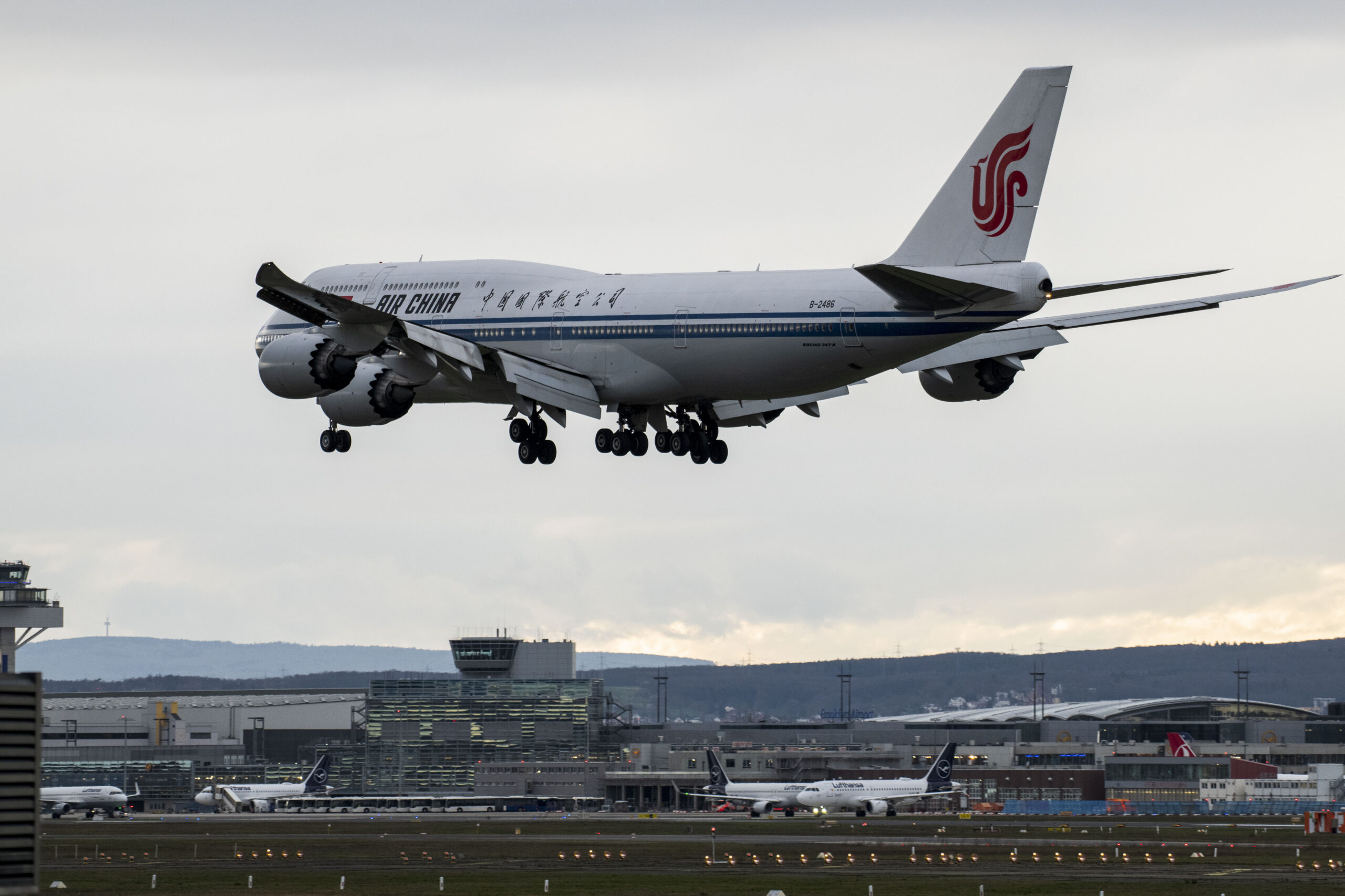
The court’s announcement indicates that the court previously accepted a private lending dispute between Runhanhui and Sanya Wantong. As Sanya Wantong failed to fulfill its payment obligations within the specified period, the court took measures to restrict consumption, which also applies to the company’s legal representative, Feng Lun. This includes restrictions on activities such as flying, staying in luxury hotels, and purchasing real estate.
Business registration records show that Sanya Wantong was established in 2016 with a registered capital of 5 million RMB. It is owned by 60% by Xinyong Real Estate Development Co., Ltd., 30% by Runhanhui, and 10% by Beijing Fangshun Cultural Communication Co., Ltd. Feng Lun indirectly controls the company as one of its actual controlling persons through shareholding.
On the evening of September 18th, Feng Lun posted a response on his Weibo account, stating that the dispute arose from borrowing issues between Sanya Wantong and minority shareholders. The loans involved were not authorized by the company’s governing body but were conducted without approval using the seals of two companies controlled by minority shareholders. Feng Lun also clarified that the matters under execution did not involve his payment obligations, and he has taken legal measures to protect his rights.
In fact, this is not the first time Feng Lun has been restricted from high consumption due to disputes with the same shareholder. According to Red Star News, as early as May 2023, Runhanhui had filed for execution regarding a loan contract dispute. In June 2023 and May 2024, the Longhua District Court in Haikou had also issued consumption restriction orders to Sanya Wantong, with Feng Lun’s response similar to the current situation, attributing the reasons to unauthorized actions by minority shareholders.
The root of the conflict between the two parties can be traced back to earlier times. Public legal documents show that in 2020, Sanya Wantong sued Runhanhui and its ultimate shareholders, alleging that personnel under Runhanhui had signed loan agreements and used company funds to make external payments without authorization, causing losses of approximately 14.9768 million RMB to the company. Over the following years, the two parties engaged in multiple litigations with the dispute remaining unresolved.
Aside from the Sanya Wantong case, Feng Lun has been involved in debt and legal disputes multiple times in recent years. Public information indicates that he had previously been named as an execution target for other company matters and had faced allegations of fund embezzlement investigations, all of which Feng Lun has denied.
As this shareholder feud continues to escalate, it prompts a reexamination of the business landscape of this former real estate tycoon. Feng Lun’s name has always been closely associated with the title of the “Six Gentlemen of Wantong.” In 1991, Feng Lun, along with Pan Shiyi, Wang Gongquan, Wang Qifu, Liu Jun, and Yi Xiaodi, jointly founded a company in Hainan, the predecessor of the Wantong Group. Operating through a consensus decision-making model, the six individuals accumulated early capital through real estate projects. In 1993, the team expanded to the Beijing market and established a foothold there.
However, as the company grew, disagreements in development philosophies emerged among the six members. Starting from 1995, members began to depart one by one, with only Feng Lun remaining with Wantong by 2003. During the separation process, they adopted the “bidding” method proposed by economist Zhou Qiren to avoid deadlock among partners. Feng Lun later summarized this as starting with a “jianghu” style and exiting in a businessman manner.
After going their separate ways, each of the six gentlemen embarked on new career paths. Pan Shiyi and Zhang Xin founded SOHO China; Yi Xiaodi started Sunshine 100; Wang Gongquan shifted to the realm of venture capital, while the other members delved into investment and agriculture-related businesses respectively. Feng Lun continued with Wantong until gradually exiting the operations after changes in the company’s ownership in 2016.
Several years later, these past events resurfaced once again. In April 2026, Pan Shiyi, who had been relatively quiet for about three years, published an article on his personal WeChat account titled “My Destiny, Myself, and the Divine.” He reflected on his personal experiences and life insights, emphasizing the importance of personal effort while acknowledging factors beyond individual control. This rare public statement garnered attention, redirecting the public eye to these early pioneers of China’s private real estate sector.
Pan Shiyi was born in 1963 in Panjizhai Village, Tianshui City, Gansu Province. In 1995, Pan Shiyi and his wife Zhang Xin co-founded SOHO China Ltd. Since 2014, Pan Shiyi began systematically selling off core domestic assets, accumulating over 30 billion RMB in cash.
After the failed privatization attempt of SOHO China in 2022, Pan Shiyi and Zhang Xin completely stepped away from the company management. At the same time, they shifted their focus to the U.S. real estate market, continuing their involvement in real estate development on the other side of the Pacific Ocean. Currently, the couple is settled in New York, USA.