
Beijing does not need to nationalize a foreign company to make it serve its interests. All it needs to do is allow the company to continuously enter the Chinese market, take advantage of manufacturing facilities or capital opportunities, align with its cooperative attitude, and then let the regular profit motive of the company do the rest.
The boards of multinational companies do not necessarily need to be directly accountable to the Chinese Communist Party (CCP), yet they can behave as if they are under its jurisdiction. They simply need to repeatedly and rationally conclude that the cost of sticking to principles is higher than compromising. This kind of balance, recurring over a decade or longer, is a common embodiment of “capture.” It does not stem from a dramatic directive, but from a gradual evolution process where self-censorship, data localization, silence on human rights issues, and preferential treatment of partners with official backgrounds gradually become the path of least resistance.
This article will examine three multinational companies from the consumer electronics, hotel services, and banking industries, analyzing how they adapt to various indicators of the CCP’s economic, governance, technological, and political dimensions. The focus of the analysis lies in behavior patterns that are difficult to explain solely based on regular commercial logic, and the “carrots and sticks” strategy adopted by Beijing to facilitate such behavior.
The responses of these companies align perfectly with the intentions of the Communist Party.
**Origins:**
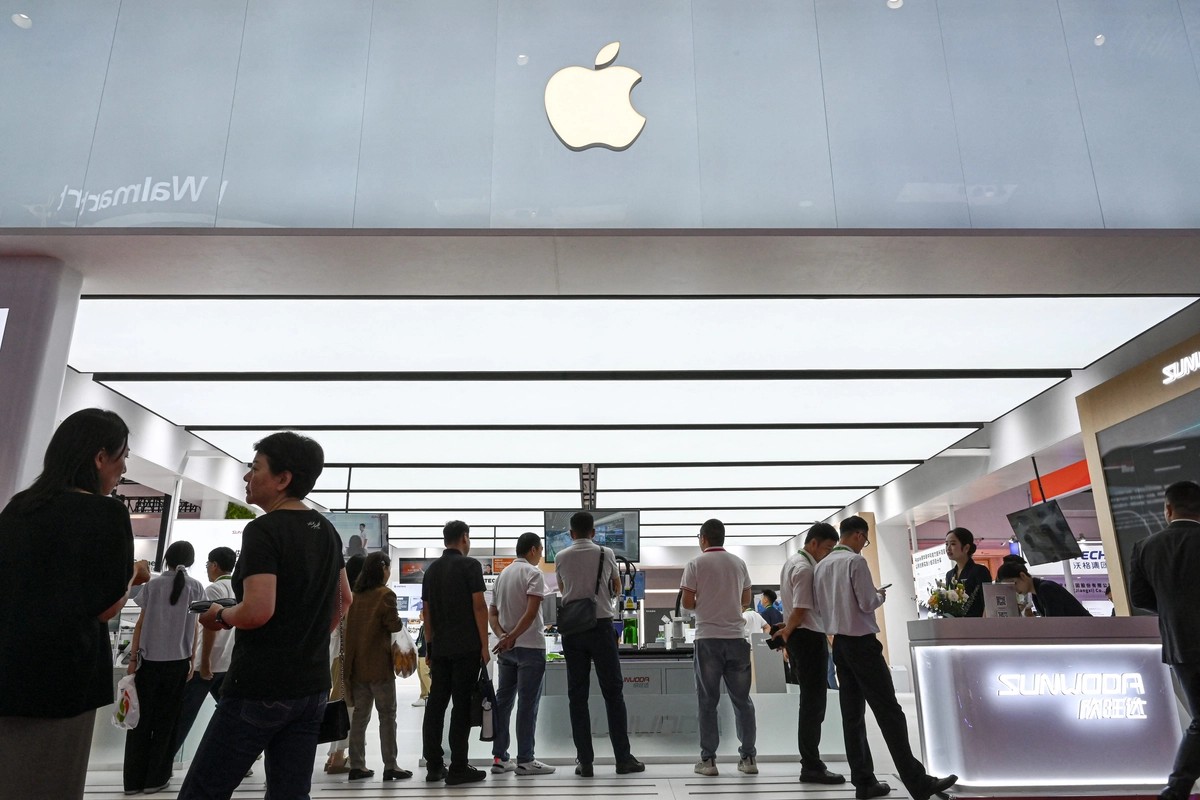
Apple’s main risk exposure comes from two sources: highly concentrated manufacturing, with about 80% of iPhones assembled in China, and the Chinese Cybersecurity Law implemented in 2017. This law forces companies to choose between “data localization” and “market exit,” and Apple chose the former.
**Carrots:**
Entering the world’s largest smartphone market and gaining unparalleled manufacturing scale, skilled labor, and infrastructure support. The Greater China region alone contributed approximately $66.9 billion in revenue to Apple’s 2024 fiscal year. In December 2021, the U.S. tech media “The Information” revealed a memo from 2016, showing then-Apple CEO Tim Cook committing to invest around $275 billion over five years in investments, technology cooperation, and supplier agreements. This is the most typical example where such transactions of “investment and cooperation in exchange for regulatory tolerance” are explicitly documented.
**Evidence 1:**
From February to July 2018, Apple stored iCloud account data for Chinese users and crucial encryption keys on servers operated by state-owned enterprises – initially by “Guizhou-Cloud Big Data” and later by the state-owned “Tianyi Cloud” division of China Telecom. This moved encryption keys that were previously under U.S. legal jurisdiction to the jurisdiction of the CCP’s courts.
**Evidence 2:**
The removal of apps from the Apple App Store follows a pattern that almost perfectly aligns with sensitive political points of the CCP’s regime. For example, the removal of the New York Times app in January 2017 upon “government request,” the removal of dozens of VPN apps in July 2017 due to the newly implemented Chinese Cybersecurity Law, the removal of the HKmap.live app tracking Hong Kong protest activities and the Quartz news app in October 2019 following accusations by People’s Daily of providing convenience to “rioters,” the disappearance of the Taiwan flag emoji from the keyboard for Hong Kong/Macau users in October 2019, and the removal of messaging apps like WhatsApp, Threads, and Signal in April 2024 under national security orders.
**Evidence 3:**
The iOS 16.1.1 version quietly limited the duration of the “Everyone” AirDrop receive mode in the China region to 10 minutes in November 2022. This feature was then used weeks later to disseminate leaflets opposing CCP leader Xi Jinping and the “zero-COVID” policy during the “Blank Paper Movement.” This restriction measure was only expanded globally two months later.
**Evidence 4:**
Reportedly, Apple lobbied to weaken the Uyghur Forced Labor Prevention Act in the U.S., but the law was eventually passed in 2021 with its core content largely unaffected.
**Evidence 5:**
Independent supply chain research suggests that several Apple suppliers are associated with labor transfer projects involving forced Uyghur labor.
**Strategic Synergy:**
Every compromise – whether it’s key migration, app takedowns, or the timing of AirDrop adjustments – did not stem from routine commercial prudence but corresponded to specific political or security priorities of the CCP regime. For example, information control during periods of instability in Hong Kong and Xinjiang, and the enhancement of domestic surveillance capabilities.
**Origins:**
In January 2018, a routine customer satisfaction survey conducted by a third-party supplier listed Tibet, Taiwan, Hong Kong, and Macau as separate “countries” in a drop-down menu, which led to comprehensive regulatory and political responses from Beijing.
**Carrots:**
Continuing to maintain its dominant position as one of the most profitable banking operations globally. As Hong Kong’s economy further integrates with the mainland, Beijing actively worked to maintain and expand HSBC’s business advantages by granting priority access to its Greater Bay Area wealth management and cross-border investment programs. In 2022, one of HSBC’s largest shareholders, the state-backed Ping An Insurance, pushed for a spin-off plan in an attempt to completely separate HSBC’s lucrative Asian business from its Western business. This move highlighted that a significant part of HSBC’s enterprise value depends on whether it can continue to garner favor and support from Beijing authorities.
**Evidence 1:**
On June 3, 2020, HSBC Asia-Pacific CEO Peter Wong publicly supported Beijing’s implementation of the Hong Kong National Security Law, stating it was a “step in the right direction” and that sanctions would harm not only Hong Kong but also the United States. Then-U.S. Secretary of State Mike Pompeo criticized HSBC’s move as a “corporate kowtow” to Beijing.
**Evidence 2:**
HSBC froze the accounts of Hong Kong pro-democracy activists, including former Legislative Council member Ted Hui, in December 2020, with Hui stating that it was a display of “succumbing to political pressure.”
**Evidence 3:**
From 2023 to 2024, HSBC (along with Manulife Financial) prevented approximately 144,500 Hong Kongers emigrating overseas under the British National (Overseas) visa scheme from withdrawing their Mandatory Provident Fund (MPF) pensions, involving an estimated $2.7 billion.
**Evidence 4:**
Reports indicated that HSBC and Standard Chartered lobbied the UK government to avoid placing China in the strictest regulatory category in new legislation related to national security and foreign influence, citing that such a move would “impede business.”
**Strategic Synergy:**
Supporting Beijing’s National Security Law, freezing the accounts of activists, and refusing to disburse pensions each independently echoed specific priorities of Beijing in suppressing opposition movements in Hong Kong and its overseas groups. The timing of these actions coincided with sensitive or scrutinized periods for HSBC’s Asian business, as well as its relationship with a significant shareholder with government connections.
The CCP deliberately constructs a system where market access, operational permits, and capital are rewards for foreign cooperation; once a company stops cooperating, these vested interests face risks. The use of “carrots” and “sticks” together is effective because rewards are often a more potent pressure tool. While threats may attract temporary public attention, receiving partnership renewals or gaining market access development achieved over a decade of infrastructure construction often provide a sustained incentive to maintain compliance.
The renowned Washington D.C.-based think tank, the Atlantic Council, concluded that Beijing views “economic inducements” – such as market access, investments, contracts, licenses, and regulatory advantages – as “powerful and proactive means of influence” under its economic statecraft. This operating model is based on clear conditions where an economic benefit is tied to the desired outcome Beijing wishes to achieve, rather than merely a business opportunity pursued by a company.
In other words, money can be flexibly used if it contributes to advancing strategic goals, such as political silence, data acquisition, technology transfers, or aligning with specific narrative frameworks. For the CCP, money itself can be manipulated to serve these purposes. Once a company has obtained funds, permits, or development space through “continuous cooperation” – be it explicit or implicit conditions – even without direct threats, it may already be under the control of the CCP.
The three multinational companies analyzed in this article that have been “captured” by the CCP are just the tip of the iceberg.