
Recent days have seen a persistent downturn in domestic demand contributing to the ongoing decline of the Chinese economy. The Chinese Communist Party (CCP) is faced with financial difficulties as government support for public hospitals and universities has been impacted. In response to the economic challenges, multiple universities across the country have issued statements expressing the need to tighten their belts.
According to data released by the National Bureau of Statistics of China on September 15, investment in China continues to decline, with real estate investment from January to August dropping by nearly 20% compared to the same period last year. Retail sales growth in August was lower than in the previous month and fell short of expectations. Credit expansion in August was well below expectations as well, indicating that the CCP’s stimulus measures have not fully offset the weak demand from businesses and households.
Bloomberg suggests that after months of significant fiscal tightening, the reform of real estate policies, such as canceling the pre-sale system, may further burden real estate investment and local government finances in the coming months.
Since the burst of the real estate bubble in China in 2021, local government revenue from land sales – which previously accounted for about 40% of total income – has significantly decreased, plummeting from 8.7 trillion yuan in 2021 to 4.15 trillion yuan in 2025. This trend has persisted in 2026, with data from the CCP’s Ministry of Finance indicating that land sale revenue in the first half of this year was only 977.8 billion yuan, down by 31.5% compared to the same period last year, escalating financial and debt pressures on local governments.
Due to the reductions in government funding, hospitals and universities reliant on fiscal support are now being required to increase their self-generated income. Performance bonuses and research funding have been tightened at numerous public hospitals and universities this year, with some regions even undergoing “outside personnel clearance” or so-called “optimization and transformation” in public institutions.
Reports from mainland China on September 15 revealed that a number of universities facing budget cuts and increased financial pressures have recently issued statements urging the implementation of strict cost-saving measures. Social media has been buzzing with news of salary cuts for university teachers, sparking concerns and discussions.
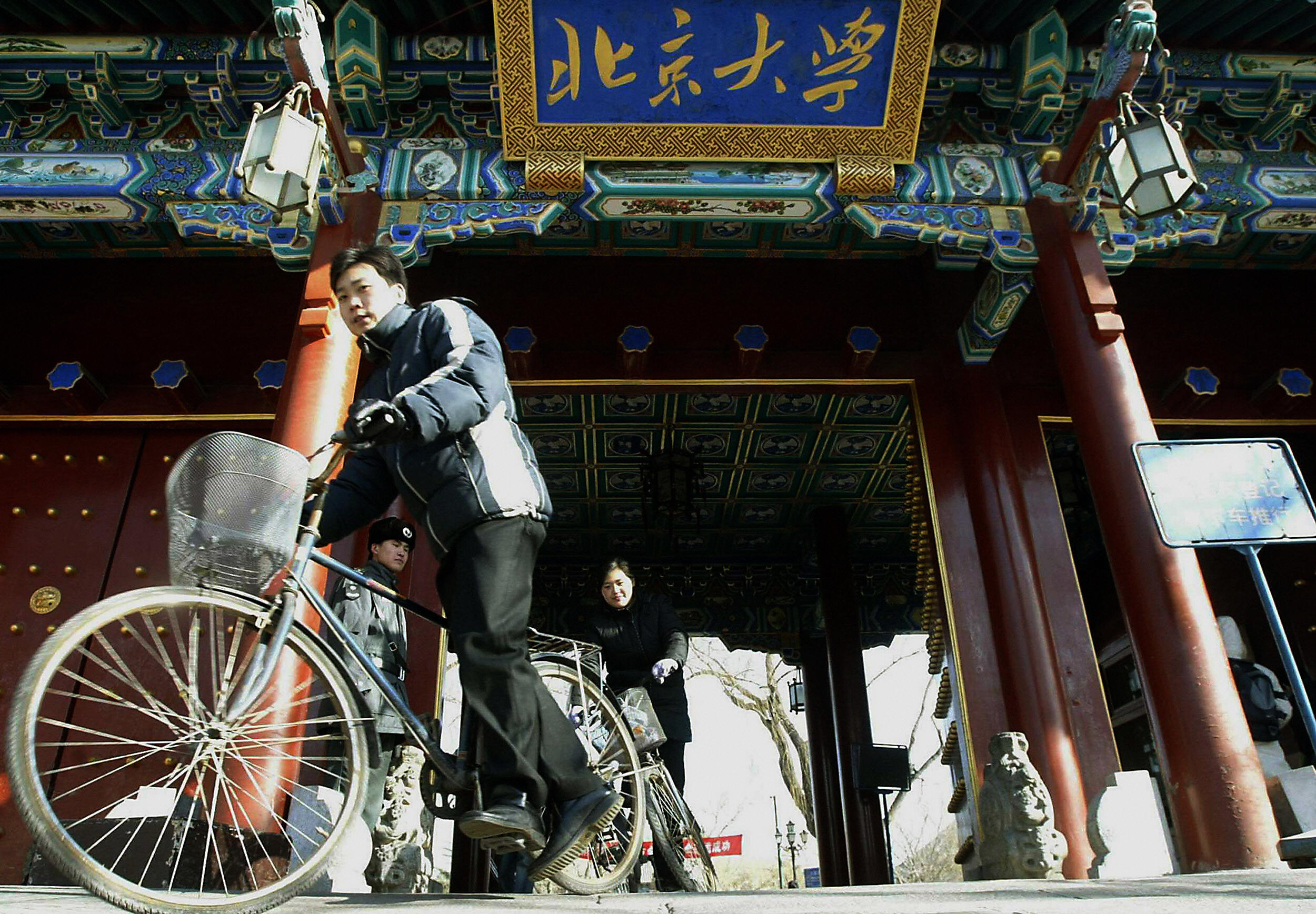
In an effort to manage financial pressures, Beijing Forestry University, Shanxi Business and Trade Vocational and Technical College, Anhui University of Architecture, and Beijing University – a key institution directly under the Ministry of Education – have all implemented various cost-cutting measures and strict controls on expenditures. These measures range from regulating work-related travel, meetings, training, and official receptions to limiting expense reimbursements for certain items and activities.
Furthermore, as one of the central government-managed institutions, Beijing University disclosed that its total revenue for the year 2026 is approximately 18.5 billion yuan, with nearly 61.89 billion yuan coming from government appropriations and the rest from tuition fees, research, and social donations. The institution’s stringent financial management has positioned it as one of the financially sound universities in the country.
Several universities, including Yunnan University, Fuzhou University, and the University of Chinese Academy of Sciences, have witnessed significant reductions in their budgets, with total revenues decreasing by varying percentages compared to previous years. As financial constraints continue to impact higher education institutions, notable universities like Central University for Nationalities, University of Science and Technology of China, China University of Petroleum (East China), and Central University of Finance and Economics are also facing budget cuts or are operating with limited financial resources.