
Hello audience, welcome to “Century Truths.”
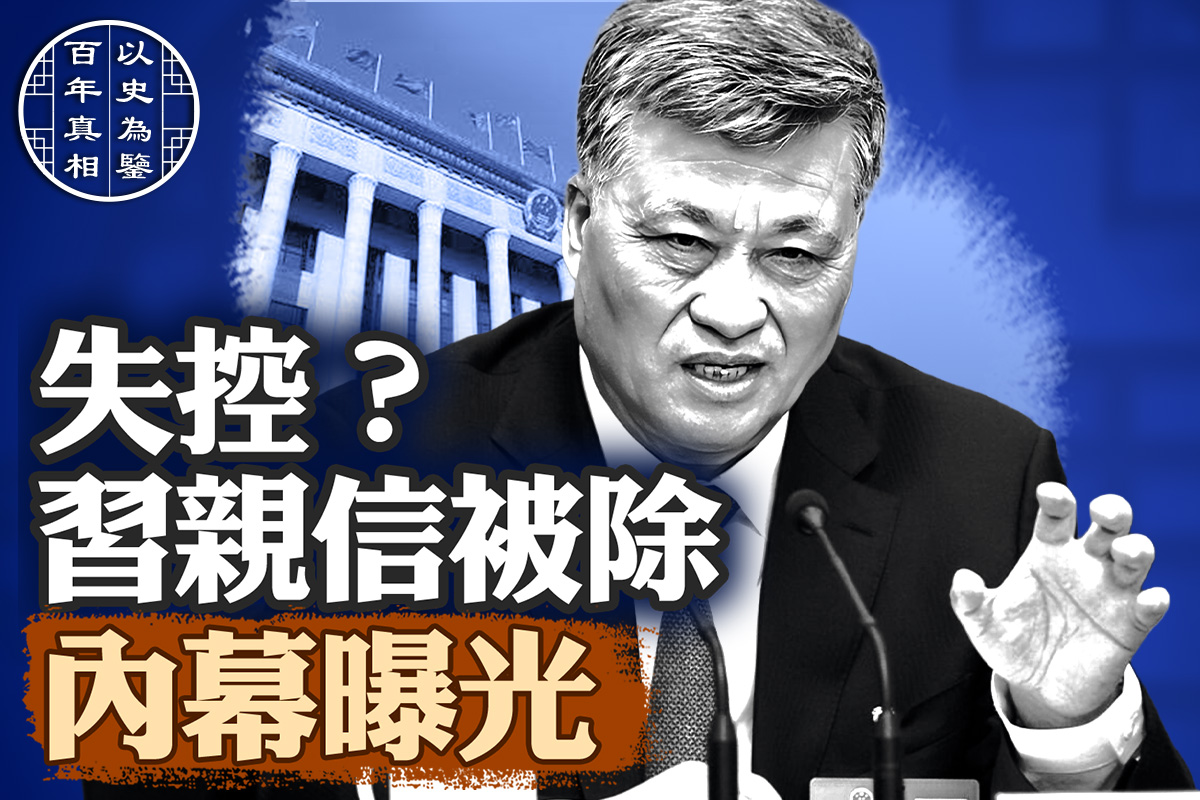
On April 3, 2026, what seemed like a routine announcement from the Central Commission for Discipline Inspection quickly ignited a storm of public opinion. The announcement contained only a brief sentence – Ma Xingrui, member of the Political Bureau and deputy leader of the Central Rural Work Leading Group, is suspected of serious disciplinary and legal violations and is currently undergoing disciplinary review and supervision investigation by the Central Commission for Discipline Inspection and the National Supervisory Commission.
This “falling from power” speculation that had been circulating since 2025 finally landed heavily in this moment.
Ma Xingrui was once seen as a “popular candidate for promotion” and was even referred to as Xi Jinping’s “number one confidant in the military industry.” Many people are asking: why would someone who had been steadily promoted and had high hopes placed on them suddenly plummet from the heights of power?
Today, let’s uncover the truth behind Ma Xingrui’s downfall.
Just looking at his resume, Ma Xingrui was almost a textbook “success story.”
Born in 1959 to a miner’s family in Heilongjiang, he entered university in 1978 and became the first Ph.D. in General Mechanics at Harbin Institute of Technology in 1988, becoming the youngest doctoral supervisor and receiving honors as a “national-level outstanding young expert.” In his thirties, he was already at the pinnacle of China’s engineering and technology sector. But what truly changed his destiny was the year 1996 – the year he entered the aerospace system.
He participated in various major aerospace projects in China, serving as the overall commander for satellites like “Practice 5” and “Ocean 1.”
These achievements opened the door to the core of power for him.
In 1999, he joined the China Aerospace Science and Technology Group and rose through the ranks to become the general manager. He later held positions such as Director of the National Space Administration and Director of the State Administration of Science, Technology, and Industry for National Defense.
Later on, he followed the typical path from a “technical bureaucrat to a political elite”: Deputy Minister of Industry and Information Technology → Senior Official in Guangdong Province → Party Secretary of Shenzhen → Governor of a Province → Party Secretary of Xinjiang → Member of the Political Bureau.
Especially after 2013, his career began to accelerate. This time frame coincided with Xi Jinping’s second year in office.
After Xi Jinping came to power, he set a key goal – to make China “strong.” In this strategy, the military industry was seen as a core pillar. Consequently, a group of officials from the aerospace and military systems were rapidly promoted. These individuals had technical backgrounds, management experience, and most importantly, were relatively “clean” politically, without deep factional ties.
Ma Xingrui was among these representative figures. Although he had close ties to Jiang Zemin’s son Jiang Mianheng in his early years, it was the promotion during the Xi Jinping era that truly propelled him forward.
From his resume, Ma Xingrui was indeed a successful scientist in his early years, but once he entered the political arena, he could not avoid the quagmire of corruption.
There have been rumors in the public domain concerning corruption involving Ma Xingrui and his family.
According to overseas media reports, in 2016, while serving as Party Secretary of Shenzhen, Ma Xingrui, in collaboration with Xu Xingjian, the brother-in-law of Xi Jinping’s wife Peng Liyuan, facilitated the acquisition of the struggling Xindacai Insurance by a state-owned enterprise in Shenzhen at a premium of nearly three times its value, amounting to a staggering 4.2 billion RMB. Three days later, Ma Xingrui was elected as the Acting Governor of Guangdong Province, elevating his rank.
There are also rumors that Ma Xingrui’s wife, Rongli, purchased 120 Hong Kong insurance policies worth millions to tens of millions of Hong Kong dollars, which were gifted to the families of officials from various ministries, local governments, and military high ranks, as a covert form of benefits exchange.
Ma Xingrui’s period of “greed and extravagance” reached its peak during his tenure in Xinjiang.
Ma Xingrui took over Xinjiang in late 2021 and was suddenly relieved of his duties in July 2025 with “another appointment.” At that time, there were no significant external events of note in Xinjiang. According to overseas leaks, his removal was likely related to severe corruption whistleblowing.
As a border region, Xinjiang’s finances heavily relied on central transfers used for infrastructure, stability maintenance, poverty alleviation, and other purposes, involving massive sums of money.
Reports suggest that he and his cronies, with audacious arrogance, circumvented the Xinjiang Finance Department, directly prepaying central funds to themselves or to enterprises under their control under the guise of “project initiation fees,” with the funds subsequently diverted into private circles. Some even described this as treating the entirety of Xinjiang’s annual finances as a “personal ATM,” with the amount involved exceeding a trillion RMB.
Key infrastructure projects from the 13th and 14th Five-Year Plans, such as the expansion of Urumqi Airport, were also said to involve benefit transmission.
Following Ma Xingrui’s removal from office, several of his former subordinates in Xinjiang were successively brought down, including officials in Aksu, the Party Secretary of Urumqi’s Political and Legal Affairs Committee, Ma Zhijun, and the Vice Chairman of the Xinjiang government, Chen Weijun.
Insiders within the system revealed that the essence of Ma Xingrui’s downfall goes beyond corruption, with the main reason being his display of “arrogance” during his tenure in Xinjiang, being accused of “speaking unwisely about the central authority,” touching upon the most sensitive political red line of the Communist Party – the issue of “loyalty.”
These disclosures show that leveraging his deep military-industrial background and the trust he gained early on, Ma Xingrui displayed significant dominance while governing in Guangdong and Xinjiang, not only influencing personnel arrangements but also expressing differing opinions on significant projects like the Xiongan New Area.
The kind of independent authority Ma Xingrui displayed during his local governance was categorized as severe instances of “speaking unwisely about the central authority” in the current political atmosphere.
In a sense, Ma Xingrui did not belong to any traditional factions but rather resembled a power newcomer “manufactured.”
However, even such “newcomers” cannot escape a perilous fate: their power entirely depends on the trust of the top leadership. Once that trust falters, their entire political lives can instantly reset to zero.
Within the Chinese Communist Party system, there is an unwritten rule – “corruption is not the biggest issue; loyalty is.” However, the problem lies in the lack of transparent supervision over power. The so-called loyalty within official circles is more of a facade of “pretend loyalty,” a survival tactic where “showing loyalty” is more important than actual performance, with true loyalty already replaced by political opportunist practices.
According to the leaks, the Central Commission for Discipline Inspection had long possessed evidence of Ma Xingrui and his relatives exploiting their influence for colossal gains. But at the level of the Political Bureau member, the truly fatal aspect was never the economic issues but rather him becoming a political “uncontrollable factor.”
Once branded with such a label, the only outcome is – removal.
This is why in the announcement from the Central Commission for Discipline Inspection, the word “comrade” was directly omitted. In the context of the Chinese Communist Party, this indicates that his political life had come to a complete end.
With the news of Ma Xingrui’s downfall, the entire Chinese Communist Party official scene quickly cooled down.
Sources close to the system noted: in today’s official circles, not only have banquets disappeared, but even the interactions among retired officials have been cut off, with everyone watching this “political storm.” Their WeChat groups have also fallen into “silence,” with hardly anyone speaking. Even occasional exchanges only dare to use vague terms like “Guangdong, Xinjiang, aerospace system.”
Any superfluous remark could be construed as a “misalignment of allegiance.”
Returning to Ma Xingrui on a personal level, objectively speaking, he wasn’t inherently a “bad person.” He was once an outstanding scientist who made tangible contributions in the aerospace field. However, once he entered the power system, everything began to change.
In an environment rife with power and money transactions, in a system where “loyalty” is the sole criterion, it is nearly impossible for someone to maintain their integrity. Moreover, they must navigate between different factions, constantly safeguarding and expanding their power in the midst of power struggles.
Ultimately, his fate ceased to be determined by his abilities but entirely relied on the political winds. This is the fundamental tragedy.
Ma Xingrui’s downfall is not an isolated incident; it is just a microcosm.
Since the era of Jiang Zemin, the Chinese Communist Party has been the world’s most corrupt party. During Xi Jinping’s 14-year tenure, he aimed to preserve the “red mountain and river” and knew that corrupt governance was the biggest threat. However, he never addressed the fundamental issue of power supervision, but instead enshrined “party leadership in all things” into the Party Constitution, further strengthening this destructive system.
The result is: one after another, a series of high officials handpicked by Xi Jinping have fallen, and now even Ma Xingrui, known as Xi’s “number one confidant in the military industry,” has fallen.
This once again underscores the fact: as long as the Chinese Communist Party’s system of “party leadership in all things” remains unchanged, no matter who comes to power, anti-corruption efforts will only breed more corruption, internal struggles will only grow more brutal.
Within the Chinese Communist system, no one is safe, no one can truly be “clean,” and no one can remain detached from power struggles. Today, it is Ma Xingrui, so who will it be tomorrow?
Alright, that concludes today’s program. If you enjoyed “Century Truths,” please feel free to like, subscribe, and share. Until next time.