
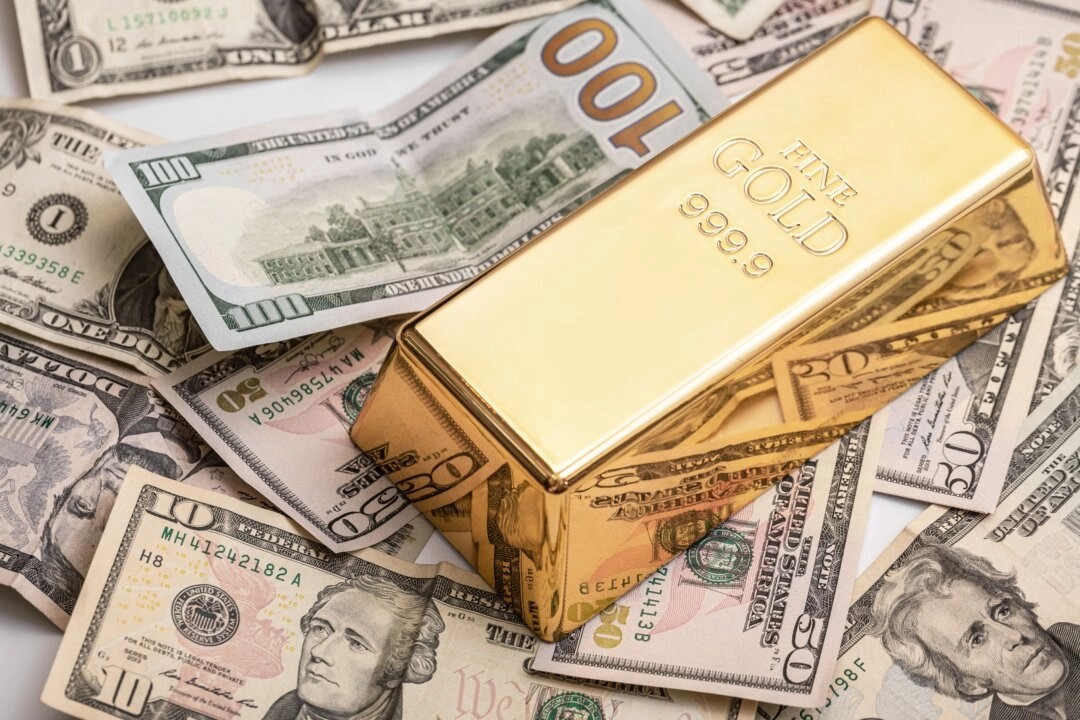
In the midst of soaring long-term bond yields in the United States, the U.S. Department of the Treasury announced an increase in bond buybacks in an attempt to alleviate market pressure. However, the bidding yield for the 20-year Treasury auction still reached 5.204%, indicating that while the U.S. government can still borrow money, it comes at a high cost. Meanwhile, the increase in long-term bond yields has not dampened gold prices, with gold continuing its upward trend. This seemingly contradictory phenomenon may serve as an important signal for the global capital markets to reassess long-term risks.
From the United States to Japan and Germany, major economies have recently seen long-term bond yields rise to multi-year highs, signaling a synchronized reevaluation in global bond markets. While oil prices, inflation, and central bank policy expectations continue to drive short-term volatility, factors such as expanding budget deficits, increased bond supply, rising demand for AI financing are pushing capital costs towards longer terms. At the same time, the continued strength in gold prices indicates that some funds are seeking value storage tools that do not rely on government credit.
“This round is the result of cyclical factors triggering and structural factors dominating,” said Professor Sun Guoxiang from the Department of International Affairs and Business at Nanhua University in Taiwan, analyzing for Epoch Times. He pointed out that while short-term factors such as oil prices, rate cuts expectations, and risk aversion continue to cause fluctuations in long-term bond yields, issues like U.S. fiscal deficits, normalization of Japanese interest rates, and increased global capital demand will not disappear quickly. Market reassessment now focuses not only on the level of yields, but on the government’s debt over the next ten years, inflation, fiscal credibility, the status of the U.S. dollar as a global capital “safe anchor”.
On August 19, U.S. Treasury Secretary Bassett announced that from September 9 to November 4, the buyback limits for 10-20 year and 20-30 year Treasury bonds would increase from $2 billion to at least $4 billion.
After the announcement, the 10-year U.S. bond yield fell 5.7 basis points to 4.647%, and the 30-year yield dropped 9 basis points to 5.196%.
It is widely believed in the market that Bassett’s move is aimed at easing pressure ahead of the subsequent $16 billion auction for 20-year Treasury notes. Previously, the 30-year U.S. Treasury bond yield had risen to 5.34%, hitting a new high since 2007, and the 10-year yield had also briefly jumped to 4.71%, surpassing the 3.94% before the U.S. and Israel jointly launched airstrikes against Iran at the end of February.
However, according to Japanese financial media Minkabu, the winning bid yield for the 20-year Treasury notes was 5.204%, slightly higher than the expected 5.199% before the auction. Although the difference was only 0.005 percentage points, it still shows that the U.S. government needs to pay slightly higher interest rates than market expectations to complete the financing.
An increase in bond yields typically means a decrease in bond prices, as well as an increase in the cost of government borrowing. In recent years, U.S. government interest payments on debt have exceeded defense spending.
As of the 18th, the total U.S. government debt reached $40.05 trillion, according to data released by the U.S. Treasury on the 19th. Since surpassing $30 trillion in January 2022, the debt has increased by over $10 trillion in about four and a half years, nearly doubling from $19.4 trillion ten years ago. In 2022 alone, the government’s interest payments have approached $1.2 trillion, higher than other major budget expenditures including defense, except for social security and Medicare.
Outside the United States, expanding government budget deficits and the escalation of U.S.-Iran tensions have also driven up energy prices, pushing up bond yields in developed countries. The benchmark 30-year German bond yield rose to 3.763%, hitting a 15-year high; and the French bond yield for the same period also reached a high not seen since 2008. Japan’s 30-year bond yield rose to 4.1285%, surpassing the 30-year high set in the spring of this year.
Luis Alvarado, Co-Head of the Global Fixed Income Division of Breckinridge Capital Advisors, said, “The major fixed income markets are indeed showing similar trends.” He added, “The problem with the United States is that the size of its bond market exceeds the total of Japan, the UK, the EU, and other Asian countries. There are fiscal deficits worldwide, so this is not a phenomenon unique to the United States.”
The recent rise in long-term bond yields is not just a U.S. fiscal issue but the result of simultaneous increases in financing demands among major developed economies. At the same time, the AI industry is starting to become a new major capital demander.
Today’s AI industry is different from the traditional internet model, which mainly relied on software and servers for expansion. Industries such as data centers, high-performance chips, electricity, grids, and cooling systems require companies to invest significant capital before they can profit.
Nicholas Elfner, Co-Director of Research at Breckinridge Capital Advisors, estimated that as major cloud companies continue to roll out large financing projects, total corporate bond issuances in September could reach $200 billion.
The issuance of investment-grade corporate bonds in the United States this year has increased by 38% compared to the same period last year. Bank of America strategists expect that total issuances in 2026 will reach a record high of $2.1 trillion, with a significant portion flooding the market in the coming weeks.
Regarding the impact of AI industry financing needs on the long-term capital markets, Sun Guoxiang said that while long-term capital markets currently face significant financing demands from both governments and AI companies, it is still too early to say that the two sides are evenly matched. Government debt supply remains the largest force influencing the market.
He said, “More accurately, AI financing needs have joined the already tight long-term capital markets, giving insurance companies, retirement funds, and asset management companies more choices and forcing government bonds to raise yields to maintain attractiveness.”
AI company funding needs are not the main reason for the recent sell-off of long-term bonds, but they could become a new factor driving up long-term capital costs.
In the midst of this global shake-up in long-term capital markets, Japan’s bond market cannot be ignored. Japan not only has one of the world’s largest bond markets but is also an important source of low-cost funding for the international financial system. Japanese institutional investors tend to allocate funds into U.S. Treasury bonds, Eurobonds, and other overseas assets, while international investors often borrow low-interest yen to invest in higher-yielding overseas assets.
Sun Guoxiang pointed out that the rise in Japanese bond yields will increase the attractiveness of domestic assets, weaken the relative advantage of foreign bonds, and possibly lead to a partial flow of funds back to Japan. If Japanese funds reduce their allocation to foreign bonds, the United States and Europe may need to offer higher yields to maintain their attractiveness to other long-term investors.
One of the important factors driving the recent rise in Japanese bond yields is the market’s expectation of an accelerated rate hike by the Bank of Japan. Recently, Japan’s TBS television quoted multiple sources as saying that the Japanese government supports an early rate hike for the purpose of maintaining the effectiveness of market interventions between Japan and the United States, with the Bank of Japan considering including the September or October meetings. Market pricing indicates an 80% probability of a rate hike to 1.25% before September and a 100% chance of a hike before October.
Former Japanese finance official Takehiko Nakao expressed on a Tokyo TV program on the 17th that if the inflation rate remains at 2%, it would be reasonable to raise the policy interest rate to 2.25% or 2.5%.
This statement indicates that discussions in Japanese policy circles are no longer just focused on the next rate hike but also contemplate what level long-term interest rates might return to in the medium to long term.
Sun Guoxiang stressed the importance of closely monitoring adjustments in Japan’s interest rate policy. He said, “The normalization of interest rates in Japan may also reduce yen carry trades. If there is a mass unwinding of leveraged positions, the impact may spread from the bond market to stocks, credit bonds, and even emerging markets.”
From the United States issuing large amounts of debt with high yields, AI companies expanding their funding, to Japan gradually exiting the ultra-low interest rate era and increasing gold allocation by central banks, the seemingly disparate market changes are pointing to the same issue: the tightening of cheap funds. Market reassessment now focuses not only on the next rate hike or cut but on who can still borrow money at low costs amidst increasing government debt and financing demands and which assets are worth holding in the long term.
According to traditional financial logic, rising bond yields typically are unfavorable for gold. Gold itself does not produce interest, so when yields on risk-free assets like U.S. bonds rise, the opportunity cost of holding gold also increases. However, amidst the recent global sell-off of long-term bonds, gold prices have not continued to weaken; instead, they have rapidly approached $4,500 per ounce after the U.S. Treasury announced an increase in the repurchase of long-term bonds.
Regarding this, Sun Guoxiang said, “The key is not just to look at whether nominal yields are increasing but to see why they are increasing.” He pointed out that if yield increases come from a strong economy, a shift towards hawkish central bank policy, or rising real interest rates, gold is typically under pressure as the opportunity cost of holding interest-free gold rises.
However, if the rise in long-term bond yields reflects concerns about inflation, budget deficits, sovereign credit, or currency depreciation, gold may instead rise in tandem. Sun Guoxiang believes that this round of “rising bond yields, rising gold” is not contradictory; both may reflect the same thing: “The market demands higher returns to be willing to hold government bonds for the long term, while also increasing demand for non-sovereign assets like gold.”
Deutsche Bank explains the recent rise in gold prices from a long-term demand perspective. The bank believes that the driving factors are no longer just inflation hedging or rate expectations but that structural forces such as central bank gold purchases, diversification of reserves, and de-dollarization are equally important. According to its model, gold is in the fifth “explosive” rally phase since 1979, with the current market starting in August 2024.
Deutsche Bank particularly values central bank buying. The bank believes that official gold purchases are shifting from cyclical hedging during crises to long-term reserve allocation. A recent survey by the World Gold Council (WGC) shows that 45% of surveyed central banks plan to increase their gold reserves in the next 12 months, hitting a new high in the survey, which could continue to support gold prices in the long run.
In terms of price predictions, the Deutsche Bank model estimates the basic fair value of gold to be around $4,700 per ounce. It expects that by the end of 2026, prices may range from $4,700 to $5,100 per ounce. This judgment is not simply betting on geopolitical crises or Fed rate cuts but is based on a combination of ongoing central bank gold purchases, reserve diversification, the US Dollar, and real interest rates among other factors.
From the U.S. issuing high-yield debt, AI companies vying for capital, to Japan exiting the ultra-low interest rate era, and central banks increasing gold allocations, the recent seemingly diverse market changes are pointing to the same question: cheap funds are contracting. Market reassessment now focuses not only on the next rate hike or cut but on long-term government debt and financing demands as they continue to increase—where will the funds flow and which assets are worth holding for the long term?