
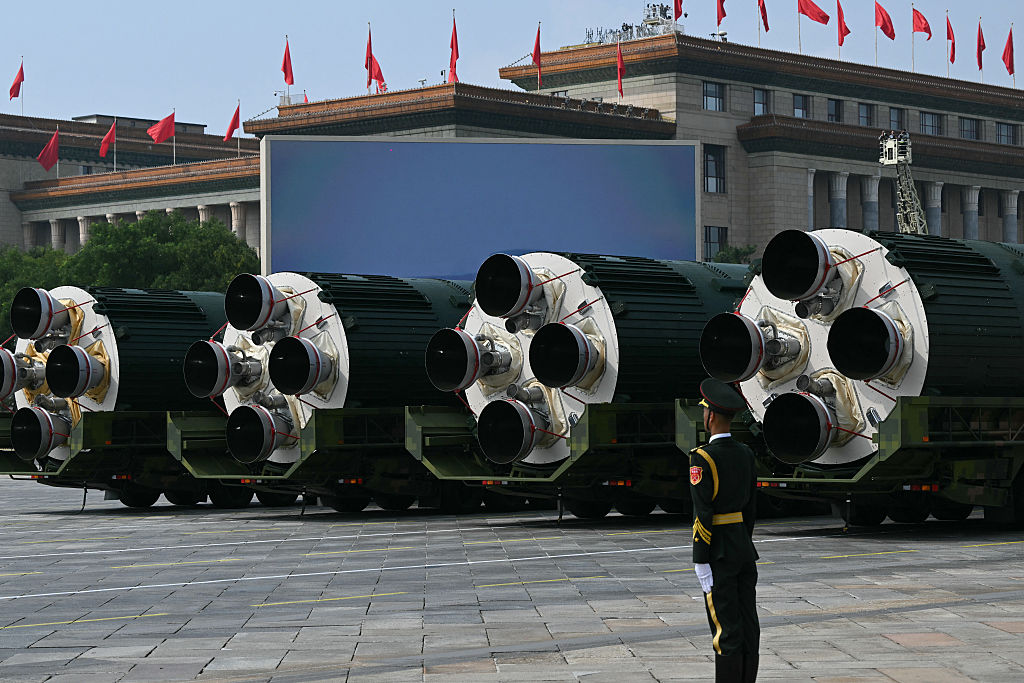
In a rare move at the Space and Missile Defense Symposium in August, senior US military officials publicly called for strengthened space situational awareness, network defense, and other counter capabilities, indicating the US is preparing to counter armed conflicts in space with non-kinetic weapons. The strong reaction of the US military is closely related to the rapid development of space weapons by China, leading to a permanent change in the space defense system.
On August 12, 2026, at the Space and Missile Defense Symposium held in Huntsville, Alabama, US Space Command Commander Stephen Whiting highlighted that the assumption of a 30-minute countdown for space conflict is now history. The US and its allies are facing a persistent space operational environment. Whiting warned that adversaries are actively probing US networks, interfering with sensors, and targeting space and missile defense assets, with China’s rapid expansion posing the biggest challenge for the Space Command. His remarks underscored the extreme vulnerability of the current space environment.
Since Operation Desert Storm in 1991, the US military has showcased conventional strike and intelligence superiority based on space assets on a global scale. This has made competitors realize that space capabilities are increasingly becoming a key factor in gaining strategic advantage.
In recent decades, the Chinese military has translated the development of space capabilities into concrete strategic actions. Through the development of offensive space weapons, they aim to compete with the US in space, attempting to paralyze US space assets through kinetic and non-kinetic means, weakening or offsetting the US military’s advantages in traditional warfare domains.
This militarization of space strategy has resulted in systematic and destructive space threats today.
Whiting detailed the anti-satellite weapon systems currently possessed by China. These weapons cover multiple layers from Earth’s surface to outer space, targeting the disruption and destruction of satellites to weaken the US military’s operational capabilities. Specifically, China has deployed direct-ascent anti-satellite weapons, land-based high-energy laser weapons, advanced electronic jamming facilities, co-orbital anti-satellite systems with orbital maneuvering capabilities, and a large number of dual-use military-civilian satellites.
Whiting emphasized that China’s anti-space capabilities have transitioned from conceptual research to actual deployment and operation. The US is now facing not a distant hypothetical threat but the forming and ongoing development of an anti-space operational system. The ability to switch between kinetic and non-kinetic destruction poses a serious threat to US space assets deployed in various orbit areas.
Additionally, China is actively developing a space-based operational system to equip the Chinese military with long-range, high-precision strike capabilities, enabling them to search, locate, track, and target US Indo-Pacific Command forces in the vast Pacific Ocean region. This intelligence capability supporting ground and maritime operations directly from space is altering regional power balances.
Whiting pointed out, “There are no safe harbors in space. We cannot dig trenches or build shields. Our satellites are always predictably located within the opponent’s weapons engagement zone.” In this unique operational domain, non-maneuverable satellites essentially become stationary and predictably trackable targets that could face lethal strikes at any time, making the defense of future space assets extremely complex.
Whiting warned that network technology underpins the entire operation of the space system. Space networks, with global coverage, extend from ground control and communication facilities to synchronous orbits approximately 22,000 miles above Earth, forming a vast new network space. The US must defend the entire network chain to prevent any breaches or weak points in the entire system.
China is actively seeking weaknesses in these network systems, attempting to seize control of space assets or cut off their data transmission through reversible or irreversible network attacks and interference. This mode of warfare deeply intertwining networks and space requires the US to establish impregnable digital defenses across thousands of miles of network space.
The competition for space network space is already reflected in several ongoing conflicts. In the Ukrainian battlefield, Russian forces continue to attempt attacks on commercial satellites and communication networks, aiming to destroy Ukraine’s command and control systems. Meanwhile, Iran has also begun using its limited technical means to interfere with and attack US space assets. China, on the other hand, is attempting to develop orbital maneuvering and on-orbit support capabilities.
In recent years, China’s development trends in space have shown strong aggression, such as mechanical interactions between two satellites in orbit. This space maneuvering capability could evolve into space maneuvering combat capability, potentially turning space into a new arena of destructive warfare.
Whiting has mentioned the potential threat of orbital nuclear anti-satellite weapons on multiple occasions. The growing threat from these weapons of mass destruction, as China, Russia, and North Korea expand their nuclear arsenals, poses an increasingly dangerous trend extending into space. Once such weapons of mass destruction are deployed in Earth’s orbit, they will have irreversible catastrophic effects on the entire space environment.
The threat from China in space is also evidenced by its disregard for international norms, directly contributing to the continuous deterioration of the space environment.
According to international space surveillance data, China has generated a large amount of space debris from past anti-satellite weapons tests, posing a continued threat to the safety of international space stations and satellites. Furthermore, in advancing its communication satellite program, China has left abandoned rocket debris in low Earth orbit multiple times, increasing the risk of orbital collisions.
In contrast, the US provides basic space situational awareness and orbital tracking data to the world through Space-Track.org, while also implementing long-term policies to mitigate orbital debris, including controlling orbital lifetimes to within 25 years after the end of space missions.
Comparatively, China’s actions completely disregard global commons safety.
In response to China’s multifaceted asymmetric challenges, the US is taking corresponding measures.
The US Space Command is advancing the deep integration of key defense institutions like the Space Command and Missile Defense Agency to establish a new Space Command and Control Center. A “Unified Space Operations Headquarters” is being constructed in Huntsville, Alabama, which will integrate mission systems, networks, capabilities of all branches, and supporting organizations to provide modernized command and control platforms for the Space Command to command forces, integrate joint forces, and execute space operational missions. Additionally, the headquarters will be the location for the Missile Defense Agency, Army Futures Command, and NASA’s Marshall Space Flight Center, forming a cluster of US space, missile defense, and defense technology.
This integration of functions reflects the fundamental reconstruction of the US military’s central nervous system to address future space competition.
The US Space Command has established clear priority capability investment plans for fiscal years 2029 to 2033. The core of this plan involves shifting traditional thinking away from viewing satellites as static consumables, towards a concept of dynamic space operations that emphasize agility and resilience of space assets, having tactical capabilities for continuous maneuverability, active threat avoidance, and advantageous terrain occupation like navy ships or air force jets.
Furthermore, the US is accelerating the development of cross-domain missile defense systems, including integrating space-based sensors, land-based, and sea-based interception systems to counter multi-layered complex strike means from hypersonic gliders to direct-ascent anti-satellite weapons.
Moreover, the US is constructing alliance systems to address global space challenges. The US-led multinational force “Operation Olympic Defender” has expanded to include seven member countries such as Australia, Canada, UK, US, New Zealand, France, and Germany, attaining initial operational capability in April 2025.
Whiting emphasized that one of the US’s critical advantages in space competition is having an extensive network of allies and partners. This advantage is being translated into practical joint combat capabilities.
China is attempting to extend the battlefield into space, forcing the US and its allies to dispel illusions and make substantive equal responses. This competition aimed at targeting opponent space assets is turning space into an irreversible new battlefield.