
On Tuesday, the US House Select Committee on CCP issued a statement supporting the Pentagon’s efforts to strengthen scrutiny of research and cooperation relationships between federally-funded universities and the Chinese Communist Party (CCP) and related entities. This measure aims to prevent sensitive technology leakage, intellectual property theft, and the exploitation of research funded by US taxpayers by foreign adversaries.
The committee declared its support for the Department of Defense’s enhanced review of research security and foreign cooperation at some federally-funded US universities. On Monday, the Department of Defense notified 30 federally-funded universities across the US to immediately review their academic, financial, and research cooperation with entities related to the CCP, Russia, and Iran, all deemed as entities posing national security threats.
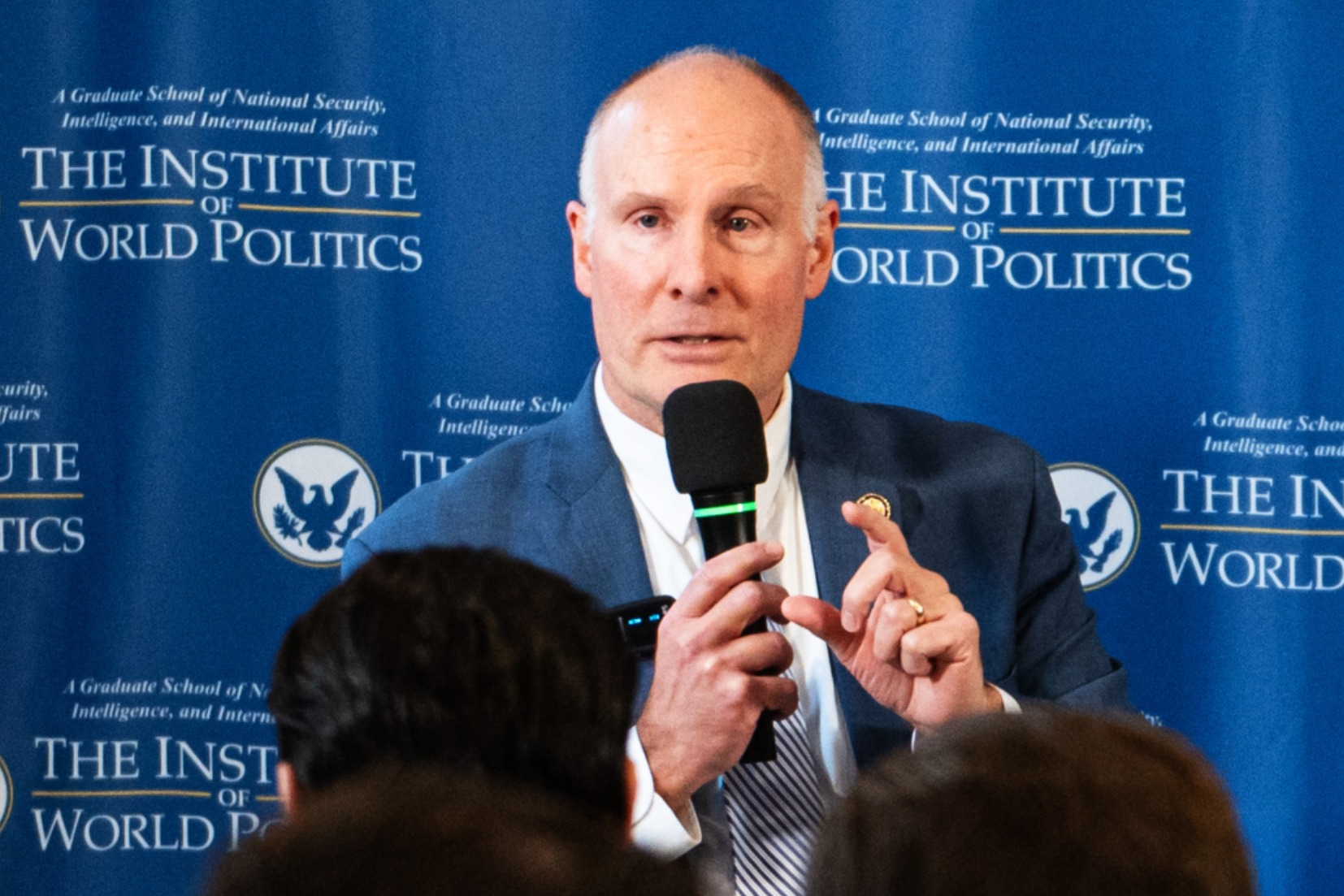
Committee Chairman John Moolenaar stated that universities failing to comply with basic research security standards and neglecting problematic foreign relationships should face real consequences for misusing taxpayer funds. He emphasized the risks posed by research partnerships and collaborations with Chinese entities associated with the CCP and the Chinese military, highlighting the importance of protecting taxpayer-funded research from exploitation by the CCP and other foreign adversaries.
The Pentagon’s Under Secretary of Defense for Research and Engineering, Emil Michael, reiterated the department’s zero-tolerance approach towards overseas academic collaborations that jeopardize US national security. Institutions receiving federal funding must adhere to the highest standards of research security requirements to mitigate unauthorized technology transfer, intellectual property theft, and the misuse of research funds by hostile forces.
Universities on the list of notified institutions include prestigious names like Georgetown University, Harvard University, Massachusetts Institute of Technology (MIT), University of California, Berkeley, University of Texas, Austin, and others. This review aligns with the US government’s recent emphasis on enhancing university research security policies.
According to the Higher Education Act, federally-funded higher education institutions must report any foreign donations, contracts, or related funds exceeding the statutory reporting threshold to the Department of Education. The current reporting threshold is the cumulative amount of $250,000 from the same foreign source within a year, with deadlines typically falling on January 31 and July 31.
In a move to safeguard against ‘malicious foreign influence,’ the Department of Education called on all US universities to prioritize research integrity protection and preventing undue foreign interference as critical policy issues.
As part of efforts to mitigate national security risks, the Pentagon has been restricting research collaborations between US defense-funded activities and foreign entities identified as potential threats. Notably, previous concerns over Harvard University’s foreign funding and cooperation with China have received attention from the US government and Congress.
Before the recent directive, several days earlier, joint reports were released by the House Select Committee on CCP and the House Committee on Education and Labor, accusing Harvard of establishing a non-profit organization called ‘Harvard Global’ to bypass federal reporting requirements for foreign donations.
The Education Department’s scrutiny in 2025 revealed incomplete or inaccurate disclosure of some foreign funding details by Harvard, prompting a request for further information related to foreign grants, contracts, and governmental relationships.
As of December 16, 2025, Harvard had reported over $610 million in funds from ‘countries of concern,’ including China, exceeding the totals reported by any other US university. By July 31, Harvard had received nearly $687 million in donations and funding from China.
The Pentagon has been updating lists of entities related to Chinese military-civil fusion and other national security risks. In July, the Department published a revised ‘1286 List,’ with 130 entities from China, Russia, and Iran, including prominent universities like Fudan University and Shanghai Jiao Tong University listed for the first time.
Efforts by the Pentagon to restrict cooperation with entities on the ‘1286 List’ through federal funding have been intensified in the 2026 fiscal year. The Department warned researchers that collaboration with listed entities could affect their eligibility for future federal funding applications.
On August 17, the Pentagon emphasized that these audits would better equip the US to anticipate emerging threats, adapt to evolving hostile strategies, and maintain its leadership in global innovation. Collaborative efforts with Congress are underway to construct a robust research ecosystem protecting critical discoveries from misuse.