
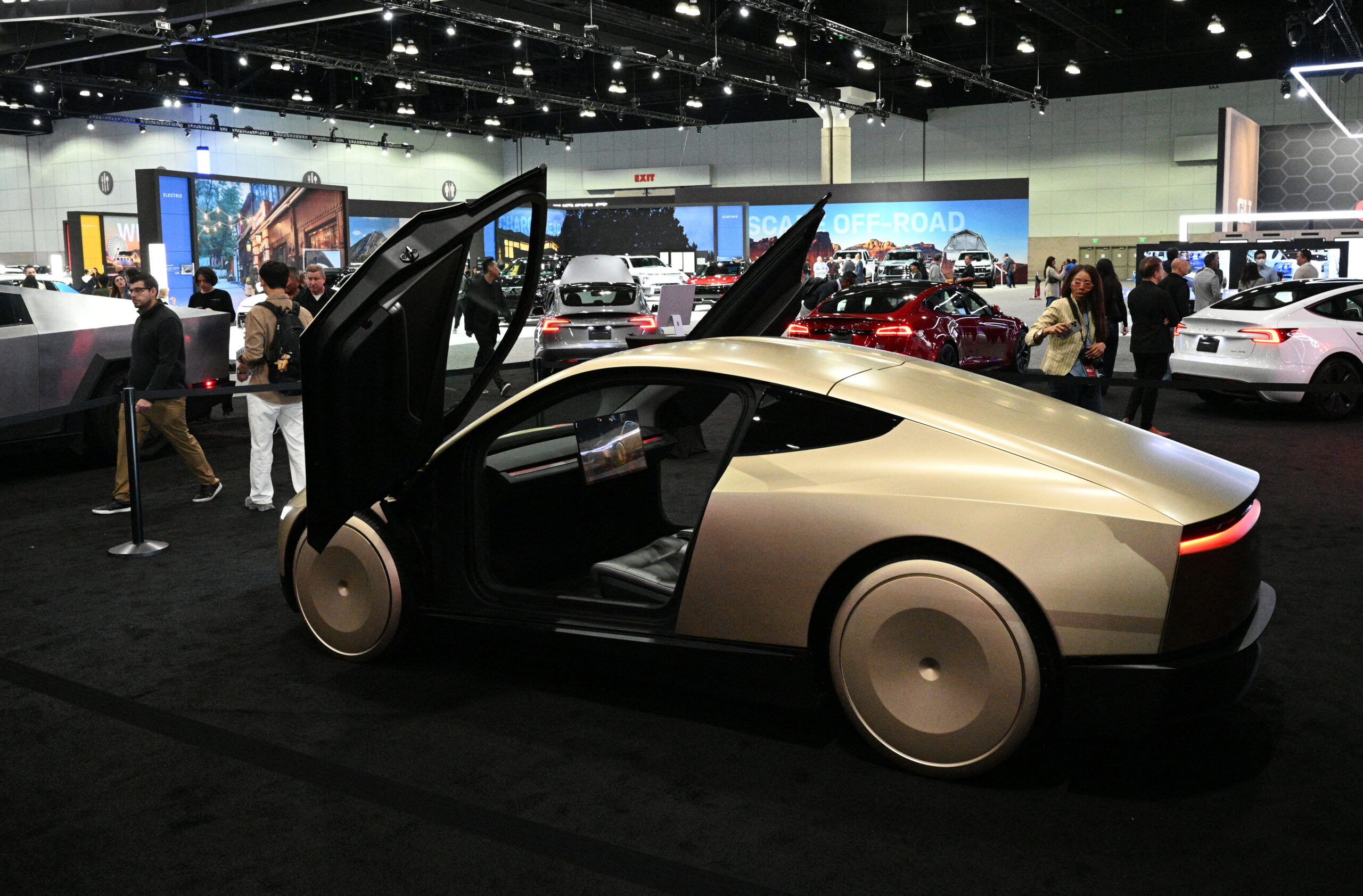
Tesla is preparing to roll out its autonomous driving Cybercab model, which features no steering wheel and no brake pedal, as part of its Robotaxi program. The company aims to start offering public road passenger services in Austin, Texas as early as this month.
According to a report from tech media outlet “The Information” on August 18, Tesla has informed its employees that the initial phase of public deployment will involve employees test-riding the Cybercab on public roads, followed by integrating the vehicles into the existing Robotaxi service in Austin a few days later.
Sources cited in the report stated that the company’s internal goal is to complete this by the end of August, although the timeline may be adjusted due to preparation work. It was mentioned that Tesla conducted emergency response training with frontline personnel in Austin last week, including protocols for moving these vehicles when necessary.
Currently, Tesla operates its Robotaxi service in Austin with around 186 registered Model Y vehicles equipped with its Full Self-Driving (FSD) technology.
During Tesla’s second-quarter financial report and conference call this year, it was revealed that the Cybercab has already started production at the Gigafactory Texas, with an annual capacity exceeding 125,000 vehicles.
CEO Elon Musk mentioned in a recent conference call that the Cybercab utilizes a new platform and will require the accumulation of specific driving data before large-scale deployment. He stated, “Before we can have a large number of Cybercabs on the road, we need to accumulate specific driving data for this model.”
The report indicated that Tesla is currently collecting mileage data through retrofitted versions with steering wheels and pedals for calibration purposes. Ashok Elluswamy, head of Tesla’s artificial intelligence department, described the vehicle as a “remarkable product,” aligning its production goals with the pace of unsupervised Robotaxi mileage growth.
It is highlighted in the report that the regulatory status for the commercial passenger service of the Cybercab by Tesla remains unclear.
The Cybercab is seen as Tesla’s core product in transitioning from an electric vehicle manufacturer to a self-driving and robotics business company. The company plans to invest over $25 billion this year to support this transformation, approximately three times the $8.5 billion in capital expenditures in 2025.