
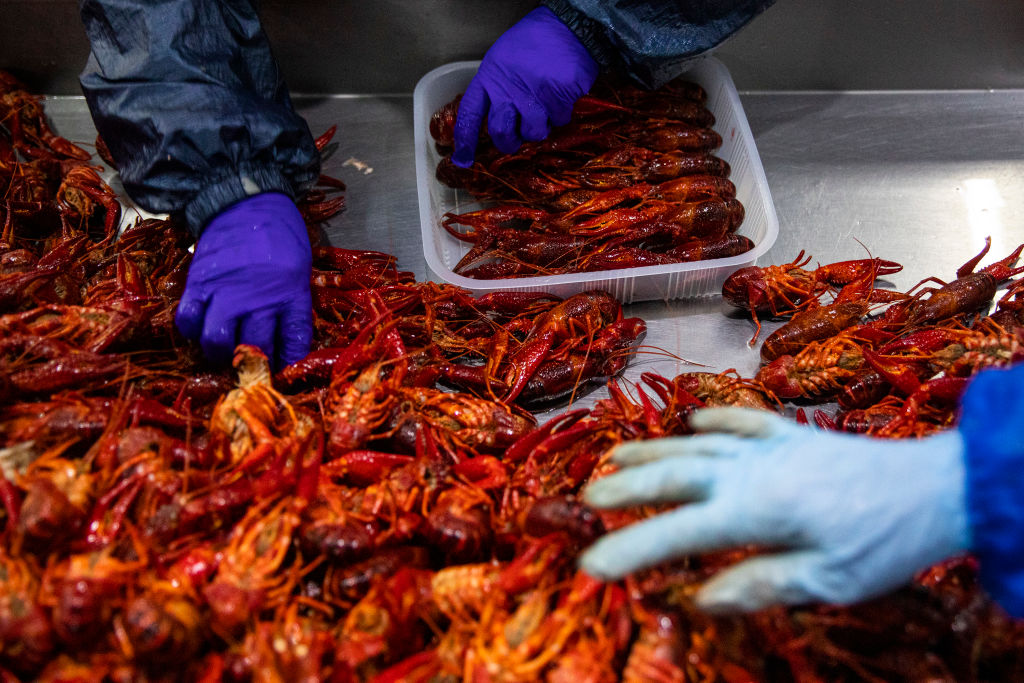
In the midst of peak summer in August, when consumption of crayfish is supposed to be at its peak in mainland China, this year has seen a downturn in the market with prices sliding and consumption cooling off.
According to a report from the WeChat public account “BrandPrism” on August 17, statistics from the Small Crayfish Industry Sub-association of the China Aquatic Products Circulation and Processing Association show that from January to July this year, prices of crayfish of various sizes have decreased by about 30% compared to the same period in the past two years.
Traditionally, with the purchase price of crayfish dropping, consumers should have responded with a grand reverse harvest. However, the reality is that despite farmers anxiously at the ponds, consumers remain indifferent, and even the crayfish dining market shows signs of imminent collapse.
A verified Weibo user, Lu Jin, a radio host, columnist, and a popular figure with 248,000 followers, recently posted about the cooling consumption of crayfish. A crayfish restaurant owner in Hangzhou mentioned that the sales of crayfish in the restaurant had dropped by 70%, citing high prices and the hassle of peeling as reasons.
Some have done the math: paying 99 yuan for 30 crayfish, only getting three ounces of meat after removing the heads and shells. Spending 99 yuan for a table full of shells, oily hands, and an empty stomach, while next door, a 59 yuan buffet offers an hour of hearty eating.
Consumers have pointed out that prices at well-known crayfish chain restaurants remain high, and the price drop is not noticeable to regular consumers.
Online user “Lucas火山” commented that despite the talk of crayfish prices going down, there is no visible decrease in prices at hotels and late-night restaurants.
Others expressed dissatisfaction with the pricing, such as “不想失眠困女士” who found 98 yuan per jin (500g) for medium-sized crayfish too expensive.
In recent years, group purchases of crayfish buckets for 99 yuan for 6 jin and 188 yuan for 6.5 jin with three flavors have become ubiquitous even in small local stores. Even chain hotels are offering discounted sets like “88 yuan for 2.5 jin of crayfish, including sides and drinks” to attract customers.
In response to the situation, some businesses are resorting to replacing large crayfish with smaller ones and adding side dishes and sauces to make up the weight.
The shrinkage of offline stores is alarming. Data from Red Dining shows that as of April 2026, there are significantly fewer specialized crayfish stores nationwide, about 61,000 compared to nearly 100,000 in September 2024. At the same time, the closure rate of crayfish dining establishments stands at 37.2%, topping closures among all food categories according to Dining Bible’s “2024-2025 China Restaurant Category Closure Rate.”
Financial information platform “Tasty Money” expressed that this cooling trend is not accidental. A decade ago, capital poured into the crayfish industry, with real estate companies expanding into farming, leading to oversupply and price wars. Some businesses compromised on quality, not only lowering product standards but also eroding consumer trust and enthusiasm. The co-cultivation of rice and crayfish expanded to around 30 million mu, with a production volume of roughly 3 million tons. Upgraded seedling technology enabled year-round supply. The scarcity and premium of crayfish as a seasonal internet celebrity have been completely diminished.
The transformation of consumer channels has also dealt a fatal blow to offline stores. The booming development of fresh e-commerce and pre-cooked meal industries allows consumers to enjoy crayfish at home. During the 2026 “May Day” period, group orders for crayfish on Douyin surged by 69% compared to the same period last year, further encroaching on the physical stores’ survival space. Faced with high rent and labor costs, traditional brick-and-mortar stores have significantly weakened competitiveness.