
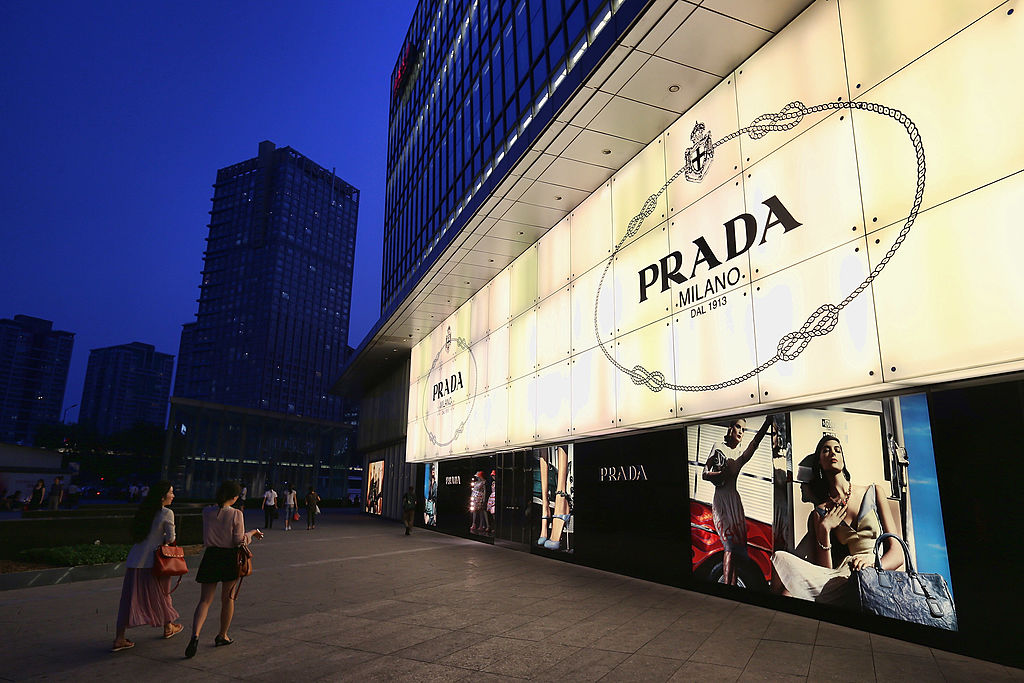
Italian luxury brand Prada plans to close 2 to 3 flagship stores in China each year over the next two to three years. At the same time, brands like Gucci, Cartier, and Louis Vuitton are also reducing the number of their stores. The personal luxury goods market in mainland China has been shrinking for two consecutive years, with consumers becoming more cautious in their luxury spending.
According to a report by “21st Century Business Herald” on August 4th, Andrea Guerra, the CEO of Prada Group, mentioned in the company’s semi-annual report conference call for 2026 that they would be closing 2 to 3 Prada flagship stores in China annually over the next two to three years.
As of August 4th, Prada’s official website listed 49 operating stores in mainland China. Since 2024, the brand has closed stores such as the Prada Shanghai Jing An Center, Shanghai Hongqiao Airport, Haikou Riyue Plaza Duty-Free, and Jinan Ginza Shopping Mall. Plans for a store at the Shanghai Bund Taikoo Li have also been put on hold.
Guerra explained that the closures will primarily target the second or third stores in cities where there is overlapping foot traffic and higher operational costs.
Prada is not alone in this situation. Kering Group, the parent company of Gucci and other brands, has closed a net total of 84 directly operated stores globally in the first half of the year and plans to close approximately 100 by the end of the year, with about 40% of them in Asia.
Gucci has closed stores such as Shanghai Grand Gateway Plaza, Reel Department Store, and New World Daimaru since last year. Bottega Veneta has withdrawn from some shopping malls in cities like Changsha, Ningbo, Wuhan, Shanghai, and Chengdu, while Balenciaga has closed some stores in Shanghai, Wuhan, Kunming, and Beijing.
Louis Vuitton closed mainland stores like Kunming Golden Resources Department Store, Chengdu Tianfu International Airport, and Beijing Capital International Airport in the first half of this year.
In the first quarter of this year, Cartier closed 5 stores in mainland China. Nicolas Bos, the CEO of Richemont Group, Cartier’s parent company, stated that both the group and its competitors were overly optimistic about the Chinese market in recent years. Some brands expanded too rapidly following earlier success in the Chinese market and are now readjusting their store networks.
A report from global strategy consulting firm Bain showed that the sales of personal luxury goods in mainland China decreased by 18% to 20% in 2024 and further dropped by 3% to 5% in 2025.
In terms of categories, clothing sales in 2025 declined by 5% to 8%, leather goods by 8% to 11%, watches by 14% to 17%; while cosmetics increased by 4% to 7%, being one of the few categories recording growth.
Bruno Lannes, Senior Global Partner at Bain, mentioned that in 2025, the Chinese luxury goods market did not see a comprehensive recovery. Consumer confidence remains fragile, and young potential consumers are delaying luxury purchases.