
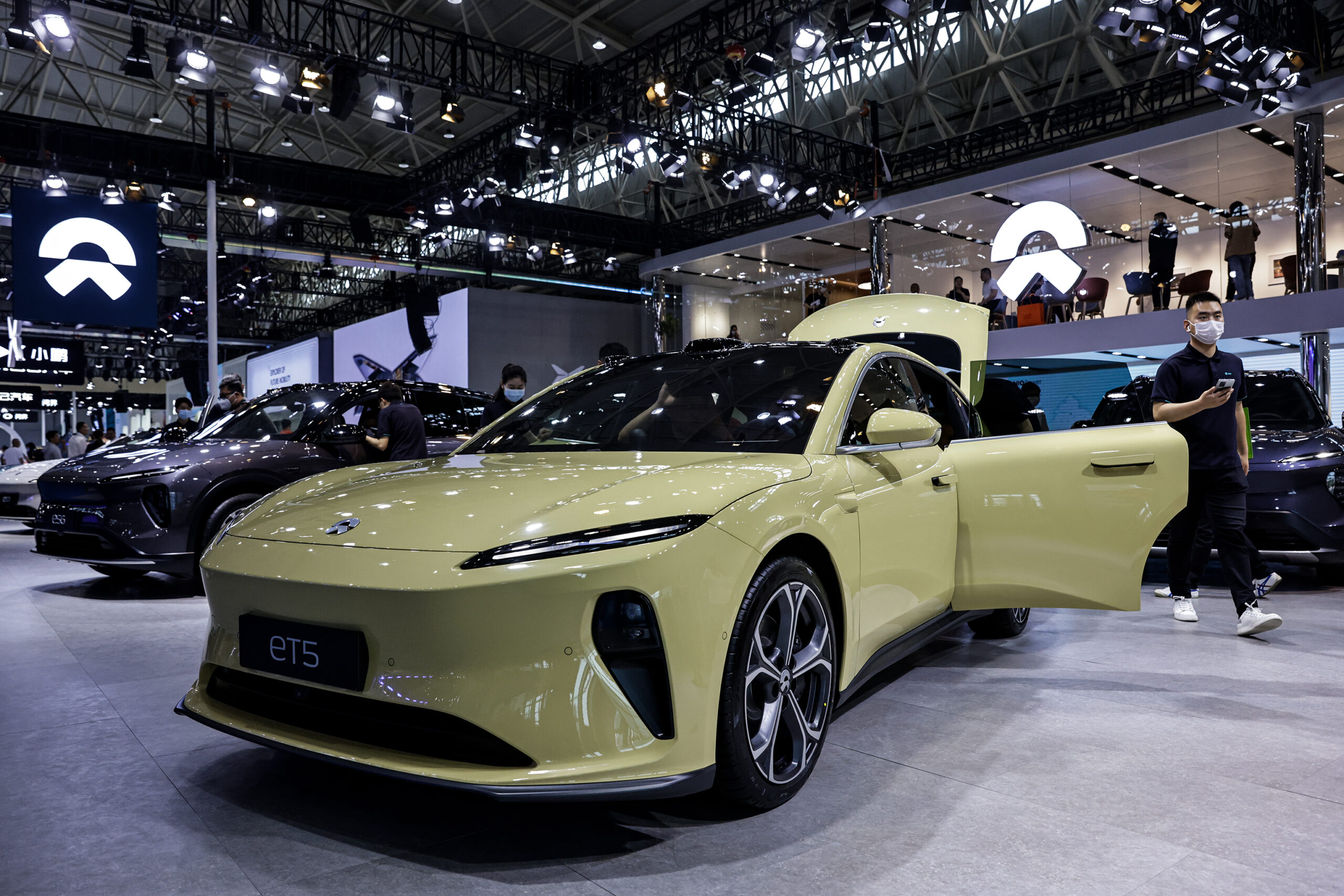
In recent years, the situation of cut-throat competition in China’s new energy vehicle industry has been worsening. Car companies, in order to maintain their market share, have been constantly launching new car models. In the first five months of this year, an average of 3.6 new car models were introduced to the market every day. Recently, industry insiders have been continuously criticizing the safety risks of “fast-track cars.”
During the 2026 China Automotive Forum held from July 21st to 23rd, Li Fenggang, the General Manager of Beijing Hyundai Motor Co., publicly criticized some brands for speeding up the launch pace by cutting necessary testing processes, thus turning consumers into de facto test drivers and planting safety hazards.
The intense pace of new product releases and the short development cycles have drawn sharp criticism. He Zhiqi, the Executive Vice President of BYD, exclaimed, “This is madness, we are talking about automobiles here!”
According to a report from the “China Auto News” on August 3rd, data shows that from January to May this year, a total of 542 new car models were introduced in the Chinese market, averaging 3.6 new models per day. Behind the rapid iteration of new cars lies the increasingly compressed development cycle of the entire vehicle. In the era of fossil fuel cars, the research and validation cycle for a new car typically lasted more than 36 months. However, many brands have now compressed this cycle to around 18 months.
An industry insider expressed, “In the past, it took several years to go through a set process for a fossil fuel car project. Now, when taking on a new energy vehicle project, the timeline from initiation to completion is required within six months, leaving no chance for gradual refinement.”
Recently, Xiaopeng X9 has encountered a widespread fault with drive flat spots due to high temperatures, leading some car owners to question, “Wasn’t the extreme heat test conducted before the launch?” Concurrently, some operational vehicles equipped with the innovative Hangzhou 177Ah battery have been experiencing battery malfunctions. In response, some industry insiders suggested that manufacturers may be hastily assembling vehicles to seize the market, significantly reducing the verification testing time.
On July 31st, the automotive sector creator “Car Cartoon Tribe” wrote that the industry is caught up in a frenzy, where being a step behind might mean missing out on a piece of the pie. Some car models go from concept debut to trial delivery in less than a year. Processes such as DV component design verification, PV mass production verification, which used to involve two complete rounds, are now hurriedly completed in one round. Comprehensive vehicle electronic control programs that required tens of thousands of repetitions for debugging are now hastily installed within two weeks. Durability road tests covering three to four hundred thousand kilometers are halved, and many vehicles leave the production line after simple testing with just twenty to thirty thousand kilometers of mileage, leaving all the bugs that should have been resolved in the laboratory to be discovered by the drivers on the road.
“Car Cartoon Tribe” criticized that such “fast-track cars,”, while seemingly benefiting the car companies in terms of speed to market, monthly sales, and storytelling in the capital market, shift all implicit risks onto the car owners, essentially turning them into “live test drivers.” With inadequate safety assurances, driving becomes like opening a blind box, where faulty door handles, improperly calibrated brake systems, insulated high-pressure circuits, unidentifiable road impediments by driver assistance systems, and insufficient cooling fluid corrosive performance are potentially life-threatening issues.
The “China Auto News” notes that the chaos of “fast-track cars” continues to brew, with an influx of car models of varying quality entering the market. This not only poses numerous road safety hazards but also erodes consumer trust in car manufacturers, which, if ongoing, will inevitably shake the foundation of the automotive industry’s development.
In the first half of this year, the automotive industry’s profit was 195.4 billion yuan, a 20% year-on-year decrease, with an industry profit margin of only 3.8%, indicating continued weak profitability. The “fast-track” approach has not brought sustainable growth. Instead, it has dragged the entire industry into a vicious cycle of “increasing losses with increasing competition, and increasing competition with increasing losses.”