
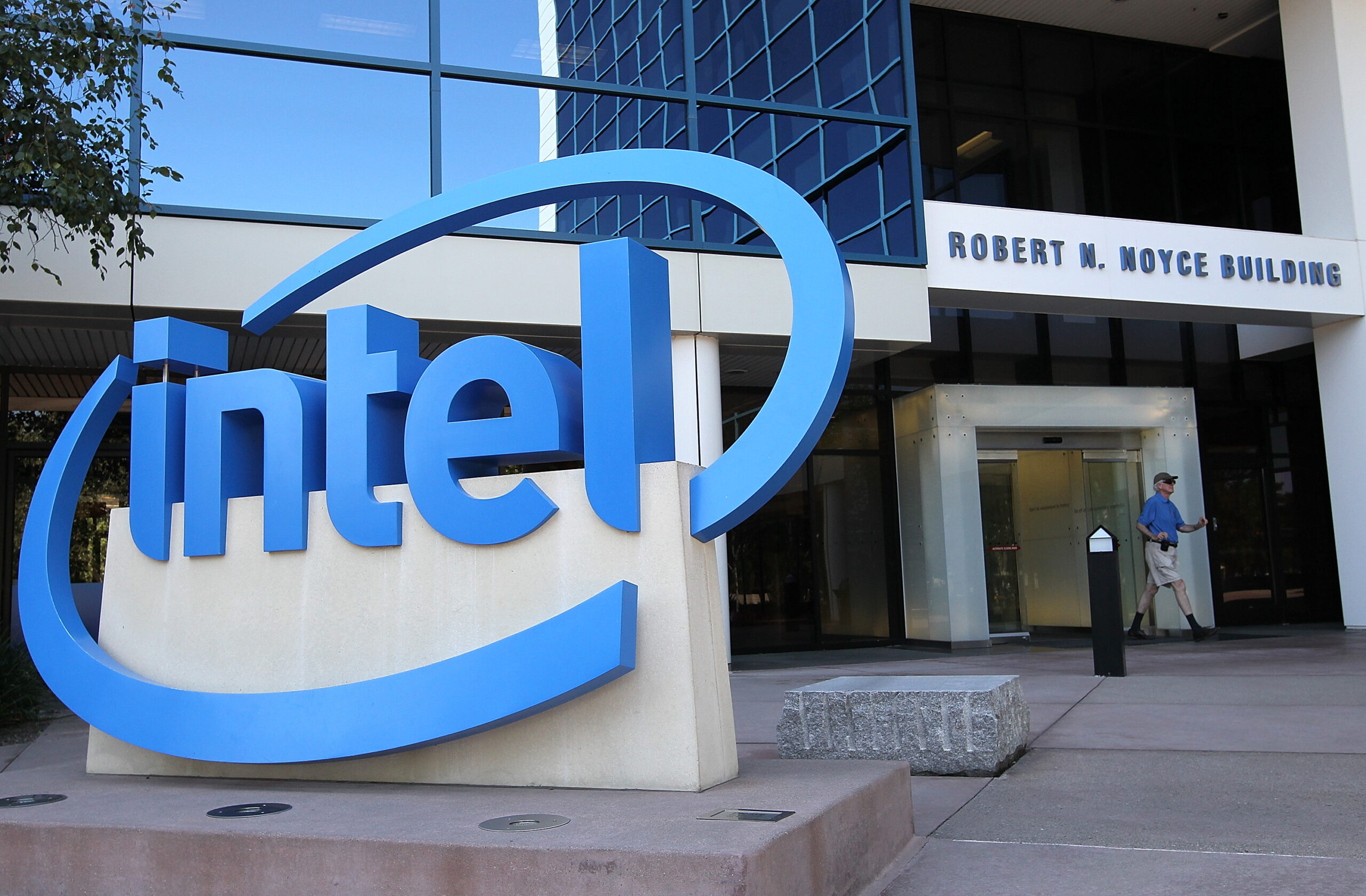
The Supreme Court of the United States heard a major case this week related to Intel’s retirement plan. The outcome of this case could impact employers’ attitudes towards including hedge funds and private equity in 401(k) retirement savings plans.
On October 6, the Supreme Court heard oral arguments for the “Anderson v. Intel” class-action lawsuit filed in 2019 (case number 25-498). The plaintiff in this case is former Intel employee Winston Anderson. Anderson accused Intel of harming employees’ retirement benefits by heavily allocating 401(k) retirement funds to high-fee, low-return hedge funds and private equity, resulting in significantly underperforming retirement funds compared to general stock funds, which may violate the “Employee Retirement Income Security Act” (ERISA) prudent management obligations.
401(k) is a common retirement savings plan in the United States, allowing holders to save and invest during their working years to prepare for retirement. Some employers also provide matching contributions to help accumulate retirement funds.
Intel’s explanation is that investments should not only be judged based on hindsight returns, but also consider investment objectives, risks, and decision-making processes. Intel argues that these funds were originally meant to diversify risks and reduce losses during market downturns, rather than aiming for the highest returns during market upswings.
Many retirement plan management and sponsor organizations are currently in a wait-and-see mode, awaiting the Supreme Court’s decision and the completion of the Department of Labor’s final rule-making on alternative investments before considering adjustments to the investment options provided in 401(k) plans. Meanwhile, asset management firms are actively preparing new products.
The focus of the Supreme Court justices’ review is whether the plaintiff must present a benchmark with investment objectives and risk characteristics similar to make the lawsuit proceed.
The justices believe that merely arguing based on poor investment performance is not sufficient, and the plaintiff must present a “meaningful benchmark” for the court to assess investment performance.
The justices used fruit analogies multiple times. Justice Clarence Thomas summarized his view of the Ninth Circuit Court of Appeals decision, saying, “You can’t compare apples and oranges… If you have a fund… designed to generate higher returns but also higher risks… you can’t compare it to a fund designed to prevent loss.”
Justice Samuel Alito asked attorney Matthew Wessler representing the employees further to clarify his position, questioning whether he believes that one can “present a claim by comparing apples and oranges but with the caveat that there are inherent flaws in the relevant investment strategies itself.” Justice Amy Coney Barrett also used the same fruit analogy during the debate.
Justice Neil Gorsuch asked Wessler to acknowledge a general principle: when the lawsuit claim is limited to poor investment performance, “there must be some meaningful benchmark – it must be apples, not oranges.”
The justices also directly asked Deputy Solicitor General Aimee Brown how much guidance the court should provide in this case.
Brown believes the court should propose “some specific boundaries or parameters” for what constitutes a “meaningful benchmark.” She told the justices, “Prudence or imprudence is about the decision-making process, not the investment performance.”
In the rebuttal phase, Wessler pointed out that all allegations must be considered together and evaluated from a holistic perspective.
He told the court, “I think that’s important in these types of cases. Because the plaintiff may allege that a particular investment strategy itself was not prudent, or the manner in which that strategy was implemented was not prudent, and the outcome was indeed suboptimal.”
Before reaching the Supreme Court, this case had been reviewed by the district court and the appellate court, and both courts rejected the claims.
In 2019, Anderson filed the lawsuit in the US Northern District of California. On January 8, 2022, Judge Lucy H. Koh of this court ruled to dismiss six main claims from the plaintiff’s complaint. The court believed that the plaintiff did not present a comparable investment fund as a benchmark, which was insufficient to prove that Intel’s investment decisions violated prudent management obligations under ERISA. Additionally, the court found that the plaintiff’s allegation that Intel invested retirement funds in companies in Intel’s venture capital sector to reduce its own investment risk lacked specific evidence to prove illegal conflicts of interest or self-dealing.
While the court rejected these six claims, the plaintiff was not allowed to amend the complaint to refile, but another claim regarding the failure to timely provide retirement plan documents was not dismissed along with them.
On May 22, 2025, the US Ninth Circuit Court of Appeals upheld the district court’s rejection of the relevant claims, finding that the plaintiff’s arguments were insufficient to support their lawsuit claims.
As a result, Anderson petitioned the US Supreme Court on October 20, 2025, requesting a review of whether lower courts could require plaintiffs to present a substantively comparable investment fund as a benchmark at the outset of a lawsuit. The Supreme Court granted the petition on January 16, 2026, decided to hear the case, and held oral arguments on October 6, 2026.
The impact of this case extends beyond the dispute between Anderson and Intel and could potentially affect how retirement fund participants nationwide approach similar litigation and evidentiary requirements in the future. Therefore, employers are awaiting the Supreme Court’s ruling, with some hoping for clearer guidance to mitigate the risk of future lawsuits.