
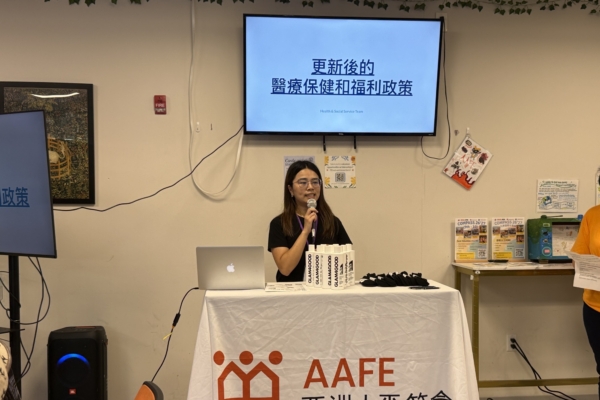
The Asian American Federation (AAFE) held an information session titled “Impact of H.R. 1 on SNAP and Medicaid Beneficiaries” in Flushing on August 19th. The session focused on the changes in the Supplemental Nutrition Assistance Program (SNAP, commonly known as food stamps) for individuals aged 18-64, outlining the work requirements, exemption criteria, and potential consequences for those who do not meet the requirements.
Participants learned that able-bodied adults without dependents (ABAWD) aged 18-64 receiving SNAP benefits are required to meet work requirements. If they fail to fulfill the monthly 80-hour work requirement and do not qualify for exemptions, they can only receive SNAP benefits for a maximum of 3 months within a 3-year period.
However, not all SNAP beneficiaries are subject to work requirements. Exemptions include being under 18 or over 65 years old, unable to work 20 hours or more per week due to physical or mental disabilities, needing to care for children under 14, receiving or applying for Supplemental Security Income (SSI) or Social Security Disability Insurance (SSDI), pregnant, or unable to work due to caring for a sick or disabled individual.
The concept of “countable month” refers to a month in which an ABAWD receives SNAP benefits for the entire month but does not meet the work requirements or qualify for exemptions, which results in that month being counted as a “countable month.”
Furthermore, individuals undergoing substance abuse or alcohol recovery programs, engaging in half-time work and half-time education, employed with a weekly income of at least $217.50, or participating in Temporary Assistance for Needy Families (TANF) or work assistance programs are also exempt from ABAWD work requirements.
Individuals facing challenges meeting work requirements due to physical or mental health issues should have their healthcare provider complete the ABAWD Medical Statement Form (FIA-1021w) and submit it to the New York City Human Resources Administration (HRA) to apply for the relevant exemption.
Applicants should retain relevant documents such as proof of employment, occupational training or work experience certification, job search records, community service verification, vocational education training certification, and proof of caring for children’s parents participating in community service for use during the review process.
AAFE also reminds the public not to ignore government department letters under changing welfare policies. When conducting business, individuals should bring all correspondence from the New York State Health Exchange (NYSOH), HRA, New York State Office of Temporary and Disability Assistance (OTDA), Medicaid, Medicare, or SNAP; especially pay attention to renewal notices or letters requesting action, missing deadlines may affect benefits and coverage.
In case of changes in income, family size, address, immigration status, pregnancy, or insurance coverage, individuals should promptly report to the relevant departments. For those who may not meet the work requirements due to disabilities, pregnancy, caregiving responsibilities, education, treatment, receiving SSI or SSDI, the session suggests proactively inquiring about exemption eligibility and seeking appropriate assistance.