
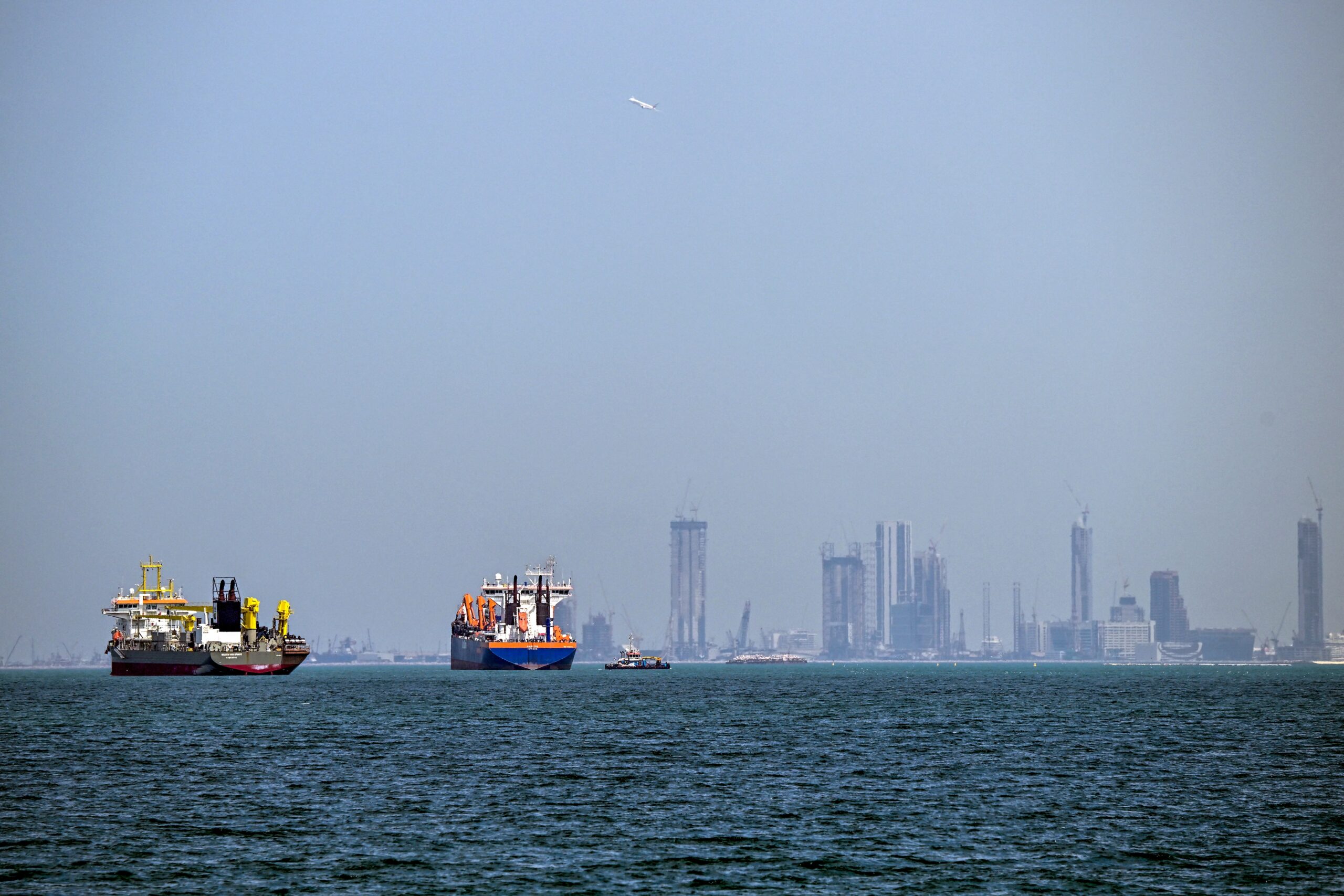
The United Arab Emirates announced on Tuesday (August 18) an indefinite suspension of all trade, commercial dealings, and financial transactions with Iran. This decision came after the UAE accused Iran of launching two ballistic missiles, targeting maritime shipping. Experts believe that this embargo will significantly impact Tehran, comparable to the economic blockade the United States imposed on Japan during World War II.
According to the UAE Ministry of Defense, their air defense systems detected both missiles ultimately falling into the sea, one outside UAE territorial waters and the other inside. The Ministry assessed that the missile strikes were clearly aimed at “maritime shipping”.
This incident marks the first reported attack since the assault on Fujairah port on May 4 this year. The missile threats prompted the UAE authorities to urgently send mobile alerts to residents. Subsequently, the Ministry of Interior confirmed the situation was safe, allowing people to resume normal activities.
The UAE Ministry of Defense emphasized their readiness to address any threats and vowed to firmly respond to any attempts to jeopardize national security and stability.
The country’s Foreign Ministry later declared that, due to the escalating situation harming regional and international peace and security, all trade, commercial dealings, and financial transactions with Iran have been suspended until further notice.
Responding to the UAE’s accusations, Iranian Foreign Ministry spokesperson Esmaeil Baghaei dismissed the claims as “baseless” in the early hours of Wednesday.
Baghaei hinted at the possibility of this incident being a “false flag operation” and accused the UAE’s accusations of violating the principle of neighborliness. He urged all parties in the region not to believe these unfounded allegations against Tehran.
To date, Iran has not admitted to launching any missiles toward the UAE.
This attack comes at a sensitive moment, with the 60-day deadline for peace talks between the US and Iran expiring on Monday without any breakthrough, raising concerns of a potential escalation in regional conflicts.
Since the beginning of the US-Israel war with Iran at the end of February, the conflict has disrupted the normal shipping routes in the strategic chokepoint of the Hormuz Strait. During the early stages of the war, Iran launched numerous missile and drone retaliatory attacks against Gulf countries, including the UAE.
According to reports from the Peninsula TV, within the first six weeks of the US-Iran conflict, Iran fired over 530 ballistic missiles, dozens of cruise missiles, and deployed over 2,200 drones, claiming to target only local “US assets”.
In recent months, the UAE and Iran had attempted to ease bilateral tensions. Following a memorandum of understanding between Washington and Tehran in June, relations between the UAE and Iran briefly improved, leading to a resumption of some diplomatic and economic exchanges.
Trade between Dubai and Iranian ports gradually resumed, and some flights between the two countries restarted. Additionally, the UAE authorities recently eased restrictions, allowing around 20,000 Iranian citizens with UAE residency permits stranded abroad since the war outbreak to return.
However, this fragile relationship has recently faced a severe test. The UAE accused Iran of attacking two oil tankers operated by the state-owned Abu Dhabi National Oil Company (ADNOC) in the Hormuz Strait. Iran has not acknowledged this accusation thus far.
Previously, the Iranian Revolutionary Guard issued warnings that if ships passing through the Hormuz Strait were associated with Tehran’s adversaries or failed to comply with Iran’s instructions, military actions might be taken against them.
The UAE’s comprehensive halt in economic and trade dealings with Iran will undoubtedly deal a heavy blow to Tehran’s already exhausted economy.
Retired US General and former Assistant Secretary of State Mark Kimmitt, in an interview with Peninsula TV, highlighted Dubai’s crucial role as a trade and financial conduit for Iran. Kimmitt stated that the UAE surpasses China and Turkey, supplying Iran with about a third of its annual imports.
He assessed that the significant impact of the UAE’s comprehensive embargo on Iran could be akin to the nearly total economic blockade the US implemented against Japan during World War II.
Kimmitt bluntly stated, “From various perspectives, the UAE’s embargo measures may have a greater impact than US sanctions.”