
China’s car companies are quietly changing the way they release new vehicles. Once grand events featuring giant stages, celebrity appearances, and live broadcasts to hype up new car releases are now being simplified or even canceled by some companies. From announcing a new model with just a poster, to posting detailed configurations online, and even completing offline launches in just a few minutes, car manufacturers are adopting lower-cost, more direct methods to introduce their new cars to the market. Behind this trend lies the contradiction between the rapid increase in new car supply in the Chinese automotive market and the pressure on market demand.
According to a report by “21st Century Business Herald” on August 14, insiders revealed that the cost of hosting a technical launch event for a top car company in 2026 has exceeded tens of millions of yuan, not including expenses for venue rental, media reception, and celebrity marketing. However, as the investment in these events continues to rise, the connection between these events and actual order conversion is weakening.
On August 14, the launch of the GWM WEY V8X took place solely online, skipping pre-sale events and jumping straight to accepting reservations.
GWM’s Chairman Wei Jianjun previously stated that in the first half of 2026, there were two to three new car launch events happening daily in the Chinese car market, criticizing this model as “wasteful and damaging.”
Recently, this shift has become more evident across multiple car companies. On July 28, the ORA U9X five-seater version was quietly announced through a poster; in early August, the NIO ES8 rear-wheel drive extended-range version was quietly listed with just a detailed configuration diagram; on August 11, the Lixiang A05 was released, with the entire launch event lasting less than 20 minutes.
The report highlights the noticeable shift from extravagant offline launch events costing millions to simple posters, configuration diagrams, or direct listings.
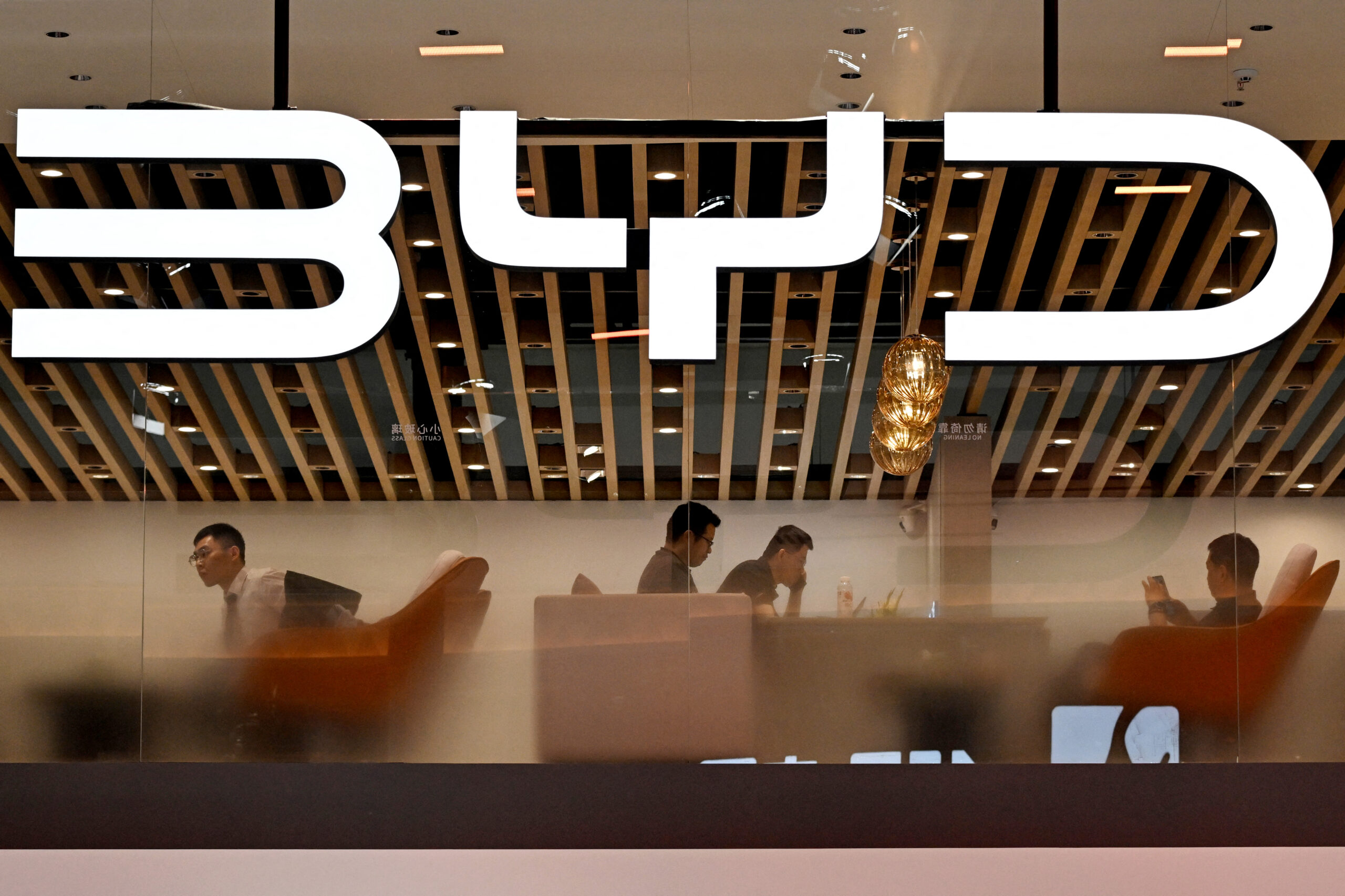
This transformation is primarily occurring against the backdrop of a sharp increase in new car supply. He Zhiqi, Executive Vice President of BYD, expressed concerns about the fierce competition and saturation in the Chinese car market. Data shows that from January to May this year, a total of 542 new car models were introduced domestically, averaging 3.6 new models each day. He pointed out that despite the billion-yuan investments and development cycles of over two years for each new car, the enthusiasm for these models often fades within three months due to the massive competition in new car introductions.
After the post gained widespread attention and was featured in various domestic financial and automotive media outlets such as “Daily Economic News,” it became a representative industry perspective discussing the phenomena of the 2026 Chinese car market’s “disorderly saturation” and “cooling new car launch events.”
In an announcement on July 22, Vice President and Secretary-General of the China Association of Automobile Manufacturers, Fu Bingfeng, stated that by the first half of 2026, the number of new car releases in China had exceeded 500 models. Most car companies are pursuing a strategy of offering a wide range of products, leading to increasingly severe homogenization issues among models.
Expert Li Yanwei of the China Automobile Dealers Association said on August 6 that in the first half of 2026, there were only about 165 truly “all-new models” introduced in the domestic market. The reported 500 to 600 models may include different configurations, facelifts, and derivative versions of the same base model. As a result, not all of the 500 plus models can be considered entirely “new.”
The surge in new car releases has not correspondingly increased market demand. According to the China Passenger Car Association, retail sales of passenger cars in June totaled 1.602 million units, a 23.2% year-on-year decrease. The cumulative retail sales for the first half of this year reached 8.701 million units, down by 20.2% compared to the same period last year. The association noted that the “new car effect” is becoming shorter-term, significantly weakening its overall impact on the market.
Citing data from Autohome, “Daily Economic News” further pointed out that among the several new car models introduced in the first half of this year, less than 30 have monthly sales exceeding 10,000 units.
Despite the increasing number of new models, consumers’ attention for each vehicle has not similarly increased. Notably, the automotive industry is not only facing an increase in the number of new models but also a growing issue of severe product homogenization.
Fu Bingfeng mentioned that there are now over 130 automobile brands in the Chinese market, with most companies adopting a strategy of offering a large variety of products, resulting in substantial homogenization among models and triggering widespread operational anxiety within the industry.
Under these circumstances, the launch events themselves are spiraling into oversaturation: grand stages, celebrity appearances, live streaming, and various technological displays continue to multiply. However, consumers faced with a flood of new car information daily are allocating less attention to individual launch events, limiting their effectiveness.
Furthermore, automotive companies are facing a narrowing profit margin. According to “Caixin,” the sales profit margin of the Chinese automotive industry was 4.1% in 2025, further decreasing to 3.4% in the first five months of 2026.
At the same time, data from the China Association of Automobile Manufacturers shows that domestic automobile sales in the first half of 2026 totaled 9.921 million units, a 21.1% year-on-year decrease.
With market demand under pressure, intensified product homogenization, and shrinking profit margins, car companies are compelled to continuously introduce new models to compete in the market while re-evaluating the necessity of high-cost marketing activities.
Analysis from internet users suggests that the shift from costly offline launch events to simple posters, configuration diagrams, or direct listings reflects car manufacturers’ recalibration of the marketing return on investment. The internal competition within car companies is extending from products to marketing strategies, with the decline of launch events possibly illustrating the shift in the Chinese automotive market from quantity-driven competition to competition based on existing market shares.