
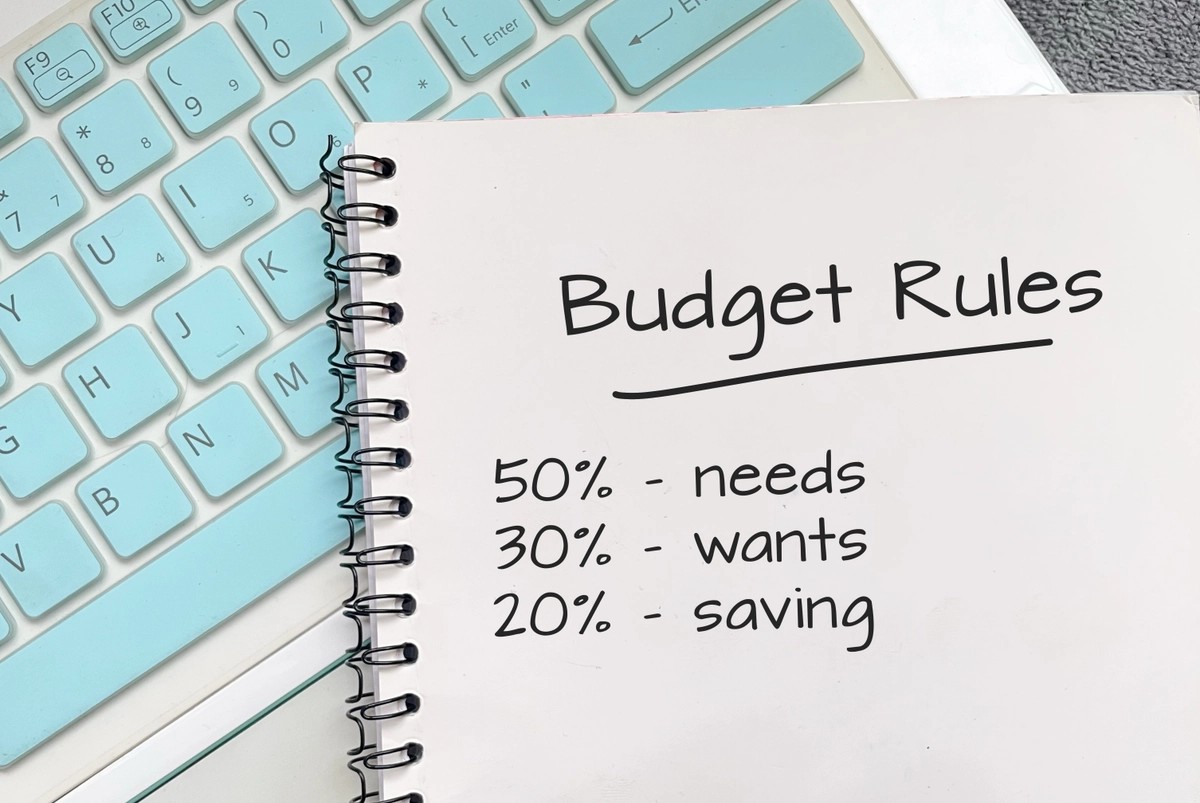
The “50/30/20 Budget Rule” suggests allocating 50% of your income to “needs,” 30% to “wants,” and 20% to savings and debt repayment. But is this method still relevant in 2026?
The answer is yes. As a simple financial framework, it remains practical. However, for many families facing high rent and grocery expenses, the proportion of “needs” has quietly exceeded 50%. This means you may need to adjust the ratios, rather than abandoning this financial concept altogether.
I appreciate this rule because it is one of the few financial recommendations that can be easily remembered without relying on apps or spreadsheets.
Nevertheless, if viewed as an inflexible rule rather than a flexible guideline, it can lead to frustration.
—
**Allocation Ratios:** 50% for needs, 30% for wants, 20% for savings and debt repayment, based on post-tax income.
**Origin:** This rule was popularized by U.S. Senator Elizabeth Warren and her daughter in their book “All Your Worth.”
**Reality in 2026:** Due to low personal savings rates in the U.S., most individuals fall short of the 20% savings target.
**Adjustable Ratios:** In high-cost living areas, adopting ratios like “60/25/15” or “60/20/20” may be more practical while working towards the ideal goal progressively.
**Ideal for Beginners:** It serves as an excellent entry-level financial guideline before transitioning to more detailed budgeting methods.
The essence of this rule lies in categorizing expenses into three types, with the common pitfall being the confusion between “needs” and “wants.”
“Needs” are expenses that are essential and cannot be avoided, such as housing, utilities, groceries, insurance, commuting costs, and minimum debt repayments.
On the other hand, “wants” are items that enhance your life but are ultimately discretionary, like dining out, streaming subscriptions, travel, and buying new gadgets.
Savings encompass emergency funds, retirement savings, and additional debt repayments beyond the minimum.
“Personal finance is 20% head knowledge and 80% behavior. The 50/30/20 plan works because it’s simple enough for people to do.”
— Amelia Warren Tyagi, co-author of “All Your Worth”
Frankly, while the framework itself is sound, the current economic environment has made it challenging to execute.
According to data from the Bureau of Economic Analysis, the national personal savings rate has lingered at low single digits, far below the recommended 20% of this rule.
This gap indicates that for many families, the 20% savings goal is currently an ideal rather than a reality.
The solution lies not in discarding the rule but in adjusting its applicability. If your essential expenses consume 60% of your income due to high living costs, starting with ratios like “60/20/20” or “60/25/15” could be a pragmatic approach, while maintaining the goal of “50/30/20” in the long run.
A budget that you can stick to and maintain a 15% savings rate is far superior to a so-called “perfect” budget that you will eventually abandon.
Suppose your post-tax monthly income is $4,000. Following the strict 50/30/20 allocation, $2,000 would go to needs, $1,200 to wants, and $800 to savings and additional debt repayment.
If just rent alone increases your needs to $2,400, which is 60%, you could reduce wants to $800 (20%) while keeping savings at $800 (20%). The total remains the same, but adjustments have been made based on actual circumstances, allowing you to maintain a healthy savings ratio.
Suggestions:
– Calculate your after-tax income, which is the amount you take home after taxes and deductions.
– List your expenses for one to two months, categorizing them into needs, wants, and savings.
– Compare your actual ratios to the target ratios and note where you exceed or fall short.
– Set up automatic savings deductions first to ensure money is saved before you have a chance to spend it.
– Adjust ratios based on your cost of living and gradually move towards the 50/30/20 ratio over time.
Is the 50/30/20 rule based on total income or net income?
It is based on net income, which is after-tax income, the money you actually bring home.
If your employer already withholds retirement contributions, you can include those amounts in your 20% savings category.
What should I do if my living expenses exceed 50% of my income?
This situation is common in high-cost cities. You can start with a ratio that reflects your actual situation, like 60/20/20, and gradually reduce the percentage of expenses by increasing income or reducing fixed expenses.
Is the 50/30/20 rule better than a “zero-based budget”?
The 50/30/20 rule is simpler and easier to follow, while a zero-based budget allows for more precise control over every dollar. Many people start with 50/30/20 and transition to a zero-based budget when finer control is necessary.
The “50/30/20 Budget Rule” remains relevant in 2026 as a user-friendly framework, provided you view the numbers as flexible targets rather than rigid rules. Categorize expenses into needs, wants, and savings, set up automatic savings mechanisms, and adjust ratios based on actual living costs. The best budget isn’t the most mathematically elegant solution but the one you continue to use six months later.