
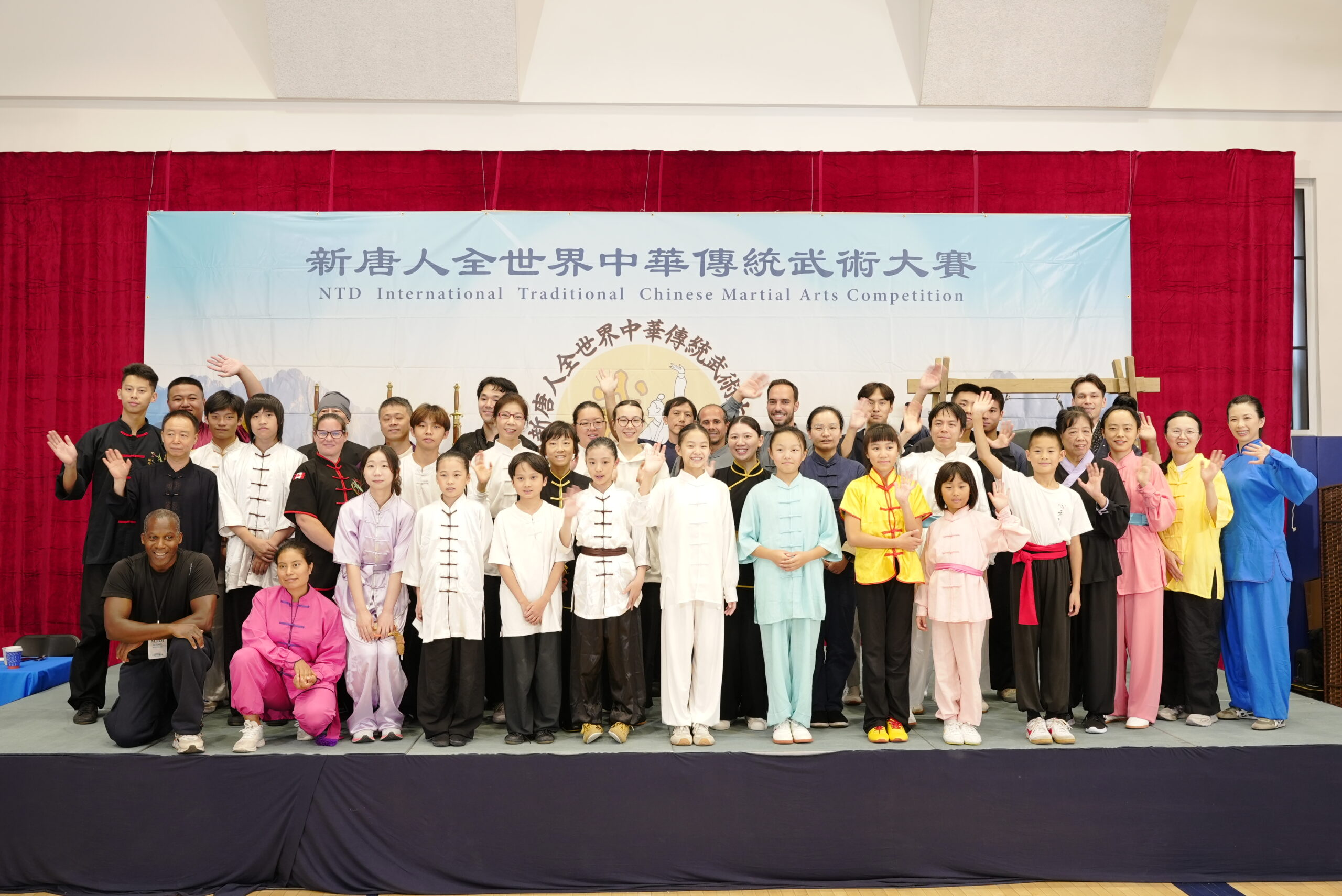
The ninth NTD World Chinese Traditional Martial Arts Competition semifinals were held on August 14 in Manhattan, New York. While the preliminary round showcased a variety of martial arts techniques, the semifinals tested the competitors’ understanding and mastery of their chosen routines, as well as the skill demonstrated in each move. The judges noted a clear trend among the competitors towards revitalizing traditional martial arts, indicating a deeper appreciation for the profound nature of these ancient practices.
As one of the judges, Zeng Jiehong, pointed out, compared to the previous edition, participants have shown significant efforts towards reviving traditional martial arts and have taken a big step forward. He emphasized that the competition standards continue to rise along with the breakthroughs in the competitors’ skills, reflecting an overall improvement in the field.
After a competitive semifinal round, a total of 39 contestants advanced to the finals across different categories:
Youth Fist Form Division: Participants such as Shi Yuxi, Zhang Ruixiang, Xu Xin, Li Hemei, Dong Jieshen, Chen Yinheng, and Han Aini
Women’s Fist Form Division: Including Ding Zhen, Katrina Audet, Lu Wanlun, Li Jiexin, Ellen Opfermann, Gu Kaiwen, Majoa Chaux Rojas, and Wei Lai
Men’s Fist Form Division: Featuring Chris Chappell, Liu Daxing, Xu Tangzhi, Li Jiakang, Li Hongguang, Lin Jingyao, Eike Opfermann, Kawaikiyoshi Kiyoshi, and Ronald Wheeler
Youth Weapons Division: Notable participants such as Lu Dexin, Zhang Xuanqi, Lin Chenhan, Liang Songqi, and Wang Xuandi
Women’s Weapons Division: Including Wu Jiarou, Frances Gui, Wang Pingping, Rachel Ge, and Jin Huan
Men’s Weapons Division: With competitors like Liu Dayan, Jimy Garcia, Wang Xilun, Chen Shaoxuan, and Han Jixiang
According to the competition’s mission, it aims to showcase the essence of traditional Chinese culture, promoting values such as humility, continuous learning, maintaining good intentions, and righteousness as the foundation of martial arts practice. Upholding traditional moral beliefs such as respect for teachers and prioritizing virtue, the competition aims to embody the true spirit of traditional martial arts.
Zeng Jiehong emphasized the importance of “Wude,” or martial morality, in traditional martial arts. He highlighted that traditional martial arts are rooted in cultural values and heritage, with an emphasis on cultivating not just physical techniques but also moral character. Participants are encouraged to embody and uphold Wude principles in their practice to revive and elevate traditional martial arts towards its authentic roots.
Traditional martial arts also emphasize internal cultivation, as Zeng Jiehong explained. Every form has a set of foundational movements that focus on refining basic skills before progressing to more complex routines. By practicing traditional martial arts in a natural, balanced, and patient manner, practitioners can experience physical and mental harmony and longevity in their training.
Taiwanese competitor Chen Shaoxuan expressed his appreciation for the high standards set by the NTD competition, emphasizing the importance of “authenticity” in traditional martial arts. He believed that true martial arts should maintain their original essence rooted in practical combat applications, without succumbing to flashy or exaggerated movements that deviate from their martial origins.
Likewise, Taiwanese competitor Han Jixiang, a practitioner of the “Hanmen Six Paths Qingping Sword,” highlighted the need for expertise in recognizing the essence of traditional martial arts. He emphasized that simplicity in movements can embody the deeper meaning and spirit of martial arts, showcasing the authenticity and essence of traditional practices.
German participant Wei Lai demonstrated the relation between virtue and skill in her practice of Xingyi Quan in the Women’s Fist Form Division. She emphasized that true power in martial arts comes from a combination of physical training and moral cultivation. The integration of Qi, intention, and spirit are essential in martial arts, transcending mere physical strength to embody the essence of traditional practices.
Japanese contestant Kiyoshi Kiyoshi showcased a traditional martial arts form in the semifinals, highlighting the importance of “Wude” in martial arts. He emphasized that traditional martial arts are passed down from masters and should not be altered casually. By maintaining the original teachings and practices, practitioners can preserve the true essence of traditional martial arts.
The finals of the competition are scheduled for August 15, with live streaming available online for public viewing. The event aims to continue promoting the values and spirit of traditional martial arts, allowing participants to showcase their skills and dedication to upholding the rich heritage of these ancient practices.