
The Department of Justice (DOJ) in the United States stated on Thursday that California prison officials failed to protect female inmates from sexual abuse and harassment by staff at two state prisons, with misconduct dating back to 2000 and continuing to the present day.
Assistant Attorney General for Civil Rights, Harmeet Dhillon, and the Chief Assistant U.S. Attorney, Bill Essayli, announced that there are reasonable grounds to believe that the California Department of Corrections and Rehabilitation (CDCR) and two women’s prisons are violating prisoners’ constitutional rights.
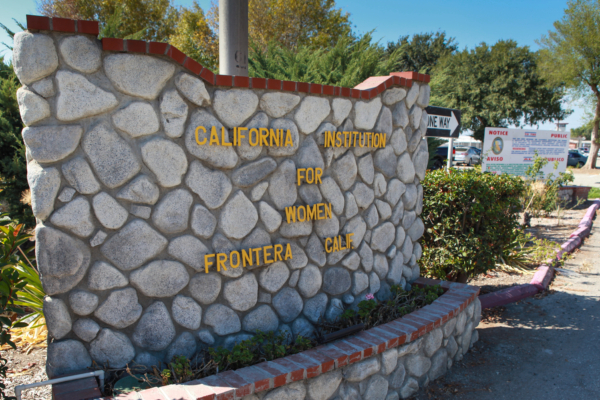
The focus of the investigation was on the Central California Women’s Facility (CCWF) in Chowchilla, Madera County, and the California Institution for Women (CIW) in Chino, San Bernardino County.
The DOJ report highlighted that the Civil Rights Division’s Special Litigation Section conducted an investigation into repeated allegations of sexual assault and similar misconduct by staff members at these two women’s prisons, stating that “a pattern of ongoing sexual misconduct by staff towards prisoners has persisted since 2000, through 2024, and continuing to the present, often accompanied by violence.”
Between January 2023 and June 2025, inmates made at least 375 allegations of sexual misconduct by staff in these two women’s prisons. There have been a total of 320 lawsuits filed against these prisons and the CDCR, mostly initiated by former inmates. The DOJ investigation team focused on reviewing over 350 allegations of sexual misconduct.
According to the Madera County District Attorney’s Office, former corrections officer Greg Rodriguez was convicted of 64 counts of sexual assault in 2025, involving nine female inmates at the Central California Women’s Facility.
The DOJ report also indicated that the CDCR received allegations against Rodriguez as early as 2014, but did not begin investigations until 2022.
CDCR spokesperson Will Matthews stated in an email to the media outlet that the department has a zero-tolerance policy towards sexual abuse and that prisons undergo regular reviews by auditors under the Prison Rape Elimination Act. The latest audits found that both prisons met all 45 standards of the federal act.
Matthews mentioned that the CDCR has increased investigative efforts, installed fixed and body-worn cameras, and improved avenues for inmates and staff to anonymously report misconduct. Some reforms were implemented prior to the DOJ investigation, and internal actions have led to related criminal investigations and prosecutions. The department will collaborate with the DOJ’s recommendations for further actions.
DOJ investigators found long-standing issues such as staff misconduct, inadequate security measures, a dysfunctional confidential reporting system, improper investigation procedures, and insufficient accountability mechanisms. These problems violate the rights of prisoners under the Eighth and Fourteenth Amendments of the U.S. Constitution. The investigation also found that California and these two prisons failed to fully implement the federal Prison Rape Elimination Act.
“Female inmates have constitutional rights to be free from sexual abuse and harassment by prison staff,” Assistant Attorney General Dhillon stated in a release, pointing out that the investigation uncovered the CDCR’s failure to protect female prisoners despite being aware of repeated incidents of sexual abuse and harassment.
The DOJ has instructed California to take remedial actions. If state officials fail to address the issues adequately within 49 days, the Attorney General can file a lawsuit under the Civil Rights of Institutionalized Persons Act. ◇