
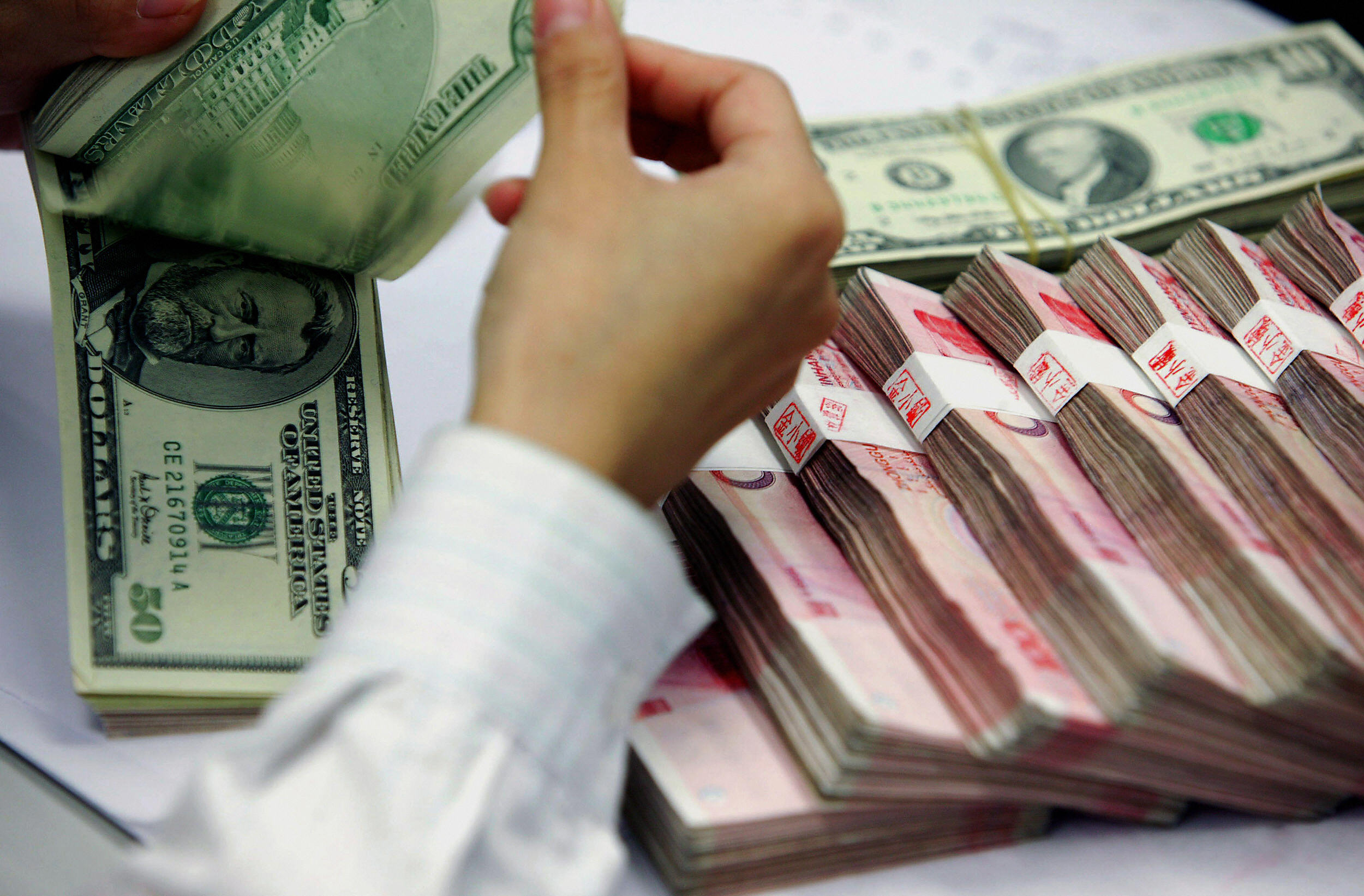
As trade negotiations between China and Europe make progress, the People’s Bank of China (PBOC) and CCTV have issued statements in defense against accusations of undervaluing the renminbi. Prior to this, leaders of Germany and France have expressed strong concerns over the trade imbalance between China and Europe, as well as the valuation of the renminbi, making the exchange rate issue one of the focal points in the economic and trade confrontation between China and Europe.
On October 9th, Maros Sefcovic, the EU Commissioner for Trade and Economic Security, announced on X platform that he had reached a “common understanding” with China’s Minister of Commerce Wang Wentao. The understanding involves reducing Chinese exports of hybrid electric vehicles (HEVs) and plug-in hybrid electric vehicles (PHEVs) to Europe, improving conditions for European companies entering the Chinese market, and further relaxing rare earth export permits.
According to Reuters, the consensus reached by both parties includes a reduction of over half in the export volume of the mentioned vehicles to Europe over the next four years, but the specific implementation methods have not been disclosed yet.
As negotiations between China and Europe make progress, the renminbi exchange rate has become another controversial focus. On October 8th, the PBOC released a more than 5,000-word document on its renminbi exchange rate policy, stating that “China neither needs nor intends to gain a competitive advantage through currency devaluation and has never engaged in competitive devaluation.” The next day, a commentary by “Yuyuan Tan Tian” under CCTV referred to the PBOC document as the official statement of China’s exchange rate policy and mentioned the various factors influencing the renminbi exchange rate.
EU statistics show that in 2025, the EU imported goods from China totaling 559.4 billion euros, while its exports to China amounted to only 199.6 billion euros, resulting in a trade deficit of 359.8 billion euros. Compared to 2024, EU exports to China decreased by 6.5% while imports increased by 6.4%; compared to 2015, EU imports from China have increased by 89%.
According to Reuters, in 2025, China’s trade surplus approached nearly 1.2 trillion US dollars, equivalent to around 6% of its GDP. At a time of weak domestic demand and a sluggish real estate sector, exports have been a crucial support for the Chinese economy. However, the expanding surplus has raised concerns in Europe about industrial competition and trade imbalances.
Before the negotiations between China and Europe, French President Macron criticized China for the trade surplus with Europe, claiming that the trade deficit between the EU and China was about 1 billion euros per day. He stated, “China is taking over our domestic market, including in areas like machine tools and automobiles, they had already done so in the chemical industry, they are destroying our industrial base.”
German Chancellor Merkel pointed the finger at the renminbi exchange rate. In July of this year, she publicly stated that the renminbi may be undervalued by about 25% to 30% and advocated for a dialogue with China on monetary policy. Merkel also mentioned the Plaza Accord reached in 1985 by the United States, Japan, West Germany, France, and the United Kingdom. At the time, the coordination among these five countries led to a depreciation of the US dollar to address international trade imbalances. While Merkel’s proposal does not mean Europe has decided to sign a similar agreement with China, it demonstrates that the renminbi exchange rate has become a topic of discussion in Europe when addressing trade imbalances.
The International Monetary Fund’s (IMF) annual assessment of China released in February this year also involved the issue of renminbi valuation. IMF staff estimated that the renminbi’s real effective exchange rate is undervalued by about 12.1% to 20.7%, with a midpoint of 16.4%.
For the Chinese economy, a renminbi appreciation could increase the foreign currency prices of Chinese goods, weakening the price competitiveness of some export products. For an economy heavily reliant on exports as a crucial growth support amid weak domestic demand, currency adjustments could affect exports, employment, and economic growth.
The PBOC stated that the exchange rate is influenced by multiple factors such as economic growth, monetary policy, financial markets, and geopolitics, and that the trade surplus cannot be directly attributed to the renminbi exchange rate. The PBOC also mentioned that it will submit more foreign exchange-related data to the IMF starting from 2027.
Currently, the renminbi has not achieved full convertibility, and the PBOC influences market expectations through policy tools like the daily central parity rate. The issue of concern is whether the current exchange rate formation mechanism adequately reflects market supply and demand and whether policies restrict renminbi appreciation.
The IMF’s assessment released in December last year pointed out that China’s domestic demand is weak, inflationary pressures persist, exports perform well, but imports are affected by weak demand. The IMF believes that China needs to address insufficient domestic demand and external imbalances, reducing its reliance on export-driven growth.
The PBOC attributed external doubts about the undervaluation of the renminbi to a misinterpretation of IMF assessments, however, the trade deficit faced by the EU has not disappeared. The competitive pressures exerted by Chinese goods in the European market, as well as issues like subsidies, overcapacity, and market access, continue to be points of contention in Sino-European economic and trade negotiations.
On the other hand, the fluctuation of the renminbi presents Beijing with a policy dilemma. While a weaker renminbi can help reduce the foreign currency prices of Chinese goods, supporting exports and economic growth, if depreciation happens too quickly, it could exacerbate market uncertainties about China’s economic prospects and returns on renminbi assets, increasing pressures for capital outflows. The IMF assessment indicates that in the first three quarters of 2025, China’s financial account deficit widened and foreign direct investment inflows were relatively weak.