
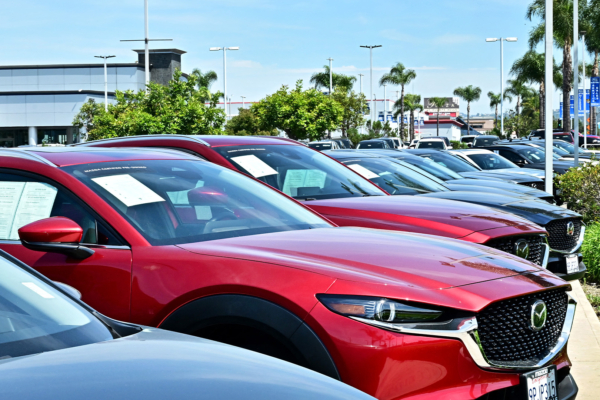
Influenced by high fuel costs and high interest rates, the wholesale prices of used cars in the United States saw their first annual decline since the beginning of 2025.
Cox Automotive announced on Tuesday (October 6) that the “Manheim Used Vehicle Value Index,” which measures the prices dealers pay for used cars at auctions, dropped to 205.9 in September. The adjusted index (considering vehicle mix, mileage, and seasonal differences) decreased 0.6% compared to a year ago and 1.1% from August.
Unadjusted data shows that wholesale prices of used cars dropped 1.2% compared to September 2025 and 1.3% from August of this year, with depreciation accelerating in the third quarter.
The decline in September reversed the trend from the first half of the year, when wholesale prices of used cars saw higher increases than in previous years. In August, the Manheim index was still 0.4% higher than a year ago.
A separate indicator released by Black Book, tracking the wholesale prices of 2- to 6-year-old used cars, showed a more pronounced decrease. The seasonally adjusted “Used Vehicle Retention Index” dropped to 139.7 in September from 144.3 in August, a 3.1% decrease, and was also lower by 3.3% compared to September 2025’s 144.4.
The company predicts that devaluation trends will continue in the fourth quarter due to seasonal pressures and manufacturer incentives impacting used car values. By the end of 2026, the Manheim index is expected to be only 0.2% higher than the same period last year, significantly below the company’s July forecast of a 2% increase and the index’s long-term average annual growth of 2.3%.
The report highlights a shift in market demand towards electric vehicles and smaller, more fuel-efficient models as buyers become more sensitive to fuel costs, leading to poorer performance in the market for large trucks and SUVs.
Cox Automotive stated that diesel vehicles only constitute slightly over 3% of wholesale inventory, but the supply days have risen to 39 days, a 27% increase from a year ago.
In contrast, the situation for electric vehicles is different. Wholesale sales of electric cars through Manheim auctions increased by 22% in the second quarter and by 45% compared to a year ago. Electric car transactions accounted for 4.9% of Manheim’s third quarter volume, reaching a historical high, up from 3.9% in the second quarter.
Retail sales of used electric vehicles hit a historic high of around 124,000 vehicles in the third quarter, an 11.4% increase from a year ago, but still only accounting for approximately 2.8% of total used car retail sales.
Monthly data from Black Book also indicates that larger vehicles are facing greater pressure. Full-size pickups, SUVs, and crossovers had some of the largest price declines in September.
Sports cars were the only vehicle category with prices higher than in August, while luxury and near-luxury vehicles also performed better than the overall market.
The decline in wholesale prices has not yet translated into significant decreases in dealer vehicle prices.
In August, the average listing price for used cars reached $27,239, a 7% increase from a year ago and the highest monthly level since December 2022. Inventory stood at around 2.13 million vehicles, with a 44-day supply.
Affordable vehicles are particularly scarce. In August, there was only a 29-day supply of used cars priced below $15,000, with inventory in that price range down nearly 26% from a year ago.
The cost of borrowing further exacerbated the burden of purchasing a vehicle. Automotive sales platform Edmunds stated that the average interest rate for loans on used cars in the third quarter was 10.6%, with an average monthly payment of $582, higher than the $566 a year ago; the average loan amount also rose to over $30,700.
A record-high proportion of 6.5% of used car buyers had monthly payments of $1,000 or more.
Despite the soft price outlook, Cox Automotive slightly raised its forecast for used car retail sales, from 20.4 million vehicles to 20.5 million vehicles.