
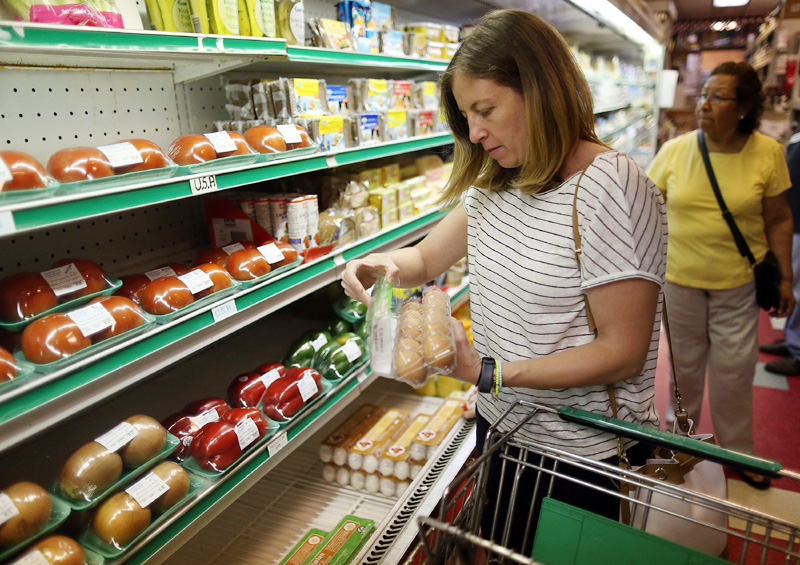
According to a new study, despite the once eye-popping double-digit inflation rate in the United States post-pandemic, grocery prices have not decreased. Personal finance website WalletHub stated that with the rise in weekly food prices across America, residents who allocate the largest proportion of their income to groceries are particularly vulnerable to the impact of rising prices.
WalletHub released a research report on Wednesday (October 7), ranking the top 100 largest cities in the U.S. based on the average percentage of income spent on purchasing groceries annually. The top 15 cities are as follows:
2.60%
In Detroit, food and grocery expenses average 4.03% of household income, the highest in the U.S. Although food prices are generally comparable to other cities and staple items like beef, tuna, and peaches are even priced lower than most national stores, the median household income in Detroit is the lowest in the country ($39,938).
According to statistics from the U.S. Census Bureau, nearly one-third of residents (32.7%) live below the federal poverty line.
WalletHub’s research shows that “residents of Detroit spend a disproportionately high percentage of their income on groceries compared to residents of higher-income cities.”
Although Cleveland has low prices for whole milk, coffee, and peaches, based on the latest government statistics, the city ranks second (3.93%) due to its second-lowest median household income ($40,801).
There are several reasons for the historic growth in grocery spending.
The disruption of the supply chain by the COVID-19 pandemic has raised labor and transportation costs; droughts, hurricanes, and diseases like avian flu have reduced yields; tariffs have increased prices of imported products such as coffee, tomatoes, and chocolate; and ongoing wars in Russia and Ukraine have disrupted the supply of oil and fertilizers.
This year, new conflicts in the Middle East have further accelerated the rise in food prices, making the cost of filling refrigerators, freezers, and food cabinets frustrating for Americans and turning the affordability of food prices into a key issue in the mid-term elections.
Matt Hamory, Global Head of Food & Grocery at consulting firm AlixPartners, said, “I think people are starting to realize, ‘I heard inflation is easing, but prices are not dropping,’ price drops must be deflation, which is very rare.”
Chip Lupo, writer and analyst at Wallethub, said, “Consumers should take full advantage of promotions and coupons, purchase generic brands, buy in bulk to save on expenses; in addition, using credit cards that offer generous rewards for grocery spending and paying the full amount monthly is also a good option.”
Experts say there is evidence that shoppers’ habits are changing, with discount stores like Costco, Walmart, and Aldi taking market share from some of America’s large grocery stores like Kroger and Albertsons.
The Private Label Manufacturers Association stated that consumers are increasingly favoring private label products from supermarkets, pharmacies, and other retailers, with sales reaching a record $282.8 billion last year.
(Text referenced from reporting by “The Hill”)