
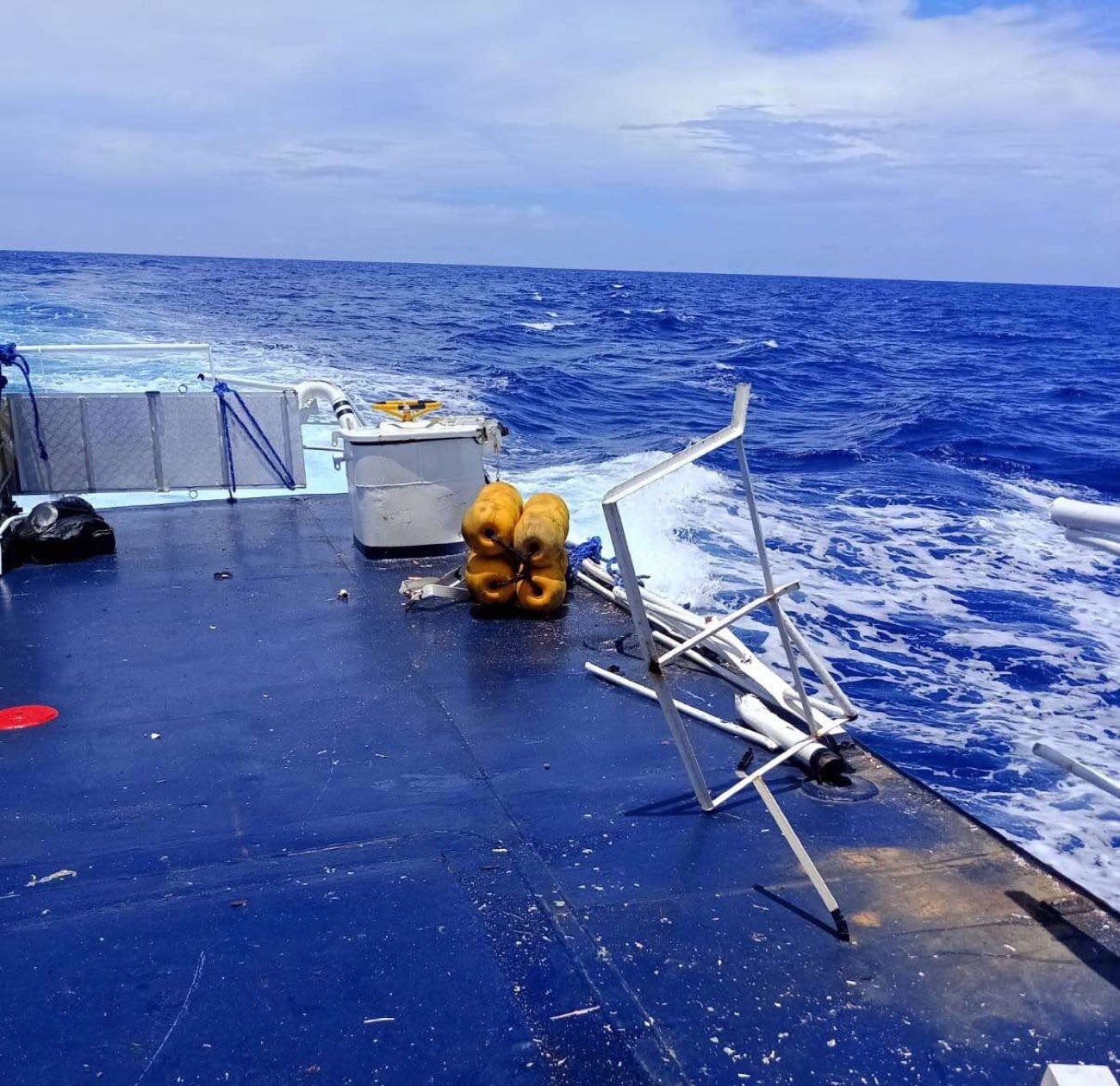
Philippine military sources revealed that the number of warships and coast guard ships dispatched by the Chinese Communist Party (CCP) to the sensitive and critical areas in the South China Sea nearly doubled last month. Over the past weekend, a CCP J-16 fighter jet dangerously approached a Philippine patrol aircraft, sparking protests from the Philippine side.
The military stand-off between the Chinese and Philippine forces continues in both the maritime and aerial domains. The Armed Forces of the Philippines reported that in September, they monitored a total of 101 different Chinese naval and coast guard vessels around four disputed areas, compared to 56 vessels in August and 48 in July.
The latest statistics from the Philippine side indicated that the highest number of CCP vessels were observed near Scarborough Shoal, with 39 different Chinese coast guard ships and naval vessels detected in that area in September.
Additionally, 28 vessels were monitored near Thitu Island (Pag-asa Island), 23 near Second Thomas Shoal (Ayungin Shoal), and 11 near Sabina Shoal.
Spokesperson for the Philippine Armed Forces responsible for West Philippine Sea affairs, Rear Admiral Roy Vincent Trinidad, stated that these numbers indicate that the CCP is engaging in “illegal, coercive, aggressive, and deceptive” activities in the region.
According to the Philippine military, on Saturday (October 3), a Philippine C-208 maritime patrol aircraft encountered two Chinese military aircraft while flying near Scarborough Shoal. One of the J-16 fighter jets repeatedly approached the unarmed Philippine plane, conducting maneuvers in front and behind the aircraft, with the proximity described by the Philippine military as “unsafe”.
The Philippine military stated, “This incident is part of a series of unsafe and provocative actions towards Philippine government vessels and aircraft performing legitimate missions.”
The Philippine aircraft eventually completed its mission and safely returned to base.
On the other hand, Beijing provided a completely different account, stating that the Philippine aircraft had entered the airspace above Scarborough Shoal without permission, prompting China to take “necessary measures” in response.
Scarborough Shoal, located approximately 120 miles (about 220 kilometers) west of Luzon Island in the Philippines, is one of the main conflict zones between China and the Philippines. The territorial sovereignty dispute between the two sides in this area has persisted for many years. Since the standoff began in 2012, China has maintained effective control over the entrance and exit channels to the island, while the Philippines insists that the island is within its exclusive economic zone.
In 2016, an international arbitration tribunal ruled that China’s extensive historical claims in the South China Sea lacked a legal basis, but Beijing refused to accept the decision.