
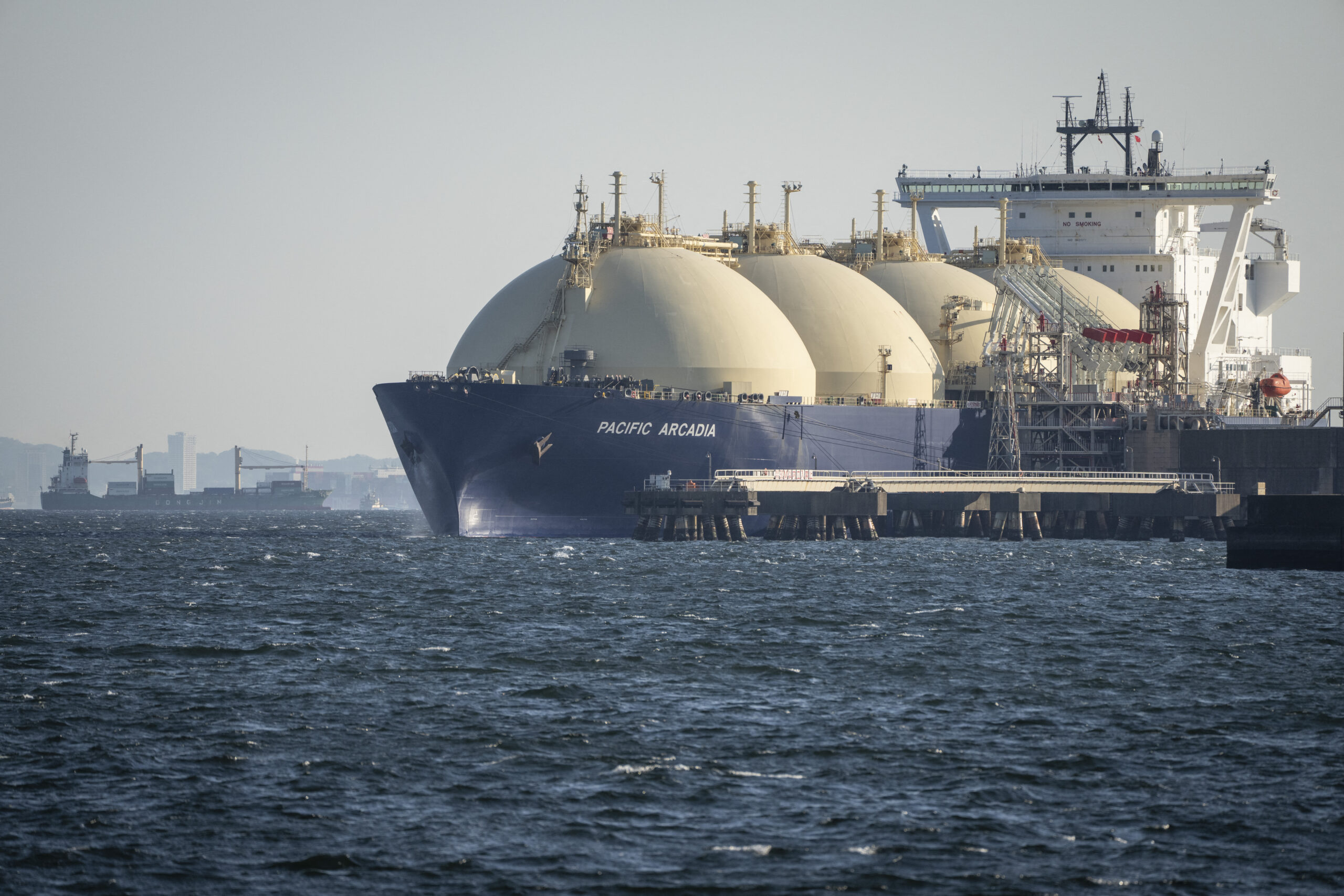
Europe is facing the upcoming winter with the lowest natural gas inventories in years, coupled with ongoing disruptions in liquefied natural gas (LNG) shipments through the Hormuz Strait, leading to an increasingly tight global LNG market. Energy industry executives are warning that if both Europe and Asia experience a harsh winter, buyers in both regions may compete for American LNG, potentially driving spot prices up to $40 per million British thermal units (MMBtu).
According to a report by Reuters on Thursday (September 17), the European Union’s natural gas storage facilities are currently only 67% full, marking the lowest level for the same period in years and significantly below the EU’s target of reaching 80% by December. Norway’s energy company Equinor forecasts that the inventory level may only rise to 75% by November 1.
Cederic Cremers, Chief of Integrated Gas Ventures at Shell, stated, “As it stands, Europe’s natural gas storage levels are reaching historic lows as we approach the end of autumn.”
Unlike during the Ukrainian crisis in 2022, Europe did not significantly replenish its storage this summer. With natural gas prices higher for near-term contracts compared to longer-term contracts, traders have been discouraged from purchasing ahead, paying storage costs for months, and waiting for the winter financial incentive.
On the supply side, pressures persist. The conflict in Iran has disrupted LNG exports from Qatar and the United Arab Emirates through the Hormuz Strait. Shell estimates that the supply losses due to this disruption have reached 36 million metric tons this year.
The Financial Times noted in its analysis on Monday (September 14) that the current volume of LNG shipments through the Hormuz Strait is less than 10% of pre-war levels. LNG vessels are large in size and value, making them vulnerable to attacks with severe consequences, and their transportation is more challenging to restore compared to oil. Market attention is shifting from “when will supply resume” to “could the interruption be long-lasting.”
However, there are buffers in the market, and a repeat of the price surges seen in 2022 is not certain. The Financial Times pointed out that international natural gas prices are currently around $25 per million British thermal units, much lower than the extreme levels of $50 to $75 during the 2022 energy crisis.
The report analyzed that North American LNG supply continues to increase, along with the deployment of wind and solar energy, which help alleviate supply pressures. Japan and South Korea are taking measures to manage natural gas consumption, while China has various alternative sources of natural gas supply.
Meanwhile, the spot price of LNG in Asia has risen from around $10 per million British thermal units before the conflict to nearly $30 now, with high prices beginning to dampen demand.
Simon Flowers, Chairman of energy consultancy company Wood Mackenzie, warned, “If we have a cold winter, the risks are very high because available spare supply is very limited, which will truly test the market.”
He stated that if this winter is colder than usual, LNG prices could rise to $40 per million British thermal units, about one-third higher than the current level near $30 in Asia. Even in a mild winter, prices are likely to remain elevated but not significantly higher than they are now.
Equinor also pointed out that if Europe and Asia both face a cold winter simultaneously and LNG shipments through the Hormuz remain disrupted, European buyers may have to compete with Asian buyers for American supply. However, LNG shipments to North Asia from the US take about 45 days, posing a challenge to Asian buyers wishing to quickly adjust shipments to meet demand.