
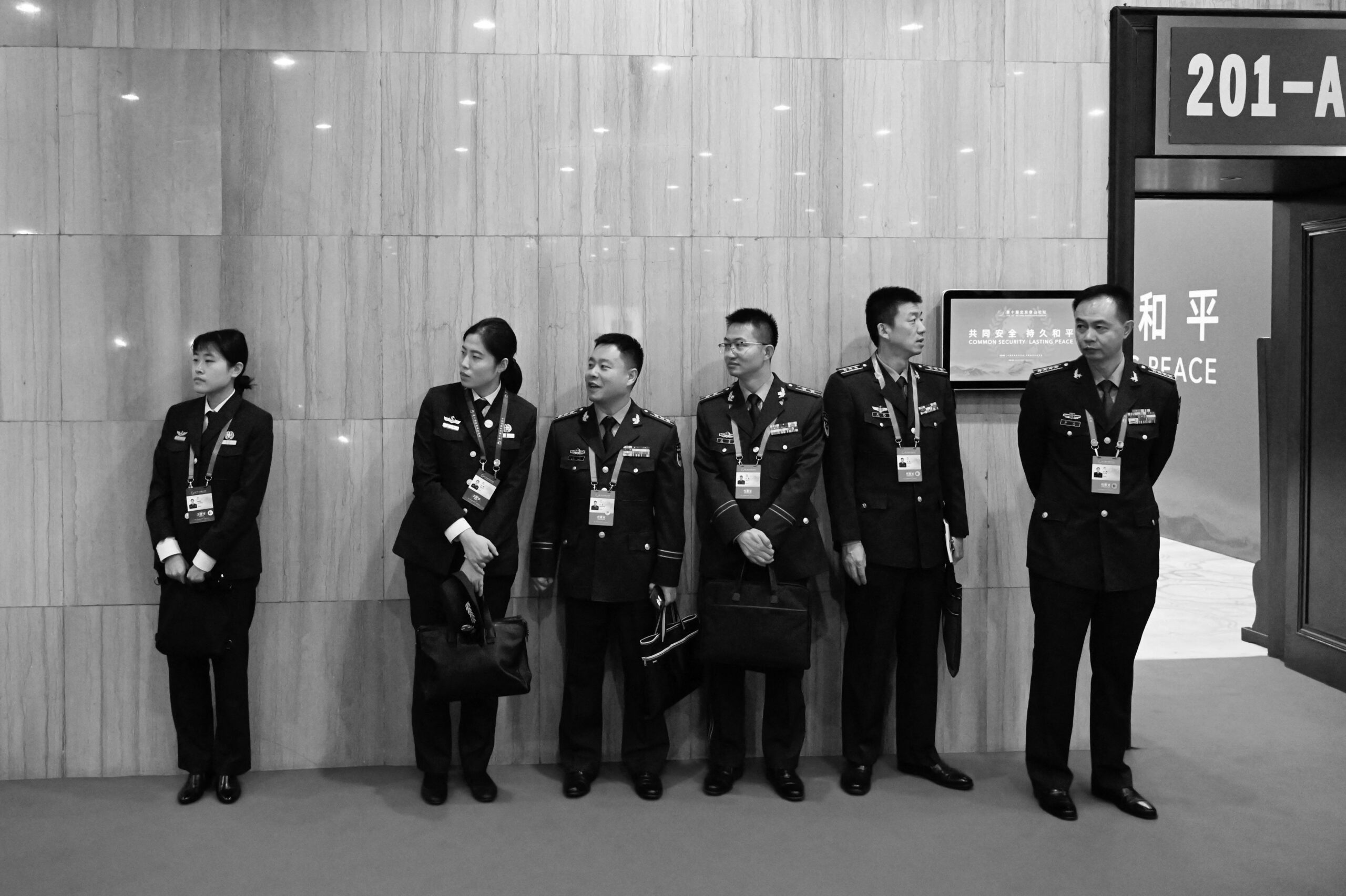
The Chinese Communist Party’s first significant amendment to the National Defense Mobilization Law in 16 years has drawn attention for several reasons. Notably, the permanent institution responsible for the law’s implementation will be established by the National Development and Reform Commission (NDRC) rather than the Ministry of National Defense. The NDRC will handle daily operations as the CCP aims to convert its economic and social strength into defense capabilities. However, data indicates that China’s economy is plagued by deep-rooted issues that are difficult to resolve.
The new version of the National Defense Mobilization Law will officially take effect on October 1st, marking the first major revision since its implementation in 2010 and sparking widespread interest. The law now stipulates that Chinese men aged 18 to 60 and women aged 18 to 55 are generally required to undertake national defense duties. Key sectors such as finance, transportation, telecommunications, energy, healthcare, and food may implement special measures during mobilization.
Observers believe that the core objective of the CCP’s legal revision is to shift resources that were traditionally concentrated on wartime readiness and preparation to a more continuous state. The concept of “civil-military integration” has been officially incorporated into the law to reduce coordination costs in times of war or emergencies. The new law makes no explicit mention of Taiwan but includes “unification” in its legislative purpose.
Drawing lessons from the conflict between Russia and Ukraine, the amended law elevates national defense mobilization from a focus on personnel, materials, and logistics to a comprehensive system for “whole-society, all-domain, rapid transition” in times of peace or war.
The term “requisition” in the law has been replaced with “collection and requisition,” obliging all organizations and individuals to accept the legal obligation to surrender civilian resources. While “requisition” may suggest resources will be returned, “collection” implies a permanent transfer of ownership, including assets of private and foreign entities without any exemption mechanisms, such as funds, water facilities, financial infrastructure, factories, information networks, data, and transportation.
By analyzing China’s recent control measures, it becomes evident that the country is gradually closing its doors while bolstering its financial resources.
Since the Chinese military reform in 2015, the delineation of mobilization responsibilities between the Central Military Commission, the State Council, and local governments has been under review. With the amended law, the “National Defense Mobilization Committee (NDMC) is mandated to organize, guide, and coordinate national defense mobilization efforts nationwide.” Notably, the responsibility falls on the NDRC rather than the Ministry of National Defense.
The NDRC has established a “National Defense Mobilization Comprehensive Department” to manage the daily operations of the NDMC. Given the necessity of mobilizing social resources across various sectors like industry, transportation, and healthcare to transform economic and social strength into defense capabilities, the NDRC, as a powerful agency, plays a crucial coordinating role.
While the financial and economic media often report on fuel price announcements by the NDRC, showcasing its planned economy heritage, the agency holds significant power, often referred to as a “mini-State Council” within China’s hierarchical system.
The author’s close relatives work within the State Council system; they note that the seat arrangement during meetings reveals which departments hold real power. At high-level State Council meetings, core positions belong to members of the executive meetings, including the Premier, Vice Premiers, State Councilors, and the Secretary-General of the State Council. Following these, in terms of hierarchy among the 26 ministries (formerly more in number), diplomatic, public security, and defense ministries hold crucial positions, with the NDRC and the Ministry of Finance following closely. Despite the Ministry of Finance and the People’s Bank of China (PBOC) being department-level entities responsible for the economy and finance, the former looks down on the latter. This is because the Ministry of Finance manages the CCP’s financial resources, while the PBOC is responsible for printing money. The PBOC only received a slight increase in political status in 2024.
Other departments like the Ministry of Transport and the Ministry of Education typically handle specific industry and field management. The NDRC, on the other hand, carries out planning and approval rights: it leads the CCP’s crucial “Five-Year Plans” (such as the 15th Five-Year Plan) and various regional strategies (such as the touted “millennial project” the Xiong’an New Area and the integration of the Yangtze River Delta). All major central government investment projects and foreign investment require approval from the NDRC. The NDRC also typically decides on funding allocations within the central government budget, determining where the money is ultimately spent on infrastructure and railway construction.
Thus, the NDRC’s responsibilities span various sectors, ranging from planning the national economy to overseeing industry, high-tech sectors, energy, infrastructure, environmental protection, social development, and price controls. This involves a wide range of areas covered by most ministries, with other ministries often needing joint approval or advance review by the NDRC when formulating major industry policies.
The recent amendment to the National Defense Mobilization Law establishes a permanent institution under the NDRC to handle daily operations, effectively expanding the NDRC’s powers. The current director of the NDRC, Zheng Zhanjie, widely seen as a trusted ally of CCP leader Xi Jinping and a member of the “Fujian-Jiangxi New Army.”
However, despite the expanding role of the NDRC, the majority of its functions remain economic-focused. This highlights that economic concerns are still the CCP’s primary focus, as economic strength forms the basis for military development.
According to data released by the National Bureau of Statistics of China on September 15, 2026, the Chinese economy shows a clear downward trend and K-shaped differentiation from January to August.
Regarding employment and consumption linked to people’s livelihoods, the national urban survey unemployment rate rose to 5.3% in August, reaching the highest level since March this year. The scale of graduates from colleges and universities this year has reached a record high of 12.7 million, coupled with past graduates, those returning from overseas studies, and the group failing in civil service examinations, intensifying employment market pressures. Employment pressure directly reduces consumer willingness, with total retail sales of social consumer goods growing by only 1.1% from January to August and decelerating to 0.4% in August alone, notably with a sharp 18.5% year-on-year decline in automobile retail sales.
Concerning the macro-economic aspects of finance and lending, the real economy faces severe liquidity constraints, with social financing seeing a smaller year-on-year increase of 2.64 trillion yuan from January to August. In August, new yuan loans amounted to only 60 billion yuan, far below market expectations. Particularly concerning is the continuous contraction in household loans reflecting residents’ reduced willingness to purchase homes and consume, persisting for the sixth month in a row.
In terms of CCP’s investments and real estate connected to its financial reserves, nationwide fixed-asset investment from January to August decreased by 7.2% year-on-year, with a significant dive of 19.9% in real estate development investment and a 13.0% drop in sales of newly built residential property, indicating substantial downward pressure on the secondary housing market.
Though external trade exports remain considerable, the opposition from 19 countries in the G20 financial and central bank meetings against CCP’s dumping of goods signals that the trade surplus may have peaked and is contracting. Overall, China faces significant economic downturn pressures.
An economic crisis also implies a fiscal crisis. In 2025, after reconciling total fiscal expenditure and revenue, the fiscal deficit amounted to ¥5.66 trillion. The projected fiscal deficit for 2026 is expected to reach ¥5.89 trillion, setting a new record high. In the first half of this year, no province or city’s finances were self-sufficient.
Local governments heavily rely on “land transfer fees,” their core revenue source, which has been halved over the past four years, surviving mainly on central fiscal support and national debt financing. This systematic fiscal contraction not only forces state-supported schools and hospitals to tighten their budgets but also signifies that the CCP’s legal amendments are paving the way for potential plundering of national wealth. Consequently, the primary challenge for the CCP is not merely future potential military conflicts but the looming economic crisis.