
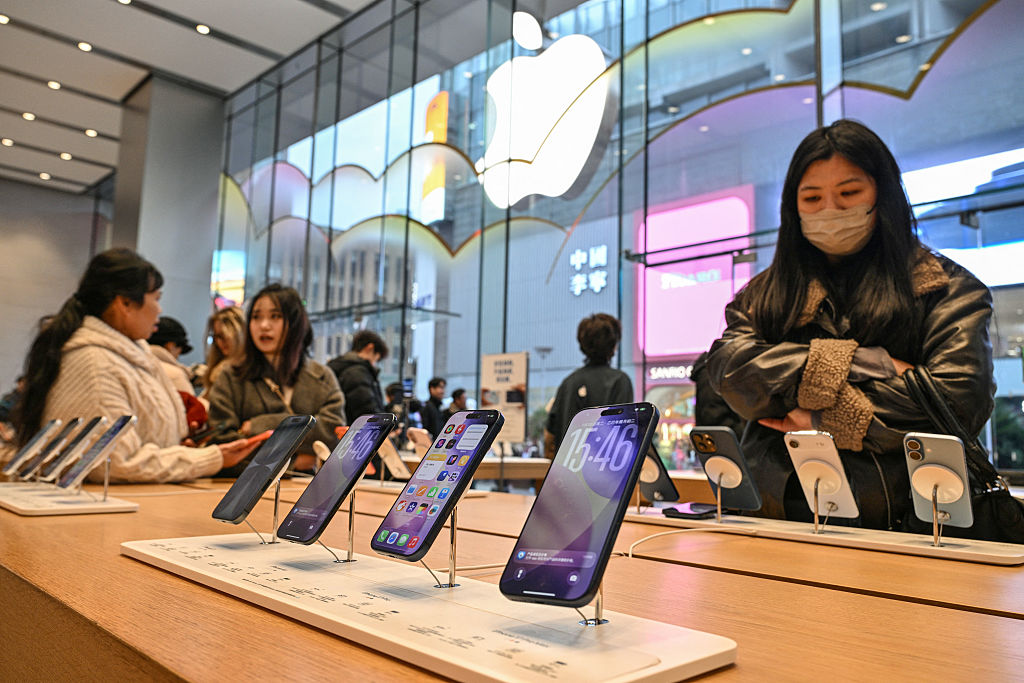
In mainland China, the prices of various mobile phones have increased by 200 to 1000 yuan (Chinese currency) in September. The budget for a phone priced at a thousand yuan can now purchase six basic household appliances. As prices continue to rise, the shipment volume of smartphones in mainland China has been declining for five consecutive quarters, leading consumers to either repair their old phones, buy second-hand ones, or delay upgrading.
On September 15th, “The price of phones can now buy a full set of household appliances” became a trending topic on Weibo. According to the electronic industry media “Electronic Engineering Journal”, based on the prices of basic household appliances, the money spent on buying a 9999 yuan Apple phone is enough to purchase a washing machine, refrigerator, television, air conditioner, air purifier, and range hood, and even have enough left to get an entry-level smartphone.
The prices of mobile phones in mainland China are still on the rise. Starting from September 1st, Huawei, Xiaomi, and Honor have once again adjusted prices, with increases ranging from 200 to 1000 yuan.
For example, the starting price of Xiaomi 17 Pro Max has increased from 6499 yuan to 6999 yuan, a rise of 500 yuan; Xiaomi 17 and Xiaomi 17 Pro have also seen price increases of 300 yuan each. Some Huawei and Honor models have also increased by several hundred yuan.
According to a report by “China Economic Net”, a consumer named Mr. Wang originally planned to wait for the release of new phones in September before purchasing an older model, but to his surprise, the phone he had his eye on went from 7999 yuan to 8999 yuan. He lamented, “This price hike is too much.” He had hoped for a price drop on the older model but instead found it “getting more expensive as he waited”.
The increase in the cost of storage chips is one of the main reasons for the current round of phone price hikes. According to Counterpoint Research, a global market research firm, the prices of storage used in smartphones rose by over 80% in the second quarter of this year compared to the previous quarter.
The research estimated that compared to models of the same grade from last year, the material costs for some mid-range phones have increased by 52% year-on-year, with storage accounting for about 40% of the material costs. Cost pressures have also affected product configurations, with some manufacturers reducing features or slowing down the application of new technologies.
Li Xin, an associate researcher at the School of Electrical Engineering at Southeast University, previously stated that the expansion of AI data centers has increased the demand for processors and memory, leading chip manufacturers to invest more resources in AI-related products. Setting up new factories and stabilizing production capacity takes a long time, so this round of chip price hikes may continue for over a year.
Counterpoint’s analysis suggests that the rising storage costs are prompting manufacturers to reduce the supply of low-priced models and raise prices, further burdening consumers with the cost of phone upgrades.
Amid the rising prices of phones, the shipment volume in the mainland market continues to decline. According to data from the International Data Corporation (IDC), a global IT market research and consulting firm, in the second quarter of this year, the shipment volume of smartphones in mainland China was approximately 66.01 million units, a decrease of 4.3% year-on-year, marking the fifth consecutive quarter of decline.
IDC stated that the rising costs of storage and other components have forced most Android phone manufacturers to increase prices or reduce features, further lowering consumers’ willingness to upgrade. The effect of the phone purchase subsidy introduced by Beijing is weakening and only applies to models priced below 6000 yuan.
As reported by the “Electronic Engineering Journal”, some consumers are choosing to spend a few hundred yuan to replace the battery, continue using their old phones, or switch to cheaper second-hand phones.
In response to these developments, some netizens commented that “A single Apple phone can now buy a full set of household appliances, phones are way too expensive now.” Another netizen mentioned that their salary has not significantly increased, and with limited upgrades in phone features, as long as their old phone is still usable, they won’t replace it.