
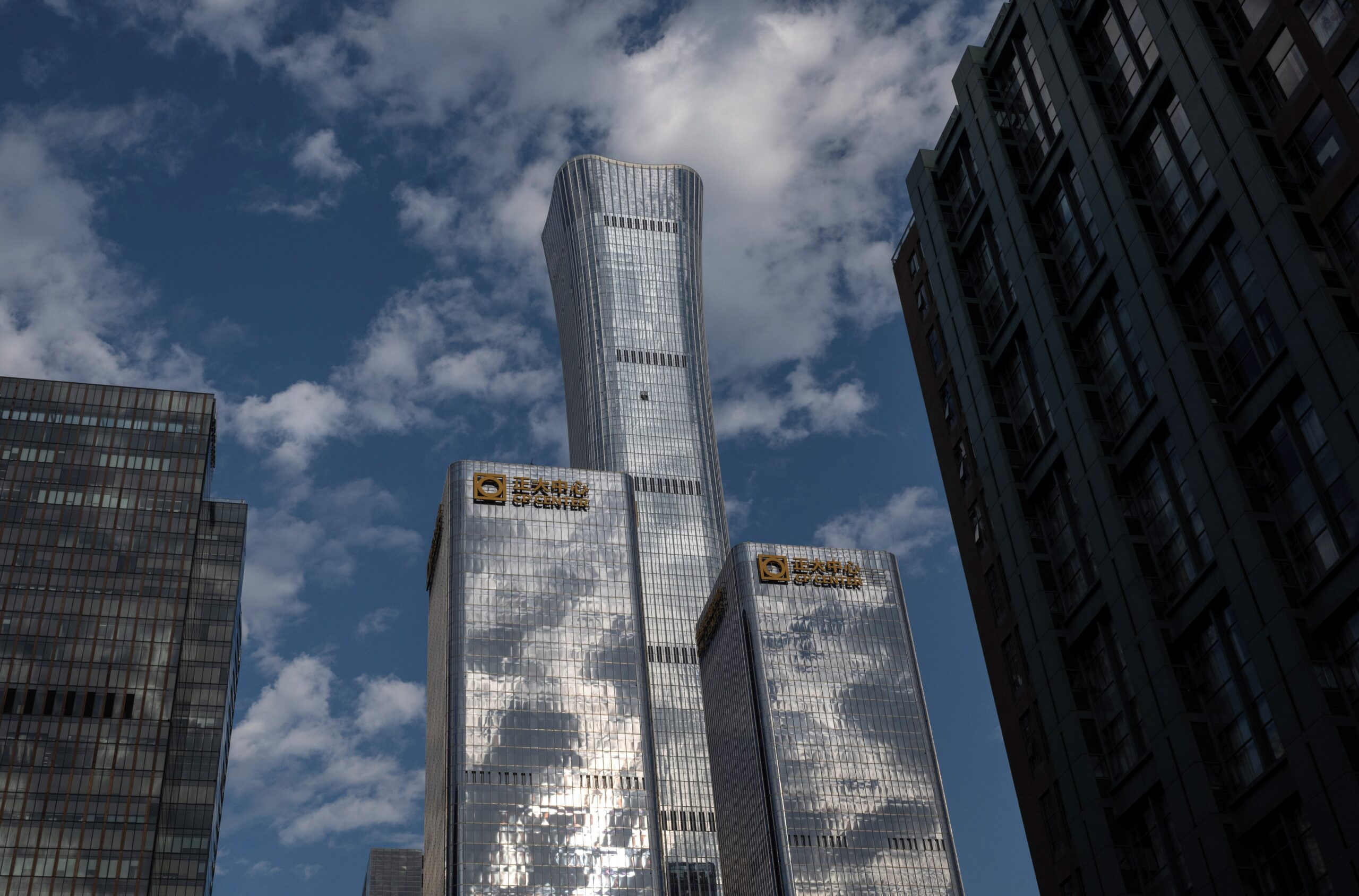
After the incident of the “China Zun” building collision, Beijing has further tightened its control over drones, implementing a citywide ban on flying, storage, and transportation starting from November 15. Additionally, starting from September 20, the no-fly zone in Beijing has expanded to a radius of 300 kilometers, covering the high-ranking Communist Party holiday destination of Beidaihe. Experts believe that this new regulation is a sign of insecurity within the Communist regime and will likely lead to negative consequences.
The revised “Beijing Municipal Regulations on the Management of Unmanned Aerial Vehicles” that was announced on September 11 will officially come into effect on November 15, establishing a comprehensive ban on flying, storing, and transporting drones throughout the city.
The regulations prohibit the possession or storage of drones and their core components within the city. Existing equipment must be relocated outside of Beijing or properly disposed of by November 15.
According to a Beijing media person, many drone hobbyists in the city have been sending their drones to friends’ homes in neighboring Hebei Province. While Hebei is also a no-fly zone, there are no restrictions on storage.
Regarding the storage policy, the media person mentioned that he asked a grassroots police officer about it. The officer mentioned that after inspections in May, they continued to survey the public in June, July, and August, and found drones that had not been turned in. With the new regulations in place, if the drones are not surrendered by November, the police will come directly to confiscate the items.
He also noted that some commercial stores, such as DJI’s many stores in Beijing, are required to transport all drones out of the city.
In addition to the local regulations issued by the Beijing government, starting from September 20, an expanded “Capital No-Fly Zone” will be designated for Beijing and its surrounding areas.
The specifics of this expanded control significantly differ from the past. The no-fly zone, centered at Tiananmen Square in Beijing, expands outward in a circular area with a radius of 300 kilometers, covering not only the entirety of Beijing but also extending east to Qinhuangdao in Hebei (including the Beidaihe area), west to Datong in Shanxi, north to the southern parts of Xilin Gol League in Inner Mongolia, and south to Dezhou in Shandong.
Official reports from the Communist Party claim that the release of the new drone regulations in Beijing is to “adapt to new situations in the management of unmanned aerial vehicles in the capital region and effectively fortify the capital’s security line.”
However, according to Hong Kong’s “Sing Tao Daily,” the authorities have explicitly framed this action as part of counterterrorism measures, indicating concerns about the potential terrorist uses of rotary-wing drones. Particularly, since last year when FPV drones were used in a “Trojan Horse” attack launched into Russia from Ukraine, it has raised alarms within the Chinese Communist Party’s security apparatus.
Observers have noted that this upgraded regulation is likely related to the “China Zun” building collision incident. On the evening of June 26, a light sport aircraft deviated from its flight path, striking the top of the tallest building in Beijing, “China Zun” (CITIC Tower). Official reports stated that the incident resulted in the death of the pilot and injuries to 13 individuals. Questions regarding the breach of the no-fly zone in Beijing and the true circumstances of the pilot’s collision remain unresolved.
Su Zi-yun, a scholar at the National Defense Institute of the Ministry of National Defense of Taiwan, expressed to Dajiyuan that these restrictions are indicators of the Communist regime’s insecurity and are likely indirectly related to the small aircraft collision at “China Zun.” However, more importantly, the signal being sent is that the Communist Party, in order to maintain its political security, has reached a point of extreme vigilance. “In theory, these small drones, even if used with hostile intent, would not cause significant damage. The Communist Party is aiming to prevent any small spark from igniting a larger fire, hence the strictest bans.”
Su Zi-yun further commented that compared with other countries’ drone regulations, each country has specific areas under control, unlike Beijing’s extensive 300-kilometer range. Additionally, other countries’ no-fly orders mainly target medium to large drones, while small recreational drones flying at relatively low altitudes are generally overlooked by authorities. “The exaggerated response by the Communist Party is apparent upon comparison.”
Previously, many viewpoints linked the Communist Party’s fear of U.S. “decapitation” operations. Su Zi-yun believes that Beijing’s revised regulations indicate a lack of trust in the population, extending even to government officials.
Discussing the use of drones by civilians, Su Zi-yun believes there is likely a “top-down directive, bottom-up response” dynamic in play.
He cited examples of drone components being sold on platforms like “Idle Fish” and Taobao, without explicitly listing them as drone parts. Savvy buyers familiar with the models would recognize them and make the purchase.
Su further stated that following the tightening of airspace restrictions since May and the subsequent “China Zun” incident, it seems challenging for the authorities to address bureaucratic complacency. For instance, Xi Jinping’s crackdown within the military caused ripples within the Beijing military and police units, leading to a ripple effect. The subsequent “China Zun” event in June left Xi Jinping suspicious, and it is likely that more significant vulnerabilities will emerge.
Su noted that the Communist Party’s policy of zero tolerance for drones in Beijing, even possibly encouraging citizens to inform on those possessing drone parts, reflects an extreme approach. Even possessing a propeller or a small motor could be deemed illegal, leading to high costs and potential public discontent in achieving absolute compliance.