
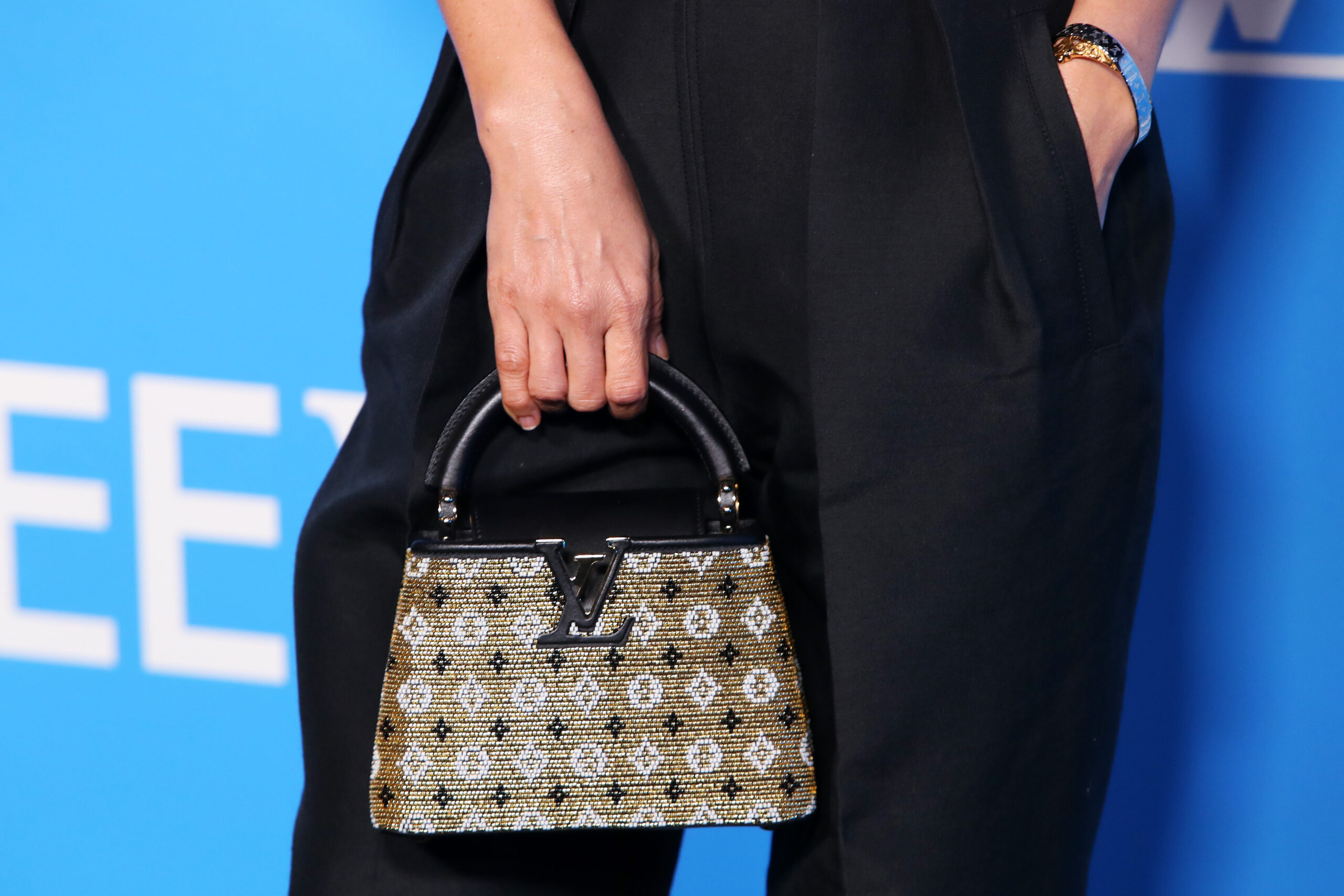
Global luxury brands are facing increasingly serious sales slumps in China. The Chinese government’s actions on taxing overseas wealth have triggered a series of chain reactions from the stock market to casinos, suppressing spending among the wealthiest consumer groups domestically.
According to three research institutions tracking industry data surveyed by Bloomberg, sales of the top 25 luxury brands in China dropped by more than 10% in July. This decline not only exceeded the slowdown in June but also marked a sharp reversal compared to the sales momentum earlier this year.
Insiders revealed to Bloomberg that sales of Louis Vuitton and Dior under LVMH, Gucci, Bottega Veneta, and Balenciaga under Kering SA all experienced double-digit declines; Hermes’ performance also dropped. These institutions pointed out that the growth rates of Chanel and Prada have also significantly slowed.
For global luxury giants, this decline casts uncertainty over the prospects of the Chinese market. As the Chinese economy slows down, leading to cutbacks in spending by the middle class, competition to attract these wealthiest consumer groups becomes more intense.
The current sales downturn comes as the Chinese government takes massive measures to curb capital outflows and collect taxes, including tightening controls on cross-border stock trading and requiring citizens to pay billions in taxes on offshore assets and investment income. These measures have dampened the consumption willingness of the wealthy class in China and may jeopardize the revival of the luxury goods industry – which had been on the rise for less than a year driven by the stock market prosperity fueled by the artificial intelligence boom.
Jacques Roizen, co-founder of Shanghai-based consulting firm Foresight Performance Partners, said: “Merchants are beginning to reflect that in the face of shrinking wealth and high-income consumers facing a stricter tax environment, VIP customer spending behaviors have become more cautious. Confronted with the performance in July, executives of luxury goods companies have valid reasons to worry.”
The new measures rolled out by the Chinese government are considered the largest overhaul of the cross-border financial system in a decade, further restricting channels that affluent families have long used for preservation and diversification of investments. Tighter regulations have caused the MSCI China Index to roll back the previous year’s 28.3% gain; the index has already dropped by 8.9% year-to-date, performing the worst among major global markets. The Hang Seng Index in Hong Kong has also weakened after previous gains.
The downtrend in the market further weakens consumer confidence. As real estate values shrink, the wealthy in China have redirected more funds towards stocks and other financial assets, making them more sensitive to market fluctuations. In the Macau gambling center, casino revenues reported in June and July fell more than expected, as high-rolling gamblers reduced their betting amounts and visit frequency.
“We have observed a certain correlation between the performance of the capital market over the past two years and luxury goods sales,” said Robert Wu, CEO of Shanghai-based market data and research company Baiguan. “In the past, this correlation wasn’t clear because a large amount of wealth was tied up in real estate.”
Stella Lin, a 37-year-old financial product salesperson in Shanghai, said the economic downturn has been enough to make her halt non-essential spending. As her stock investment portfolio (representing over half of her investment capital) has significantly shrunk in value, she has refrained from purchasing any luxury goods in recent months. In the past, she used to indulge in extravagant spending during summer vacations, attending VIP events and buying designer handbags and clothing.
“I feel really bad now because I’ve lost money,” said Lin. She used to spend at least $15,000 annually on luxury goods.
“For the past two months, I haven’t had any desire to shop at high-end stores. As for when I’ll resume spending? It depends on when the stock market can recover,” she said.
The cautious attitude of customers like Lin exacerbates the bleak outlook for the consumer industry in China. Last month, total retail sales of social consumer goods slowed to 0.6%, with significant declines in sales volume, particularly in high-ticket items like jewelry and automobiles, dropping by over 10%.
LVMH group owned by billionaire Bernard Arnault is also dealing with fallout from a trademark dispute with a local Chinese tea brand “Molly Tea.” Despite Louis Vuitton winning a trademark infringement lawsuit regarding its iconic “four-leaf flower” pattern, the incident sparked strong backlash on social media, with accusations of “cultural appropriation” swiftly rising.
Of course, luxury brands also faced challenges in July due to extreme high temperatures, heavy rainfall, and a surge in outbound tourism – factors that led to a decline in foot traffic and sales. Jacques Roizen from Shanghai consulting firm Foresight Performance Partners pointed out that August will be a crucial test of consumer confidence, as the Chinese Qixi Festival, also known as Chinese Valentine’s Day, is typically one of the peak periods for luxury goods consumption, occurring this week.
“If even with these favorable factors driving growth, brands fail to achieve positive growth, I will consider it strong evidence of a genuine slowdown,” he said.