
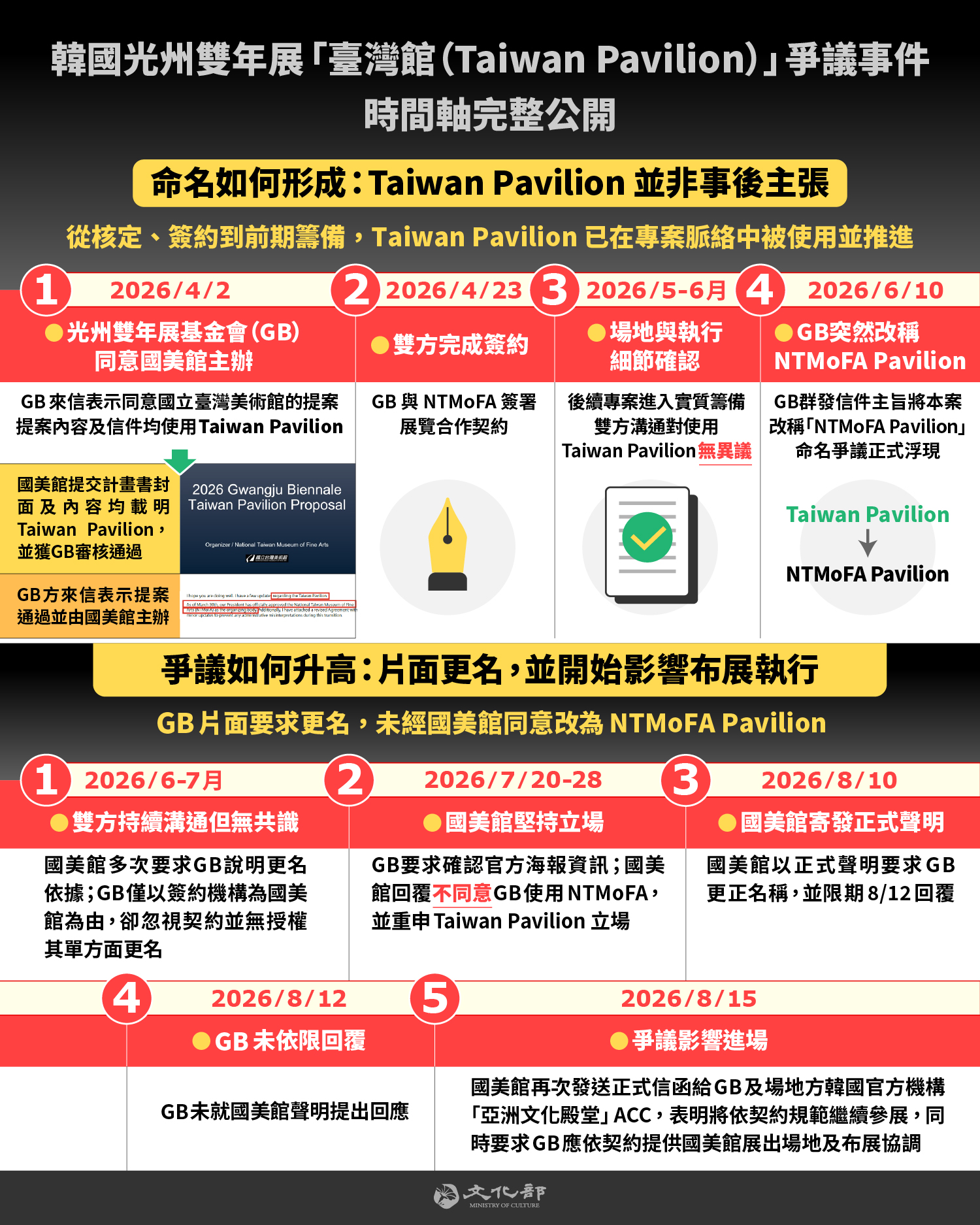
The Gwangju Biennale in South Korea is set to open in September, but a controversy has arisen as the organizing committee unilaterally renamed the “Taiwan Pavilion” to “National Taiwan Museum of Fine Arts (NTMoFA)”. This move has affected the National Taiwan Museum of Fine Arts and the artists preparing their exhibitions under contract.
Minister of Culture of the Republic of China, Lee Yuan, reiterated today that they will continue to protest and will not easily give up. The controversy surrounding the name change has sparked outrage among the participants and stakeholders.
Lee Yuan attended the 2026 Clear Sky Season event conference today and expressed in a media interview that he has discussed the issue with Minister of Foreign Affairs, Joseph Lin, and held a meeting with the participating artists on the 18th. The artists unanimously expressed their refusal to exhibit without the Taiwan Pavilion name. They intend to continue protesting if the name change is not reverted.
The Taiwan Visual Arts Association demanded that the organizing committee publicly explain the decision-making process, legal basis, and sources of pressure for the renaming. The association believes that the Gwangju Biennale should not betray its founding principles based on the democratic spirit and artistic tradition of Gwangju. Any actions that go against the spirit of democratic protest are deemed self-cancellation, as removing Taiwan symbolizes a betrayal of democratic values.
Lee Yuan stressed, “We will not exhibit without the name of the Taiwan Pavilion, and we will not easily give up. We do not rule out taking any necessary measures to protest.”
Minister of Foreign Affairs, Joseph Lin, attended the Foreign Affairs and National Defense Committee of the Legislative Yuan today and stated in the interview that the Ministry of Foreign Affairs and the Ministry of Culture are continuously monitoring and assisting in negotiations with the Gwangju City government and the organizing committee. Due to the involvement of cultural and artistic freedom in this event, as well as the signed agreements, the Ministry of Foreign Affairs will strongly negotiate to ensure compliance with the agreements for the event.
Lin also mentioned that efforts are being made to resolve the situation with assistance from the Ministry of Culture and the artists involved. He emphasized that Gwangju holds significant historical importance in South Korea for movements related to democracy, freedom, and human rights. It is hoped that the organizing committee will not deviate from the original purpose of the Gwangju Biennale.
The Ministry of Culture of the Republic of China reiterated its strong protest on the 17th and affirmed their intention to participate as the “Taiwan Pavilion”. If they do not receive a positive response, they will not hesitate to take all necessary actions to defend their rights and interests. The situation remains tense as parties continue to stand firm on their positions regarding the naming controversy.