
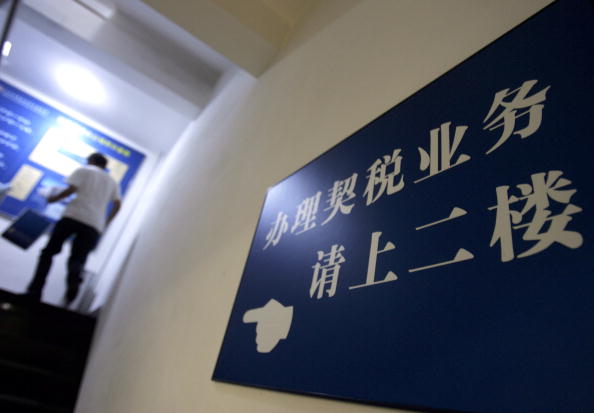
According to reports, Beijing is currently training local tax officials in an attempt to standardize the taxation standards for offshore trusts across different regions, aiming to levy taxes on wealthy individuals in China. Previously, some affluent individuals have reached one-time settlement agreements with provincial tax authorities, but it remains unclear whether these agreements will still apply under the new regulations.
On Saturday, August 15, CNBC reported that several tax consultants indicated that the Chinese National Taxation Bureau is providing training to local tax officials to standardize the technical details of offshore trust taxation.
Lawyers mentioned that the Taxation Bureau has issued draft guidance to some domestic law firms and accounting firms, and plans to hold consultation meetings in the coming weeks.
They anticipate that more draft guidance will be released by the authorities in the future, along with the publication of final documents.
Yuan Cao, a partner at Beijing Yingke Law Firm, explained that trusts established after 2023 are required to pay a 20% tax upon establishment, but there are still uncertainties regarding whether earlier established offshore trusts need to retroactively declare past earnings, how far back this should be traced, and how undistributed earnings should be handled.
Consultants also warned that many trust assets may involve issues related to overseas investment reporting and cross-border fund flows. Even if tax filings have been processed, if the initial transfer of trust funds out of China did not comply with the foreign exchange management regulations of China, they could still face scrutiny and accountability from the foreign exchange authorities.
In July, the Chinese Ministry of Finance issued regulations on foreign investment reporting, linking the tax obligations of family trusts to the settlors. Additionally, the Ministry of Finance explicitly stated that individuals holding foreign passports but with primary income sources from mainland China are still required to fulfill tax obligations.
The Cayman trust established by the family of Chinese real estate tycoon Pan Shiyi may serve as a bellwether. His foreign wife, the settlor and beneficiary of the trust, has received over 10 billion Hong Kong dollars in dividends.
The question of whether Beijing can pursue taxes from wealthy Chinese individuals who have relocated overseas and hold foreign citizenships will be closely watched. The Pan family has a three-month grace period (until October, according to officials) to declare their tax obligations to Beijing.
Windson Li, Joint Head of Tax at DLA Piper in Asia, revealed that the Chinese National Taxation Bureau has been conducting internal training at the provincial, municipal, and county levels to harmonize the interpretation of offshore trust taxation by various tax authorities.
An anonymous Hong Kong lawyer involved in sensitive matters noted that prior to the new regulations from the Ministry of Finance in July, there were significant differences in tax practices among local governments.
Several lawyers also mentioned that some wealthy individuals had already negotiated one-time settlement agreements with provincial tax authorities to resolve their tax burdens. However, it remains unclear whether these agreements will remain valid under the new regulations in Beijing.
Authorities have also tightened restrictions on capital outflows. Earlier this year, Beijing banned three cross-border online brokerage firms from serving mainland users. Local Chinese media reported that cities including Beijing and Hangzhou have begun taxing overseas insurance payments received by Chinese citizens.
In late July, the State Council issued new rules on entry and exit management, which will take effect in September, expanding the scope of citizens prohibited from leaving the country to include violations that may jeopardize national technical and industrial security export control regulations.
Some consultants suggested that this framework could provide local authorities with stronger legal grounds to restrict the exit of individuals they consider tax delinquent.
The tax hike comes at a time when local Chinese finances are under pressure. Land sales have traditionally been a major source of revenue for local governments, but with the downturn in the real estate market, land sales have significantly decreased, leading to financial constraints in localities that are in urgent need of new revenue sources.
Wang Dan, China Regional Director of Eurasia Group, mentioned that as Beijing expands tax coverage on high-income individuals and overseas wealth, and strengthens enforcement efforts, individual income tax will become an increasingly important source of government revenue.
Wang pointed out that in the first half of this year, China’s individual income tax collection amounted to around 900 billion yuan, a 13% year-on-year increase, marking the largest growth among major tax categories in China.
An article from Bloomberg mentioned that the result of taxation may lead wealthy Chinese individuals to actively consider moving abroad and accelerating the severing of all ties with China.