
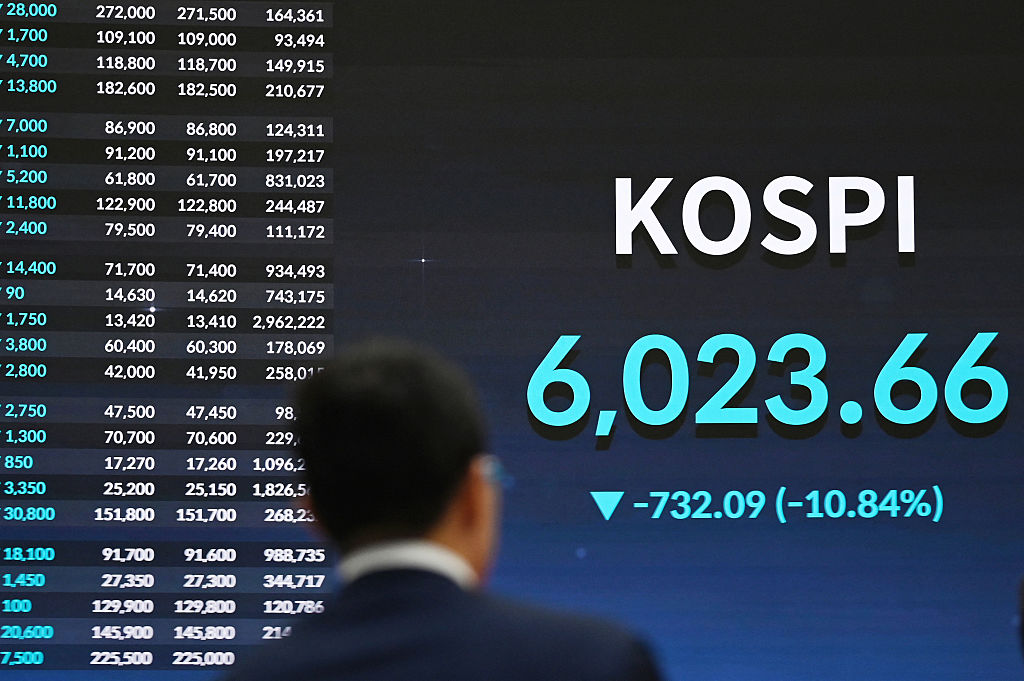
Recently, individual investors in South Korea have been heavily betting on technology stocks, trying to ride the wave of artificial intelligence (AI) to make money. However, due to the excessive speculation on large semiconductor stocks such as Samsung and SK Hynix, as well as related 2x leveraged ETFs, they suffered significant losses after the sharp drop in the stock market in July. Many people faced margin calls and forced liquidation, and the related products triggered circuit breakers multiple times.
Some have invested their housing savings in the stock market, losing about $14,000 in just one month, while others borrowed money to enter the market, facing pressure to meet margin calls.
Banker Yongjoon Kim lost 20 million Korean won (about $14,000) in the stock market in July. This fund was originally intended for buying a house and getting married this year, but the stock market plunge caused his stock value to drop by about 25%.
“This loss has been really painful for me. I have to work very hard to make up for it. But for those who bet heavier and take higher risks, it will probably be even more difficult,” Kim told the BBC. He mentioned that many of his friends are in even worse situations, with some of them almost “betting all their savings” in the market, now finding themselves in a “dead end”.
The technology sector holds a high weight in the South Korean Composite Stock Price Index (KOSPI), which has been on a steady climb this year driven by the AI and semiconductor boom. In mid-June, it briefly surpassed 9,000 points (some records indicate intraday or closing highs close to the 9,100 to 9,300 range), but then dropped significantly in the following weeks, falling to around 5,500 points in July. By mid-August, it had rebounded to around 6,800 to 7,000 points, still far below the June peak.
Wee Khoon Chong, senior market strategist for BNY Mellon Bank in the Asia Pacific region, pointed out that the drop from the June high to the July low was one of the most severe pullbacks in recent years, resembling the setbacks during the COVID-19 pandemic and the 1997 Asian financial crisis.
He analyzed that one of the main factors triggering the sharp decline in global tech stocks and South Korean stocks is the market’s concerns about whether the massive investments in the AI industry will yield corresponding returns. When market sentiment shifts from optimism to doubt, the overvalued semiconductor supply chain is hit the hardest.
This downturn has severely affected many individual investors in South Korea who bought tech stocks over the past year, especially those using leverage and borrowing to invest. When stock prices fall below a certain level, it triggers margin calls, requiring investors to top up collateral or face forced liquidation.
It is estimated that by mid to late July, around 1.2 million individual leveraged accounts in South Korea have been subject to margin calls, affecting approximately 1 in every 30 adults. Among them, about 320,000 to 360,000 accounts have been forcibly liquidated.
Regulatory authorities in South Korea have taken action. For single-stock leverage and inverse ETFs, new regulations require new retail investors to maintain a certain cash deposit (now raised to 30 million Korean won) and complete at least five trading days, totaling at least five hours of simulated trading before entering the market. These measures have gradually taken effect in mid to late August, aiming to help investors better understand the risks of daily resetting leveraged products, especially the compounding erosion effect of volatility.
The firsthand experiences of many individual investors reflect the cost of this frenzy. Youngji Park, an individual investor, nearly went all-in by investing most of his cash in Samsung stocks, at one point holding a stock value of 45 million Korean won, only to face a significant drop later on. He has decided not to cut his losses and is holding onto the stocks, waiting for a rebound, saying, “I feel so foolish to have trusted the South Korean stock market so much. Now I can only consider it as a long-term investment and wait for it to come back.”
Woongsa Kim, another investor, revealed that earlier this year, he used about half of his work bonus to buy SK Hynix stocks. The stock soared to four times his purchase price but later dropped significantly, erasing most of the previous gains. His current stock value is around 300 million Korean won (approximately $216,000), only half of the peak value.
He shared that every time he opens the stock trading app, he thinks about how much he used to earn and how much he has lost now, saying, “When I think about it, I can’t help but shed tears.”
College student Soomin Yi mentioned that due to the “FOMO” (fear of missing out) mentality, she and her friends pooled money to invest in SK Hynix without conducting thorough research. Now, she regrets not cashing out when the stock price hit 3 million Korean won per share (about $2,160) in June, instead betting that it would rise further to 5 million Korean won (around $3,600).
The high participation of individual investors in the South Korean stock market, combined with the rapid growth of single-stock leverage products since their introduction in late May, magnified both the rise and fall of this AI semiconductor trend. Foreign investors heavily sold off semiconductor stocks in July, and individual investors initially absorbed the selling pressure. However, with margin calls and forced liquidation becoming prevalent, the selling pressure further intensified.
The market has recently seen a technical rebound, with the index rising significantly from its low point in July, but the losses of many leveraged investors have already been locked in. The tightening measures by regulatory authorities show their efforts to mitigate the impact of such high-volatility products on individual investors and market stability.
This event serves as a reminder to investors that concentrating bets and high leverage during a trend reversal can lead to far greater pain than expected. In the long run, diversifying risks, understanding product characteristics, and avoiding investing life necessities in high-volatility assets remain the most fundamental disciplines.