
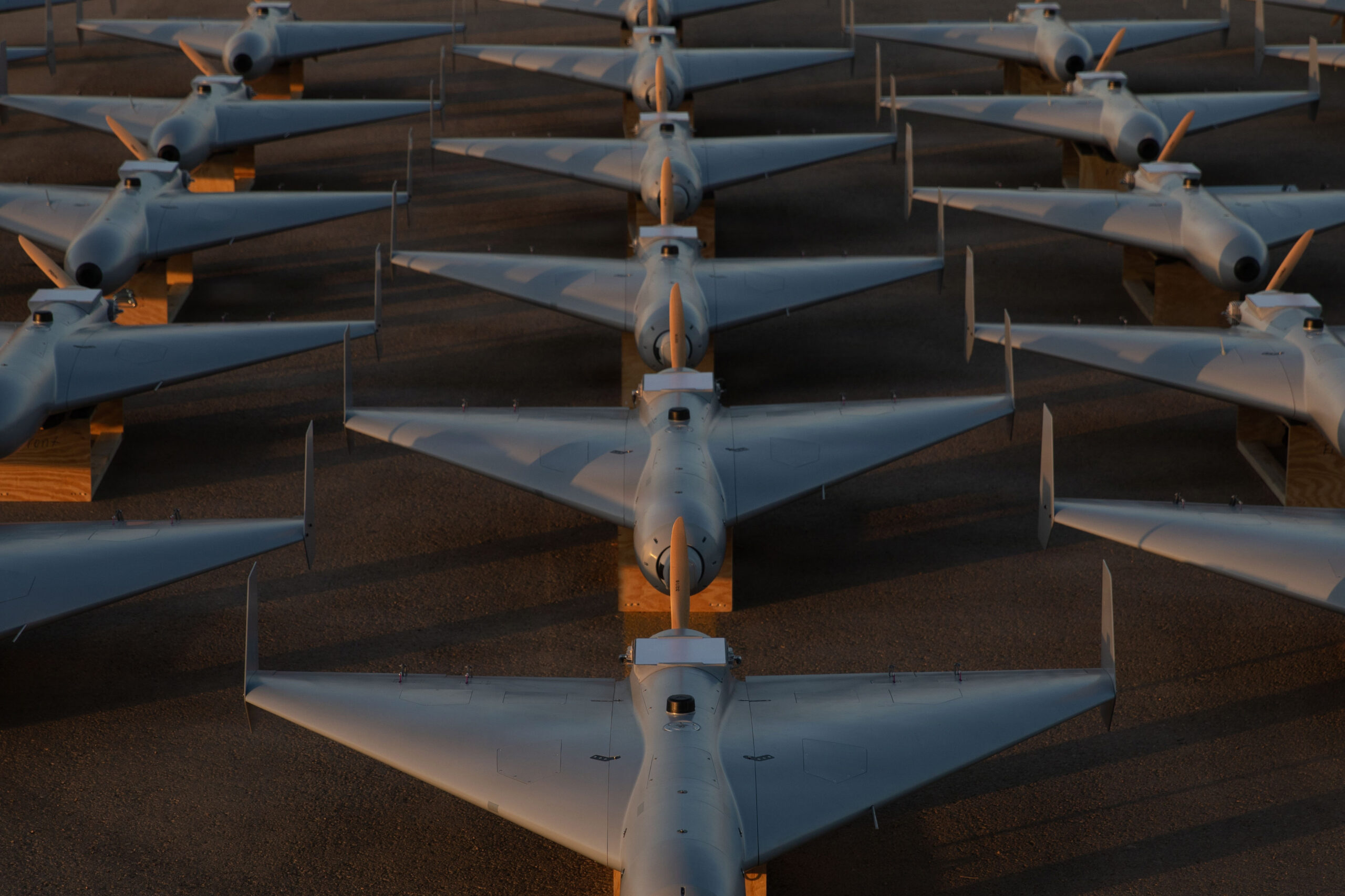
Unmanned drones are rapidly changing the way modern warfare is conducted. The US Central Command (CENTCOM) announced on Thursday, August 13, the establishment of Task Force Falcon Strike, the first large-scale, multinational, multi-domain attack drone task force of the US military. This task force plans to integrate air, surface, and underwater unmanned systems and operate jointly with Middle Eastern regional partners to counter threats from Iran and other adversaries.
According to CENTCOM, the US is organizing a multinational drone force and has begun consultations and formal invitations with regional partner countries, although the specific countries joining have not been officially disclosed.
This announcement comes amidst the ongoing conflict between the US and Iran. Since the end of February, Iran has been carrying out missile and drone attacks on US and allied facilities in the Middle East as part of Operation Epic Fury. The US military and media reports have confirmed at least 18 US military personnel deaths and hundreds of injuries in the conflict so far.
As per CENTCOM’s plan, Task Force Falcon Strike will utilize air, surface, and underwater attack drones and operate jointly with military support personnel from regional allies and partners to expand the deterrent capabilities of attack drone systems across the entire Middle East region, forming a unified multi-domain, multinational deterrence force.
These types of attack drones are often referred to as “suicidal drones” or “Kamikaze drones,” known for their relatively low cost, long-distance flight capabilities, and the ability to directly impact and explode on targets. Mass deploying such weapons could lead to saturation attacks at a lower cost compared to traditional expensive precision munitions.
Brad Cooper, the Commander of CENTCOM responsible for overseeing US military operations in the Middle East, stated that, “Given the significant innovations of our regional allies and partners, Task Force Falcon Strike aims to build upon the successful experience of Task Force Scorpion Strike. By integrating and deploying new capabilities with the US military and regional allies in the region, collective strength will be greatly enhanced.”
Task Force Falcon Strike will be led by personnel from the US Special Operations Command Central (SOCCENT) who were previously involved in leading Task Force Scorpion Strike. SOCCENT is a subordinate command under the US Special Operations Command responsible for special operations missions in the CENTCOM area of responsibility, including the Middle East region.
Task Force Falcon Strike is not a sudden emergence of a US drone program but is built upon the experience gained from Task Force Scorpion Strike.
CENTCOM announced the establishment of Task Force Scorpion Strike on December 3, 2025, which was then hailed as the first squadron of the US deployed in the Middle East specifically using single-direction attack drones. One of its core equipments was the Low-cost Unmanned Combat Attack System (LUCAS).
LUCAS, a US-manufactured single-direction attack drone, was designed based on Iran’s Shahed-136 drone. The US developed this system after reverse-engineering captured Iranian drones. According to CENTCOM, LUCAS can operate autonomously and can be launched through catapults, rocket boosters, or vehicle methods.
On December 16, 2025, the US Navy launched a LUCAS drone at sea for the first time. The drones under Task Force Scorpion Strike were launched from the deck of the combat ship USS Santa Barbara, marking the US Navy’s inaugural use of single-direction attack drones at sea.
By February 28, 2026, the US initiated Operation Epic Fury against Iran, with Task Force Scorpion Strike employing LUCAS drones in combat for the first time. CENTCOM stated that the task force initially used low-cost single-direction attack drones to target Iranian objectives.
In June this year, the US deployed its first Corsair unmanned surface vehicle to the Strait of Hormuz for a real rescue operation.
In July, Task Force Scorpion Strike launched three suicide drones from the Bandar Abbas Naval Base in Iran, successfully targeting Iranian submarines and maintenance facilities.
The accelerated development of unmanned systems by the US military is closely related to the trends observed in recent conflicts.
The Russo-Ukrainian War has demonstrated that drones have evolved from mere reconnaissance tools on the battlefield to becoming crucial platforms for attack, reconnaissance, electronic warfare, and logistics support. Ukraine’s use of drones in the conflict with Russia was decisive, successfully destroying several large Russian logistical centers, refineries, military facilities, and severely damaging Russian armored units and their “Shadow Fleet.”
Ukraine has started sharing its rapidly developed drone and anti-drone technology and relevant experience acquired from prolonged combat with other countries.
On July 27, during an interview with American influencer Laura Loomer at the Mariinsky Palace in Kyiv, Ukrainian President Zelensky revealed that the US and Ukraine are progressing in drone production cooperation, planning to establish a large drone production facility in the US.
Zelensky emphasized that Ukraine possesses a vast amount of battlefield-proven drone technology and operational experience, while the US has robust manufacturing capabilities. He believed that leveraging the advantages of both sides could lead to mutually beneficial cooperation. Reports indicate that this cooperation is seen as a critical direction in the recent defense collaboration between the two countries.
Apart from the US, Ukraine is also establishing drone and defense industry cooperation with other countries through the “Drone Deal” program.
During the NATO summit in Ankara on July 7, Zelensky signed new drone cooperation agreements with Denmark, Estonia, and the Netherlands, making a total of nine such “Drone Deal” agreements for Ukraine. The collaboration involves drone production, technology development, defense industry cooperation, cybersecurity, and experience sharing.
The agreement with Estonia aims to strengthen cooperation in drones, technology development, and defense industry, while the Netherlands pledged to deepen cooperation in defense industry, military technology, cybersecurity, and drones.
In fact, Ukraine has been actively exporting its anti-drone experience to Gulf states. In March, Zelensky visited Saudi Arabia, the UAE, Qatar, and Jordan, discussing how to utilize Ukraine’s experience in countering Russian drone attacks to help Gulf countries enhance their air defense and anti-drone capabilities.
From Ukraine to the Middle East battlefield, the military development direction of the US, Ukraine, and other countries is demonstrating a similar trend: unmanned systems are no longer just auxiliary tools for traditional manned combat platforms but are becoming core combat capabilities.
The establishment of Task Force Falcon Strike by the US military is particularly noteworthy in that it seeks to integrate air, surface, and underwater unmanned systems into the same multinational force.
If this plan is fully deployed, it could signify a significant operational mode for the US to address adversaries like Iran and others equipped with large-scale, low-cost drone capabilities in the future.