
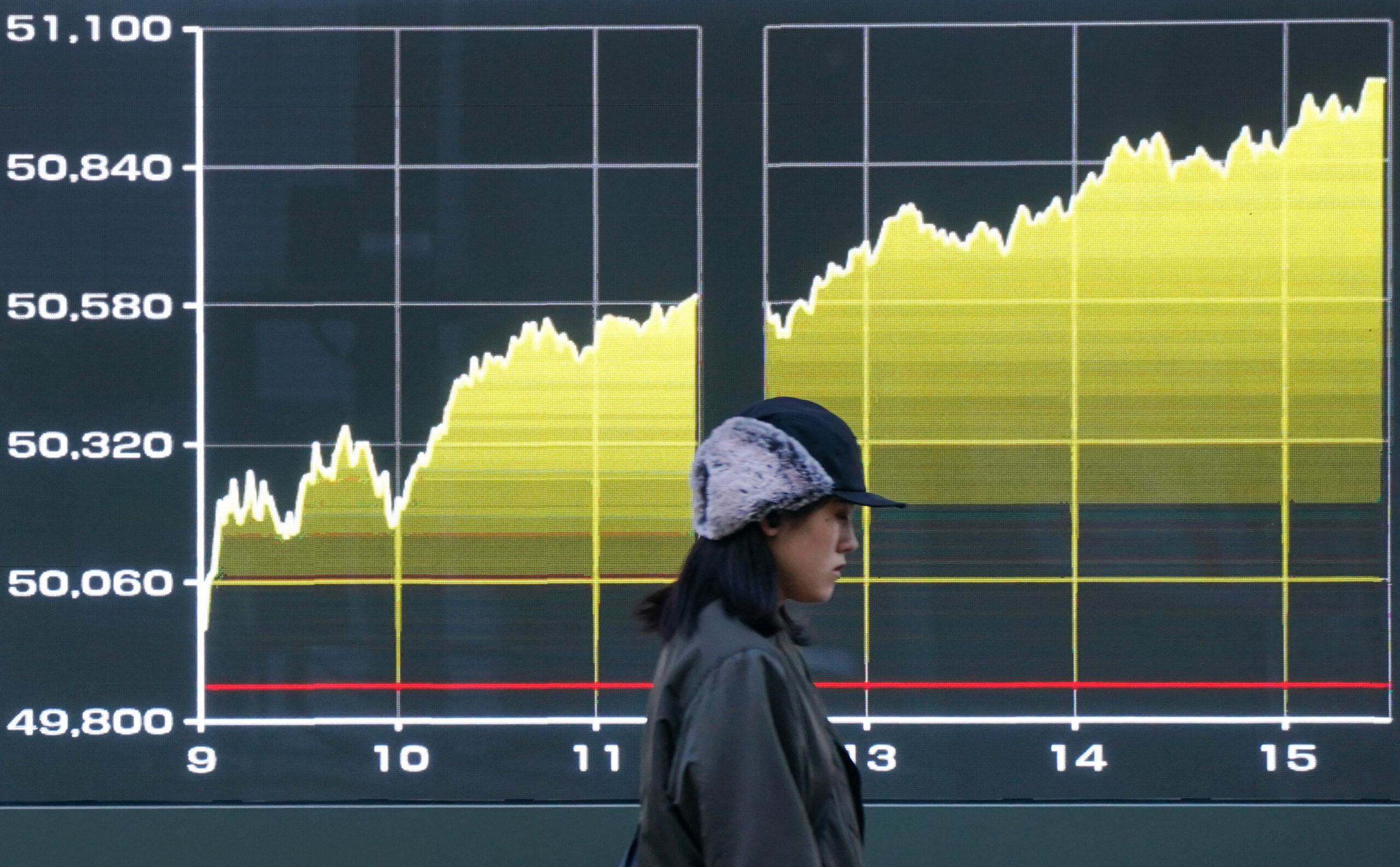
Benefiting from the mild inflation data in the United States, the market’s expectation of a recent rate hike by the Federal Reserve (Fed) has significantly cooled, driving Asian stock markets to close in the green on August 14th (Friday), marking the best weekly performance in nearly two months. However, the stalled negotiations for a ceasefire in the Middle East remain a potential variable constraining market sentiments.
The inflation report released this week in the United States showed that price pressures remain under control, further reducing the probability of a rate hike by the Federal Reserve next month. According to the CME FedWatch tool, traders currently estimate the likelihood of a rate hike next month has dropped from 55% a week ago to 35%. This expectation not only boosted U.S. Treasury bonds (although the performance of the 30-year bonds auction was subdued, exerting some pressure), but also injected confidence into the stock market.
In terms of the Asian markets, the MSCI Asia Pacific (excluding Japan) index rose by 0.28%, with a weekly gain of 2.7%, marking the strongest performance since mid-June. The Nikkei index in Japan showed even more impressive performance, rising by 1.5%, with a weekly gain of over 5%.
On the geopolitical front, the United States has indicated an intention to increase economic pressure on Iran, including expanding maritime blockades. In response to this news, Brent crude oil futures stabilized at $87.03 per barrel after a decline on Thursday, with the potential to achieve a 4% weekly gain, ending two weeks of consecutive declines.
It is noteworthy that the market currently seems to selectively ignore the stagnation of the conflicts in the Middle East, focusing funds on broad AI themes and global monetary policy prospects. In response to this phenomenon, institutional analysts have raised specific risk warnings:
According to Reuters, Charu Chanana, Chief Investment Strategist at Saxo Bank, pointed out that due to the repricing of the Fed’s rate hike risk and softening oil prices, the market’s risk appetite has temporarily been maintained. However, she emphasized, “This is still a market being driven by news headlines rather than a pure return to risk appetite. If the situation in the Middle East or the Hormuz Strait lacks clarity and oil prices surge again, it will quickly reignite market concerns about inflation and Fed policy.”
John Sidawi, Senior Portfolio Manager of Fixed Income at Federated Hermes, highlighted the anomaly in the market in recent months as the disconnect between “geopolitical uncertainty” and “asset price volatility.” He stated, “The market currently seems willing to tolerate a high level of uncertainty without demanding a higher risk premium. But this balance is unlikely to last. Any substantial escalation of conflicts in the future, or the emergence of clear solutions, could force non-market participants to take a stand, leading to market volatility much more significant than current pricing suggests.”
In the forex market, the Japanese yen to U.S. dollar exchange rate reached 159.40, continuing to hover near the crucial level of 160 where traders believe Tokyo authorities may intervene once again. Previously, a joint intervention by the U.S. and Japan at the end of July failed to effectively stabilize the yen’s trend.
Traders have already priced in the expectation of a rate hike by the Bank of Japan (BOJ) next month. However, the potential risk lies in the event that the BOJ’s hawkish stance falls short of expectations, investors may be greatly disappointed after the September meeting. Padhraic Garvey, Global Head of Rates and Debt Strategy at ING, bluntly stated that the weakness in the yen stems from the “extremely cautious stance of the Bank of Japan and excessively low policy rates,” suggesting that raising rates to relieve pressure is a necessary option, and the sooner, the better.
In the precious metals market, gold fell by 0.8% to $4,313 per ounce. The main reason was that after gold prices hit a high not seen since early June in the previous trading session, traders opted to take profits as expectations of a rate hike faded.