
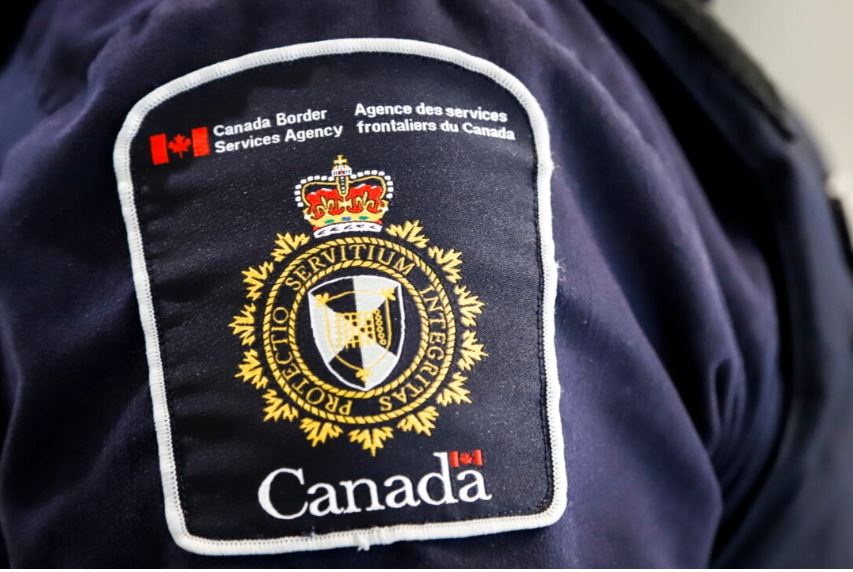
On August 12, 2026, officials from the Canada Border Services Agency (CBSA) conducted a surprise raid at an international student protest site in Calgary, Alberta, checking the immigration documents of some participants and requiring those without valid status to report to the immigration office.
According to Immigration News Canada, on August 12th, CBSA officials suddenly appeared at a demonstration site in northeast Calgary. Over 1000 international graduates had been protesting continuously for nearly two weeks, with the majority being students from the Indian state of Punjab. The reason for the protest was the rejection of their Post-Graduation Work Permit (PGWP) applications.
The report stated that this action marked the first time in modern Canadian history that federal border enforcement officers directly went to an ongoing protest site to conduct immigration status compliance checks on participants.
The protest, which has been ongoing for several weeks, has escalated from the PGWP dispute to issues of legal status and immigration enforcement.
In late June 2026, the Immigration, Refugees, and Citizenship Canada (IRCC) issued rejection letters for work applications from graduates of non-credit continuing education programs.
The rejection letters indicated that if the applicant’s program was classified as non-credit, they did not meet the eligibility criteria for Post-Graduation Work Permits as per Regulation R205(c)(ii).
On June 24, 2026, IRCC updated its PGWP eligibility webpage, clearly stating that except for certain flight school programs, non-credit programs are not eligible for PGWPs. The department clarified that it was an explanation of existing rules, not a new policy change.
CBSA is a federal agency responsible for enforcing immigration laws, investigating potential violations, and carrying out deportations within Canada. Under Canadian immigration law, there are three types of removal orders: departure orders, exclusion orders, and deportation orders.
– Departure Orders: Require individuals to leave Canada within 30 days and confirm their departure with CBSA.
– Exclusion Orders: Prohibit reentry to Canada for one year; if issued due to misrepresentation, entry is prohibited for five years.
– Deportation Orders: Permanently bar individuals from returning to Canada unless authorized in writing.
For graduates who have received notices of PGWP rejection, as their temporary statuses expire and with the slowdown in the number of express entry draw selections in the latter half of 2026, their options are narrowing. These students have 15 days after receiving the rejection notice to apply for judicial review from the Federal Court. Immigration experts advise that while seeking legal remedies, graduates need to maintain valid immigration status.
Those who are 180 days away from completing their studies may also be eligible to submit new Post-Graduation Work Permit applications, although potential issues with program classification may yield similar results.
Currently, there is no indication that CBSA conducted large-scale arrests or immediate deportations on-site. However, students who have lost legal status will face further immigration enforcement procedures.