
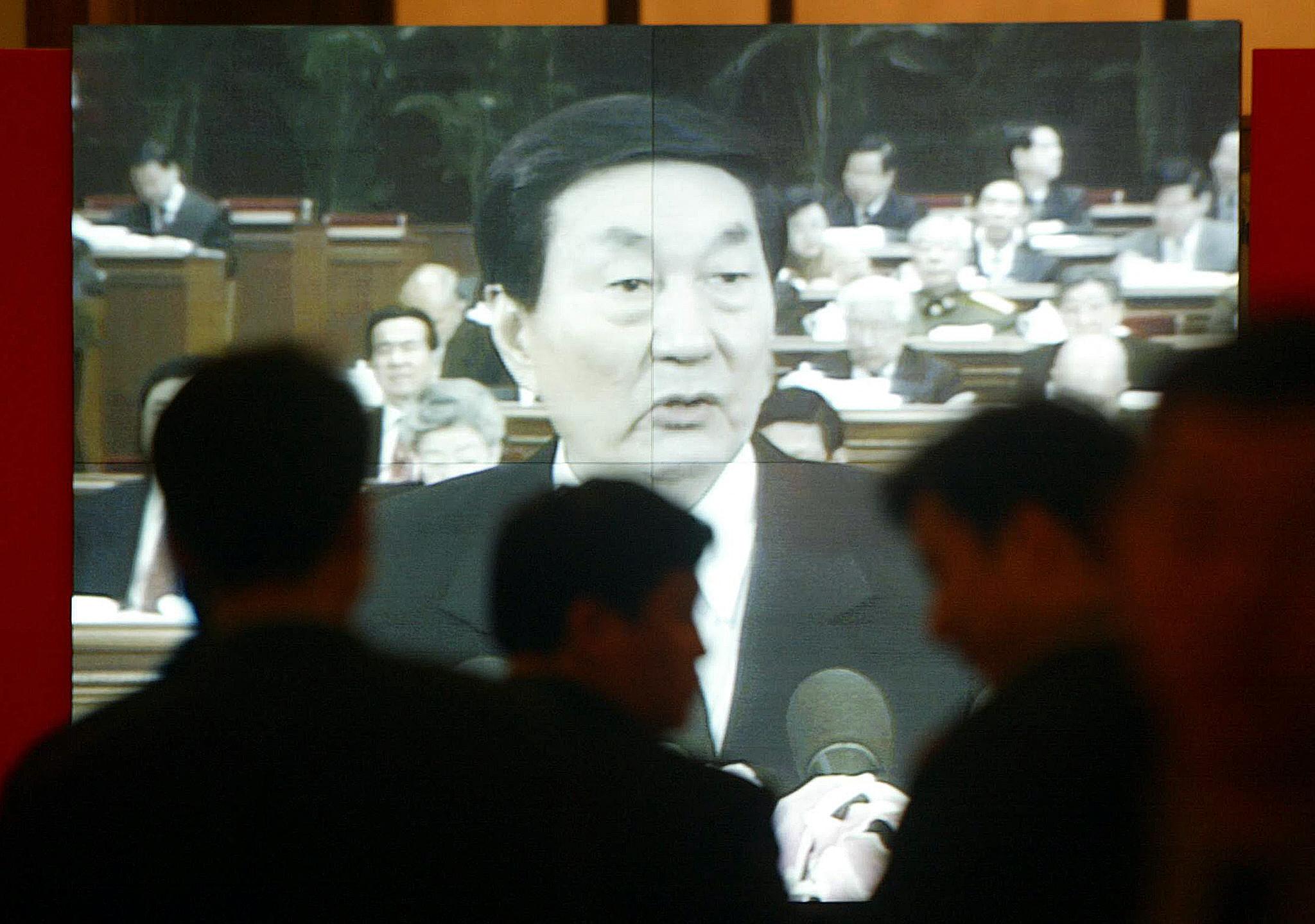
Former Chinese Premier Zhu Rongji passed away recently, drawing renewed attention to one of the significant legacies he left for China and the world – China’s accession to the World Trade Organization (WTO).
This move, considered a bold gamble at the time, aimed to push for reform through opening up and allowed China to swiftly integrate into the global market. Over the next 20 years, China transformed into a global manufacturing hub as numerous industries concentrated in China, leading to the widespread presence of “Made in China” products worldwide and a profound shift in the global trade landscape.
However, as China’s economy rapidly expanded, the state-led capitalist model under the Chinese Communist Party did not evolve towards the market-oriented and transparent direction as some Western policymakers had anticipated. State-owned enterprises, government subsidies, industrial policies, and deep state intervention in the economy gradually became core issues in China’s trade disputes with the West.
Looking back 25 years later, Zhu Rongji’s bold gamble not only changed China but also forced the West to reconsider a crucial question: Can the existing WTO rules effectively constrain a non-market economy of China’s scale deeply influenced by the Communist regime?
In the late 1990s, China faced multiple pressures in its economic reform, including struggling state-owned enterprises, financial system issues, and deteriorating external environment. Zhu Rongji personally led China in the final stages of the WTO accession negotiations, playing a pivotal role in the talks, especially in negotiations with the United States. In exchange for access to global markets, China pledged significant tariff reductions, market openings, legal amendments, and adherence to WTO trade rules.
On December 11, 2001, China officially joined the WTO as the 143rd member after 15 years of negotiations, marking a new chapter in its economic integration with the world.
Initially, the U.S. believed that China’s accession would promote political reform. However, over the following two decades, China did not progress towards political liberalization and further marketization as Western observers had hoped. Instead, China faced challenges such as real estate crises, youth unemployment, and weak domestic demand.
After China’s WTO accession, the speed of integration between its economy and the global market accelerated significantly, solidifying its status as the world’s factory with “Made in China” products reaching every corner of the globe.
On the 20th anniversary of China’s WTO accession in 2021, discussions arose questioning whether “China’s accession to the WTO for 20 years has undermined the WTO.”
Reflecting on the past two decades, China has deeply embedded itself in the global economy, becoming the “world’s factory” and reshaping the global economic and trade systems alongside geopolitical landscapes.
Statistics further illustrate this transformation. From 2001 to 2020, China’s exports surged from $266.1 billion to $2.59 trillion, growing approximately 8.7 times. In 2020, China’s GDP reached around $14.72 trillion, accounting for 17.4% of the global economy.
Numerous multinational corporations entered China, bringing capital, technology, orders, and opportunities to integrate into the global supply chain. Coastal regions rapidly formed extensive export manufacturing clusters.
Clothing, footwear, toys, furniture, appliances, electronics, industrial components – an increasing array of products bore the “Made in China” label, aided by China’s abundant low-cost labor that reduced production costs. A plethora of cheap manufacturing goods flooded the world market, propelling China as the highly coveted “world’s factory.”
However, not all parties benefited equally from globalization. The flip side of China’s status as the “world’s factory” imposed significant pressure on manufacturing industries and workers in some developed countries.
Following the influx of Chinese goods into the U.S., industries reliant on imports faced factory closures, job losses, wage declines, and reduced labor participation rates.
Economists from institutions like the Massachusetts Institute of Technology – Daron Acemoglu, David Autor, David Dorn, Gordon Hanson, and Brendan Price – revealed that between 1999 and 2011, import competition from China resulted in the loss of approximately 2 to 2.4 million net jobs in the U.S. manufacturing sector. Their research estimated that Chinese import competition accounted for around 10% of the concurrent decline in U.S. manufacturing employment.
This phenomenon coined as the “China Shock” underscored the uneven distribution of benefits from globalization. While consumers and multinational corporations enjoyed lower costs and broader markets, traditional industrial regions and workers faced factory closures, job losses, and enduring economic and social pains.
An underlying issue arose when Western policymakers anticipated that China’s integration into the global economy would lead to further marketization and openness. Yet, after over two decades, reality diverged from these expectations.
China’s economic integration into the global market did not eradicate the state’s role in the economy under the Chinese Communist regime. Instead, as China’s economy rapidly expanded, state-owned enterprises, government industrial policies, subsidies, and other factors continued to play crucial roles in the economic system.
“Voice of America” once quoted the Chicago Council on Global Affairs trade and economic analyst Alexander Hitch, who noted that over 20 years ago, the U.S. and other Western countries did not foresee that such a “non-market economy” like China would grow to such a significant scale within the WTO framework.
In recent years, the U.S. and Europe increasingly criticized China’s state-owned enterprises, government subsidies, market access barriers, and technology transfer policies, deeming the existing WTO rules inadequate in addressing these issues comprehensively.
Therefore, after 20 years of China’s WTO accession, internal discussions within the U.S. have reignited a question: Was allowing China to join the WTO a mistake?
Reports from Voice of America indicated that the U.S. and other major Western countries believe that China did not fully adhere to its WTO commitments in some areas post-accession. Additionally, China’s rapid economic expansion presented new challenges to the existing WTO rules.
Simultaneously, the U.S. and Europe began utilizing more national security measures, export controls, investment reviews, tariffs, and risk mitigation policies to reduce dependence on China’s supply chains.
This year marks the 25th anniversary of China’s WTO accession. On May 13, Y’s Day, organized by various units and organizations including Taiwan Public Policy, Taiwan Thinktank, Taiwan Professors Association, Taiwan Youth Generational Exchange Association, Taiwan Youth Foundation, Central Broadcasting Corporation, New Headline, Taiwan Civil Liberties Union, Taiwan Aspiration Association, and US Taiwan Watch, delved into how the spillover effects of China’s economy influence Taiwan and the global future with the theme “From ‘World’s Factory’ to ‘World’s Risk’ – How China’s Economic Changes Impact the Global Future?”
During the event, Professor Tsai Ming-fang from Tamkang University’s Department of Economics noted that while China was once the “world’s factory” and the top import source for the U.S., a decline in the Chinese economy ensued after the 2018 U.S. tariffs and the outbreak of the COVID-19 pandemic. Export to the U.S. dropped by over $100 billion from 2018 to 2024, leading to issues of “insufficient effective demand” and “overproduction.”
Subsequently, China resorted to dumping goods at low prices in various markets, with Europe bearing the brunt. The EU attempted to impose anti-dumping duties on China but ultimately backed down, adopting price floors instead.
Wang Guochen, Deputy Research Fellow at the First Research Institute of the China Institute for Economic Research, bluntly stated that China’s surplus production capacity continued to exert pressure, with exports setting a record $1.2 trillion surplus in 2025 and maintaining double-digit export growth in the first quarter of this year.
He highlighted that China’s economic and trade threats have become increasingly “infantile.” Foreign sanctions continue to expand, and China obstructs foreign investments and penalizes foreign-funded enterprises through mechanisms like the “Foreign Investment Security Review Measures” and “Restrictive Orders.” These developments have spurred discussions on the internationalization of the Renminbi to evade global sanctions, turning it into a financial support system for criminals and rogue regimes and posing greater challenges to the world economic and trade order.
Zhu Rongji’s gamble ultimately reshaped the perception of the West towards China (the CCP), prompting a global rethink: how long can the existing rules of globalization sustain when a country harnesses globalization to enhance itself without embracing the institutional transformations Western powers anticipated?