
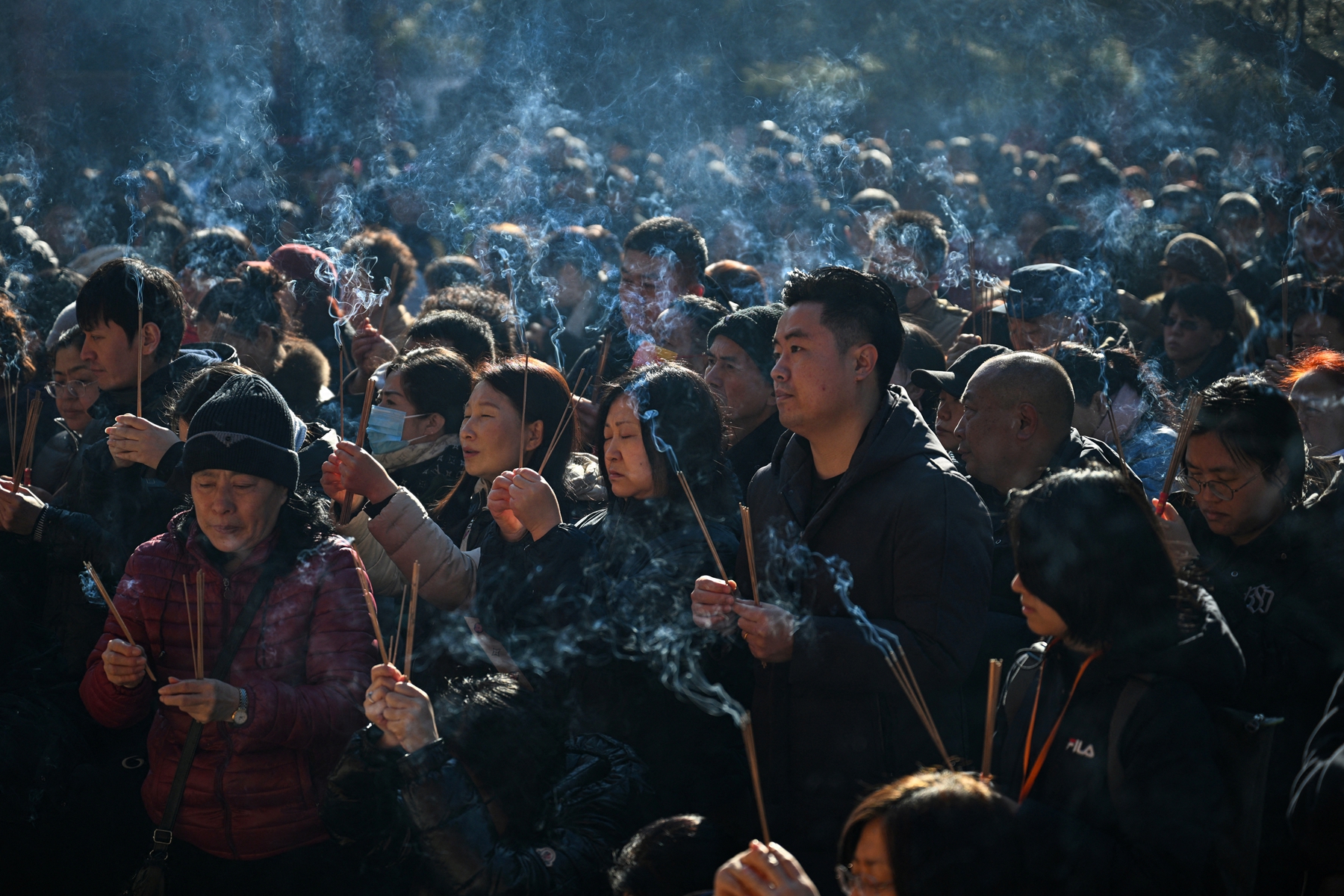
Recently, a public hospital in Chengdu conducted a religious belief survey on all staff members, requiring employees in permanent positions, contract workers, and temporary staff to fill out information on their religious beliefs. Even those without religious beliefs are also required to register. The investigation extends to the religious backgrounds of students and their families within the education system in Chengdu, with even students’ parents being included in the survey.
In a recent internal notification circulating in social media chat groups on the mainland, a second-tier public hospital in Chengdu issued instructions to collect and survey the religious beliefs of all employees in order to implement the “routine inspection requirements for ideological, ethnic, and religious work.” The hospital’s directive emphasized the need for a comprehensive survey of all staff members without exception.
Employees are instructed to truthfully fill out the forms without omissions or falsifications, with the related information being kept confidential by designated personnel solely for internal organizational purposes. It stipulates that Communist Party members are not allowed to practice any religion, and if there are any related circumstances, they must proactively report it to the Party branch. All staff members must complete the survey, including those with no religious beliefs who must select “none” and adhere to a “zero-reporting” system.
Furthermore, the hospital strictly prohibits any form of religious preaching or activities within the workplace.
The notification explicitly states, “All information is strictly prohibited from being disseminated on the internet.”
A staff member at a university in Sichuan, Ms. Chen, informed reporters that the investigation into religious beliefs is not limited to hospitals, as universities are also examining whether students’ family members have religious beliefs: “Now, checking religious beliefs includes determining if students’ parents adhere to Christianity, Catholicism, Islam, and the statistics must be reported by the school.”
Ms. Chen further stated that the ultimate purpose of such inspections is currently unclear, but schools are required to report the relevant statistical results. From hospital staff to parents of university students, they are all subjects of investigation. She believes that the authorities have always been highly vigilant regarding religious beliefs.
An educational department staff member in Chengdu, Ms. Liao Xiaoli, revealed that the Chengdu education system conducts background checks on students’ families before the start of each academic year, with religious beliefs being one of the aspects investigated. She mentioned that religions like Christianity, Catholicism, and Islam are included in the survey, even for Hui Muslims. The investigation in hospitals is managed by the medical system and is not related to their department.
Ms. Liao’s statement indicates that the Communist education system’s investigation into students’ religious beliefs and family backgrounds is not a one-time action but a regular process conducted before the start of each academic year.
The recent notification from the public hospital in Chengdu illustrates that the Communist Party has also established a mechanism for collecting information on religious beliefs within the healthcare system. Ms. Liao Xiaoli disclosed that there are irregular contacts between the Communist religious bureau and universities: “A deputy secretary is responsible for liaising with the religious department to understand students’ ideologies, primarily focusing on religious aspects.”
In the internal hospital notification, terms like “organizational systematization,” “ideological consciousness,” and “routine inspection of ethnic and religious work” emphasize the pervasive nature of the Communist Party’s control over religious beliefs.
In recent years, the Communist Party has continuously demanded that various party committees strengthen their leadership in religious work and promote the so-called “Sinicization of religion.” In 2025, Communist Party leader Xi Jinping reiterated the call for party committees at all levels to enhance religious work and incorporate religious affairs into the party’s leadership system. The so-called “Regulations on Religious Affairs” also require governments at all levels to establish mechanisms for religious work.
Overseas scholar Mr. Lu stated that the investigation of staff members’ religious backgrounds at the public hospital in Chengdu indicates that the authorities are making concerted efforts to control people’s religious beliefs and suppress them: “This phenomenon is not limited to Chengdu. I have heard that in Shandong and Zhejiang, government officials are prohibited from practicing Christianity. If discovered, they are required to resign. In previous years, a government official in Wenzhou, Zhejiang was dismissed for practicing Christianity. If you participate in family gatherings, the national security agents will cause you trouble all the time.”