
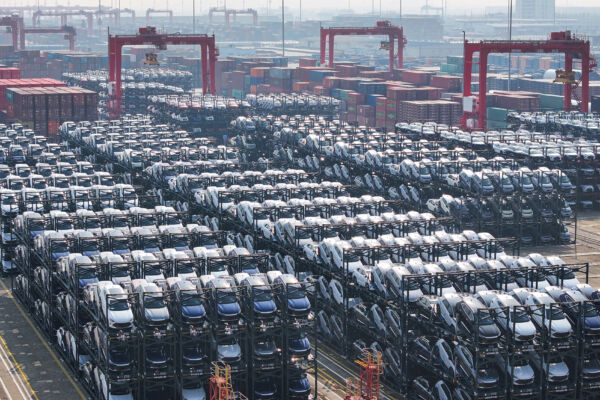
On Saturday, October 10, the China Passenger Car Association (CPCA) released preliminary data showing that in September 2026, the retail sales of passenger cars in China were 1.702 million units, a significant decrease of 24% compared to the same period last year. The retail sales of new energy vehicles reached 1.141 million units, a 14% increase from August, but still down by 12% compared to September of the previous year.
In the first nine months of 2026, the total retail sales volume of passenger cars in China, including domestic and export markets, reached 13.42 million units, a 21% drop from the same period last year. Among them, the cumulative sales of new energy vehicles amounted to 7.816 million units, also down by 12% year-on-year.
The total wholesale volume of passenger cars in September was 2.528 million units, showing a 7% growth from August, yet a 10% decline compared to September of the previous year. The wholesale sales of fuel cars plummeted by a significant 41%, with domestic production of fuel cars in the first three weeks of September dropping by 52% year-on-year.
The penetration rate of new energy vehicles in the retail sales of passenger cars in September was 67.1%, higher than the 65.7% in the previous 27 days. The top ten manufacturers in terms of wholesale sales of new energy vehicles include BYD (approximately 457,000 units), Geely Auto (approximately 189,000 units), Chery (approximately 127,000 units), Leapmotor (approximately 106,000 units), and Tesla (approximately 95,000 units).
Additionally, XPeng, Li Auto, NIO, and other companies were not among the top ten on the list.
The CPCA mentioned that in previous Septembers, the traditional peak sales season would typically drive sales of both fuel cars and new energy vehicles. However, this year the market has entered a stage of stock competition, with almost all the growth concentrated in new energy vehicles, while fuel cars have shown virtually no new demand.
The CPCA also pointed out that although the overall inventory levels are not high, excessive profits focused on the upstream sector have led to increased contradictions between upstream and downstream, resulting in continued pressure on dealers’ operations.
On the other hand, while Chinese auto companies have performed well in overseas markets, accounting for 62% of global new energy passenger car sales in the first eight months of 2026 and rising to 65.3% in July and August, the domestic market in China has been affected by various factors such as internal competition, squeezed downstream profits by the upstream, economic downturn, and rising unemployment, leading to persistently weak sales in the domestic passenger car market in China.