
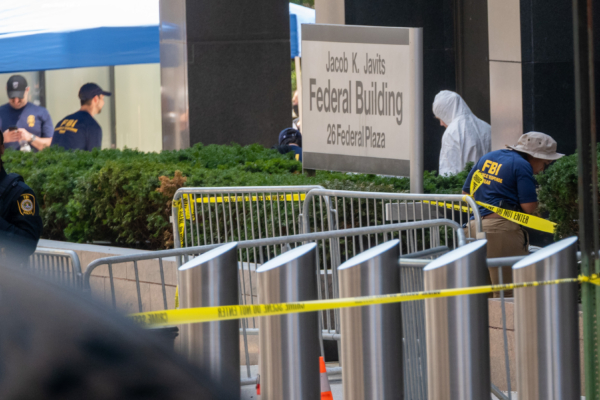
In recent times, the New York immigration court has seen judges conducting hearings remotely via video conferencing, as well as parties being arranged to appear in non-traditional courtroom spaces in federal buildings. Immigration experts point out that temporary changes in hearing locations, restrictions on public attendance, and other practices may affect immigrants’ right to a fair hearing.
The American Immigration Lawyers Association (AILA) has called for an end to the use of unmarked Department of Homeland Security jurisdiction sites as temporary courts and has advocated for establishing an independent immigration court system.
According to a recent policy brief released by AILA, the original immigration court at the New York Federal Plaza on the 12th floor has had some hearings relocated to the third-floor space controlled by Immigration and Customs Enforcement (ICE). The association has stated that some parties were notified of location changes to their hearings only shortly before the scheduled time or not at all; some locations lack courtroom signage, and the public and attendees have been denied entry. AILA has warned that these situations could undermine due process and court transparency.
According to a report by New York Focus, out of 23 immigration judges holding hearings at the Federal Plaza over three days in September, 10 appeared via video conference. The report also quoted immigration lawyers and observers who pointed out that remote hearings may make it difficult for judges to directly review documents carried by the parties or to grasp the actual circumstances of the individuals involved. The Department of Justice Immigration Review Enforcement Office has stated that whether physical or virtual hearings are conducted, judges will independently adjudicate cases based on immigration law and relevant regulations.
Mr. Wang, the managing director of the New York Qin Susan Law Firm, analyzed during an interview with this newspaper that although their law firm has not yet encountered such situations firsthand, they have heard of many instances like this.
“The authorities may be arranging ‘Mega Master Hearings’ to expedite case processing and utilizing federal government office spaces as temporary courts,” said Mr. Wang. “Some immigrants were originally instructed to go to the Federal Plaza building 26 according to their hearing notice, only to be redirected to a third-floor office upon arrival.”
Mr. Wang suggested that such arrangements could potentially deprive immigrants of a “fair and just hearing environment.” He also mentioned that some temporary hearing locations restrict journalists or media from observing, raising concerns about transparency in the process.
As for solutions, AILA is urging to cease the use of unmarked, DHS-controlled temporary hearing locations to ensure that parties receive timely and accurate hearing notifications, and to safeguard the public’s right to attend lawfully. The association also supports the passing of the “Real Courts, Rule of Law Act” by Congress to establish an independent immigration court.
Mr. Wang also agreed that immigration courts are part of the Department of Justice’s administrative system and are not independent judicial entities. Currently, parties facing such arrangements often have to react passively based on luck. He supports the industry’s call for establishing independent immigration courts because it would enable judges to preside over cases impartially, free from external pressures. He described the current concern as: “Politics overriding the actual facts of the case.”
For immigrant families, the clarity of hearing locations, timely receipt of notifications, and the opportunity for judges to review evidence can all impact case handling. Lawyers and professional organizations, therefore, demand that while expediting case processing, immigrants are ensured fair and transparent legal proceedings.