
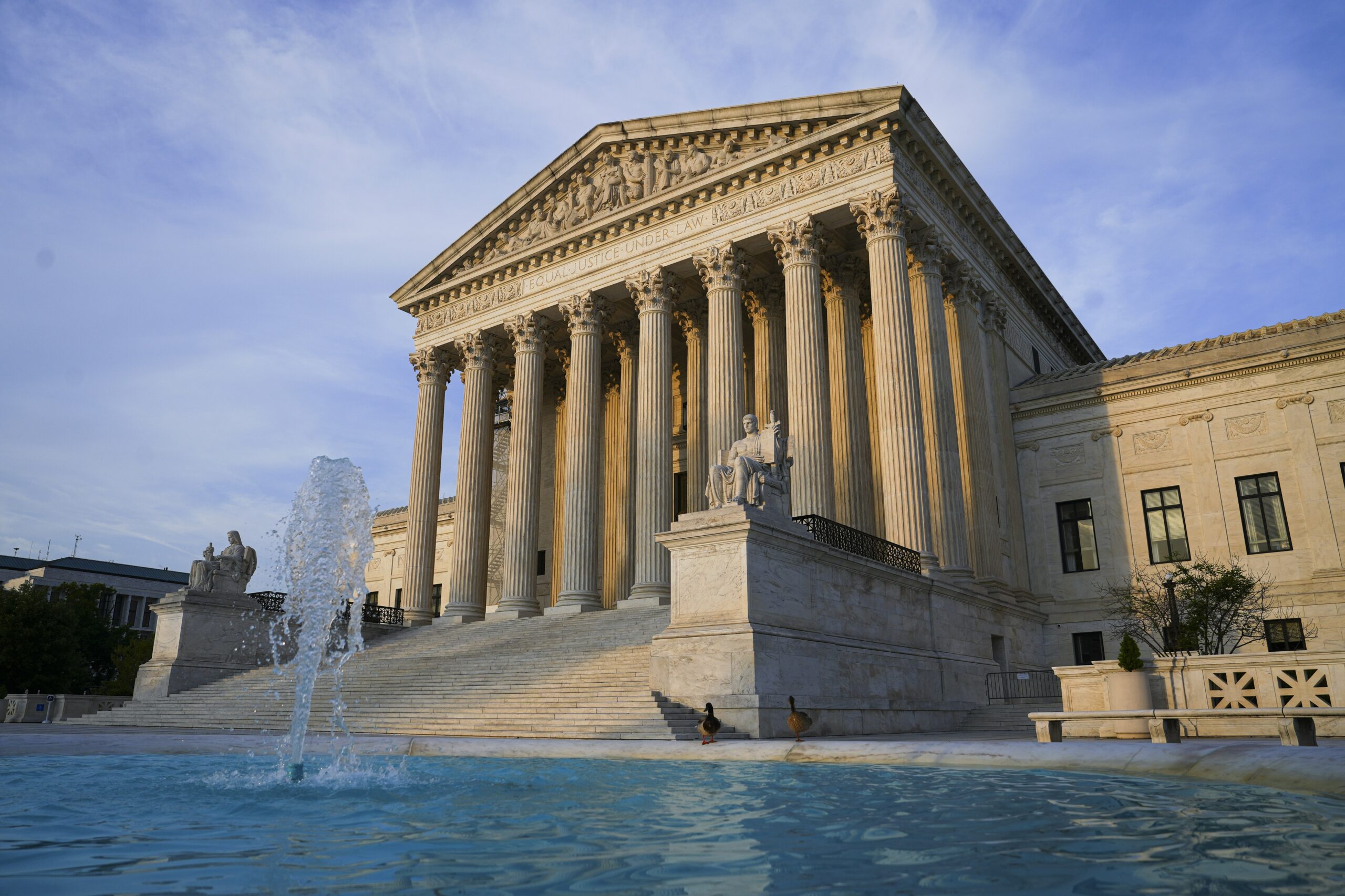
On Thursday, October 8, the United States Supreme Court granted the Federal Communications Commission (FCC) temporary relief from complying with the deadline set by a lower court. This deadline stemmed from a legal challenge by Democrats against the FCC’s new political advertising policy.
As the midterm elections in November draw near, the FCC, along with two Republican commissioners, jointly petitioned the Supreme Court to pause the ruling of the lower court. Chief Justice John Roberts issued an administrative stay, agreeing to suspend the Fourth US Circuit Court of Appeals’ mandate that the FCC make a decision by noon on Friday, and requested the Democratic challengers to respond to the application by Saturday evening.
An “administrative stay” is a temporary pause method in legal disputes designed to allow the justices more time to consider whether to halt the actions of the lower court.
The Fourth Circuit Court of Appeals had accused the FCC of using “delay tactics” on October 7, emphasizing the urgent need to rule on the Democrats’ demands with the approaching midterm elections.
The controversy centers around the FCC’s modification in March of the “lowest unit charge” rule. Originally, this rule only allowed political candidates to benefit from discounted television and radio advertising rates in the 60 days before an election, but it now extends to party committees and certain joint fundraising committees.
In response, a group of Democratic candidates including Senator Jon Ossoff from Georgia lodged objections through the FCC’s internal administrative process in April. When the FCC took no action, they filed a lawsuit with the Fourth Circuit Court and successfully halted the policy on August 25.
Democrats argue that this provision favors Republicans because Republican committees have a financial advantage over Democratic committees. According to Federal Election Commission filings, as of the end of August, the three major national Republican committees had approximately $2.33 billion in cash, while the corresponding Democratic committees held around $1.3 billion in cash with nearly $18 million in debt.
On September 4, the Supreme Court ruled 8-1 to temporarily stay the Fourth Circuit Court’s decision, reinstating the FCC’s policy and clarifying that Democrats must wait for the FCC’s final administrative ruling before challenging in court again. The lone dissenting vote came from Justice Ketanji Brown Jackson.
On October 7, the Fourth Circuit Court issued another injunction, requiring the FCC to make a ruling on the Democrats’ internal objections by noon on Friday. On October 8, Chief Justice Roberts suspended the lower court’s mandate, temporarily relieving the deadline pressure.
Currently, the FCC’s expanded application of the “lowest unit charge” rule remains in effect, allowing party committees to continue enjoying discounted rates. The Supreme Court has yet to make a final decision on the substantive issue.