
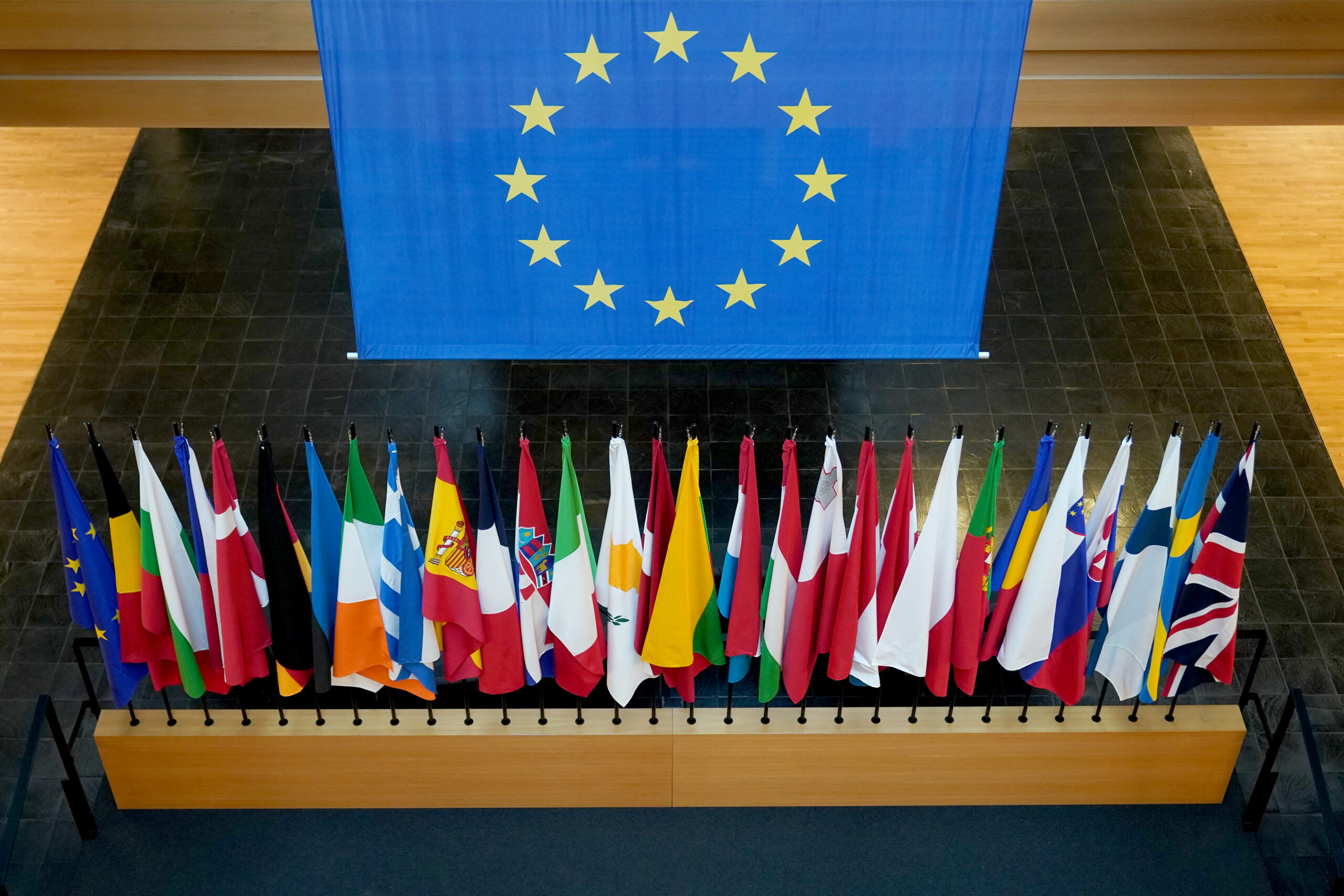
On Wednesday (October 7), the European Parliament passed a recommendation on EU-China political relations with 454 votes in favor, 86 against, and 110 abstentions. The recommendation calls for strengthening economic reciprocity, fair competition, and resilience against critical dependencies, while urging an increase in resilience against cyber-attacks, foreign interference, espionage activities, and hybrid threats. The shift in Europe’s stance is seen as an opportunity for the U.S. and the EU to coordinate responses to China, according to an article by the Foundation for Defense of Democracies (FDD).
The European Parliament stated that the recommendation aims to maintain dialogue with China while enhancing the EU’s response to economic reciprocity, supply chain dependencies, human rights, and security threats. It requests more equitable market access for European companies in China and supports the EU in taking corresponding measures when China fails to open its markets.
Although the recommendation is non-binding and does not directly alter EU policy, FDD suggests that the measures listed could serve as a policy basis for further EU action if trade negotiations with China do not progress.
Maroš Šefčovič, the EU Commissioner for Trade and Economic Security, will visit China on October 8-9 for new trade and investment negotiations, which will be a focal point of the European Council meeting on October 15-16.
FDD’s article highlighted that the EU’s trade deficit with China exceeds $1.2 billion daily, compared to around $320 million per day in 2013. EU trade data indicates that in 2025, EU exports to China were approximately 199.5 billion euros, while imports were about 559.5 billion euros, resulting in an annual trade deficit of around 359.9 billion euros. Data from Eurostat shows that in the second quarter of 2026, the EU’s trade deficit with China was 103 billion euros.
EU Commission President Ursula von der Leyen warned in September that the “Second China Shock” has arrived and expressed concerns about manufacturing job losses, factory dependencies, and supply chain vulnerabilities.
EU member states are discussing strengthening trade defense tools. The European Parliament suggests that the EU can take corresponding measures to enhance trade and investment reciprocity when China does not open its markets.
German Chancellor Friedrich Merz and French President Emmanuel Macron submitted a joint document to the EU Commission President on October 5, advocating for faster responses to systemic market distortions including dumping and government subsidies. Trade Commissioner Šefčovič also expressed support for establishing faster and more effective trade protection tools.
The full details of the related initiatives have not been disclosed yet. FDD’s article referenced suggestions that the EU could take measures such as “restricting the entry of related products into a single market” when facing critical supply constraints.
FDD also noted that China’s manufacturing value accounts for around 30% of the global total and is projected to rise to 45% by 2030. The Chinese government’s subsidies and preferential policies direct excessive production capacities towards strategic industries, leading to overproduction of goods that are then dumped overseas at low prices. Such practices not only weaken foreign competitors and deplete the global manufacturing base but also grant China dominance in key strategic areas like critical minerals, rare earths, and shipping, using them as political leverage to threaten other countries.
Despite China’s denial of “overcapacity” issues, FDD argues that this denial itself shows China’s unwillingness to curb policies that create global market imbalances. The U.S.-China Economic and Security Review Commission has previously warned that China’s economic model poses a “direct risk” to the economic resilience of the U.S. and global markets.
FDD suggests that as U.S. allies strengthen economic security tools and take tougher stances against China on certain issues, the U.S. can coordinate policies with the EU and other partners to respond effectively. Given China’s non-market behaviors, which have harmed economies based on market rules, a trade and tariff alliance based on market principles, rule of law, geopolitical stability, and shared costs and benefits should be established to translate individual actions into a powerful coordinated force against China.
FDD also recommends that supporters of the September G20 Chair’s statement and issuers of a joint statement after the October trade ministers’ meeting from the U.S., EU, and other participating economies should serve as a starting point for coordinated cooperation. Additionally, the G20’s Trade Working Group can collaboratively advance strategies for diversifying supply chains through its private sector business matching platform to expedite reducing reliance on China.