
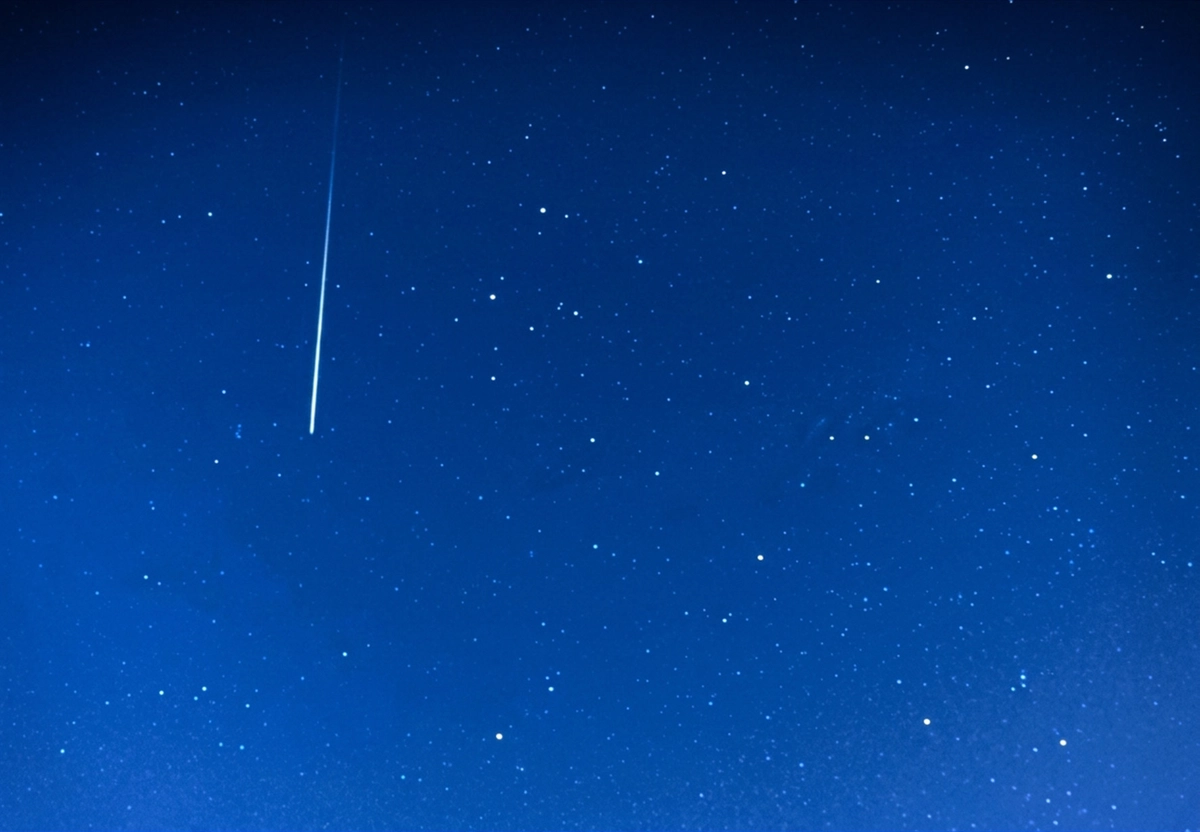
In October, if you step out onto your doorstep and gaze up at the night sky, you might notice something different. Beyond the thick urban curtain of streetlights, electronic devices, and bustling city streets that never sleep, a wave of meteors will streak across the night sky, shimmering as they go.
City dwellers will have a compelling reason to seek out dark and quiet corners to join backyard stargazers. The twin meteor showers – the Orionids and the Draconids – arrive like clockwork each year around Halloween, offering a spectacular sight. Whether you’re an amateur astronomer or just starting out in stargazing, this “meteor shower duel” is an annual visual feast.
The Orionids meteor shower is considered a true “global citizen,” allowing stargazers on both sides of the equator to enjoy it. In contrast, the Draconids meteor shower is more like an “exclusive club,” mainly visible in North America, Europe, and Asia.
Earth regularly passes through the dust tail left by Halley’s Comet. The Orionids meteor shower originates from this annual “encounter.” When tiny debris left behind by the comet rapidly collides with Earth’s atmosphere, the friction generates high temperatures, causing the debris to light up like matches. The Orionids meteor shower typically lasts from late September to late November, with this year’s peak expected around October 23rd.
The Orionids meteor shower is best viewed after midnight. While the meteors may seem to radiate from the direction of Orion, they are actually flying along their orbit around the sun, skimming through the upper layers of Earth’s atmosphere.
This annual meteor shower never fails to attract a large following. During a previous observation season, despite severe interference from city lights, photographer Steve Scanlon ventured to a football field in New Jersey and captured a meteor streaking across the night sky at an astonishing speed of 44 miles per second.
Scanlon told The Epoch Times, “On the New Jersey coast, nighttime light pollution usually swallows up most of the starry sky. That night, I stood on the local football field, aimed my camera in the planned direction. I wouldn’t say I was confident, but more hopeful.”
“However, being prepared in advance proved useful. A Orionids meteor streaked across the camera frame, with Orion also appearing in the photo. Capturing both in a single photo made the wait worthwhile.”
The photo taken by Scanlon shows a meteor streaking across the night sky at an extremely high speed, fast enough to traverse the continental United States in minutes. But even at such speeds, this meteor couldn’t actually be flying in from the constellation Orion hundreds of light-years away. Nevertheless, interestingly, when viewed from the opposite direction of the Orionids meteor shower’s trajectory, they all appear to radiate outward from a position called the “radiant point.” This is just an illusion caused by perspective.
In fact, they originate from the icy Halley’s Comet – the source of the Orionids meteor shower. This massive icy body last passed near Earth in 1986. Because it takes a long time to orbit the sun, it won’t return to Earth’s vicinity until 2061. Meanwhile, fragments that detached from the comet’s surface in ancient times intersect Earth’s orbital path every October.
However, the Orionids meteor shower isn’t the only meteor shower making an appearance in October. From October 6th to 10th, the Draconids meteor shower will also peak. It originates from a completely different celestial body. Evening is the best time to watch these sporadic meteor showers.
The comet responsible for the Draconids meteor shower, 21P/Giacobini-Zinner, more frequently visits Earth than Halley’s Comet. This comet first approaches the sun, travels near Earth’s orbit, then moves far away, looping close to Jupiter’s orbit, before returning near Earth’s orbit. It completes this cycle every 6.6 years. Dust scattered by the comet eventually forms the Draconids meteor shower.
These meteors enter Earth’s atmosphere unpredictably, sometimes appearing sparsely in some years and suddenly increasing to several hundred per hour in others. Whether a large-scale outburst will occur this year is hard to predict. However, astronomers lean towards such an outburst being unlikely. Their radiant point is located in the constellation Draco.
Meteor enthusiasts may well be able to track both annual meteor showers simultaneously, noting clear differences between the two. The earlier Draconids meteor shower features fewer meteors, about 10 per hour, while the Orionids meteor shower boasts around 20. However, moonlight can also have a significant impact. When the Draconids meteor shower peaks, a thin waning crescent moon will set, leaving the night sky almost pitch dark. Later in October, when the Orionids meteor shower peaks, a shining bright gibbous moon may overshadow the meteors’ brightness.
However, these two meteor showers may overlap in October. Can we distinguish between them?
Yes, these two meteor showers have distinct visual characteristics. Since the Orionids meteor shower enters the atmosphere at extremely high speeds, it creates bright trails that fracture into many small pieces. This is why they appear more white and less brightly colored than other meteor showers. Sometimes, you may even spot fleeting flashes of green or yellow light. About half of the Orionids meteors leave persistent traces, long luminescent bands formed by ionization gases. These meteors are also known as fireballs.
In contrast, the Draconids meteor shower moves lazily across the night sky like a slow-motion movie. They enter the atmosphere at a “sluggish” speed of 12 miles per second, emitting dim amber-colored trails.
You can also determine which meteor shower a meteor belongs to based on its radiant point. Draco and Orion are far apart in the entire sky. Look toward the far north to find Draco, while Orion is closer to the celestial equator. However, the best method is to lie on a blanket and quietly admire the entire night sky. Meteors will streak across the sky from the radiant point in all directions.
Lucky photographers may capture Orionids meteors framed alongside the Orion constellation like Scanlon at that New Jersey football field. Sometimes, meteors unexpectedly streak across the night sky. Mike Busch from Brewster, New York, had such a surprise. A Orionids meteor unexpectedly “interrupted” his photo shoot, with planets rare in a straight line in the photo.
He said, “I got up to shoot the alignment of Venus, Jupiter, and Mars. I was really lucky when the meteor appeared. The sight was truly spectacular when seen with the naked eye!”
For the English report, please refer to The Epoch Times in English.