
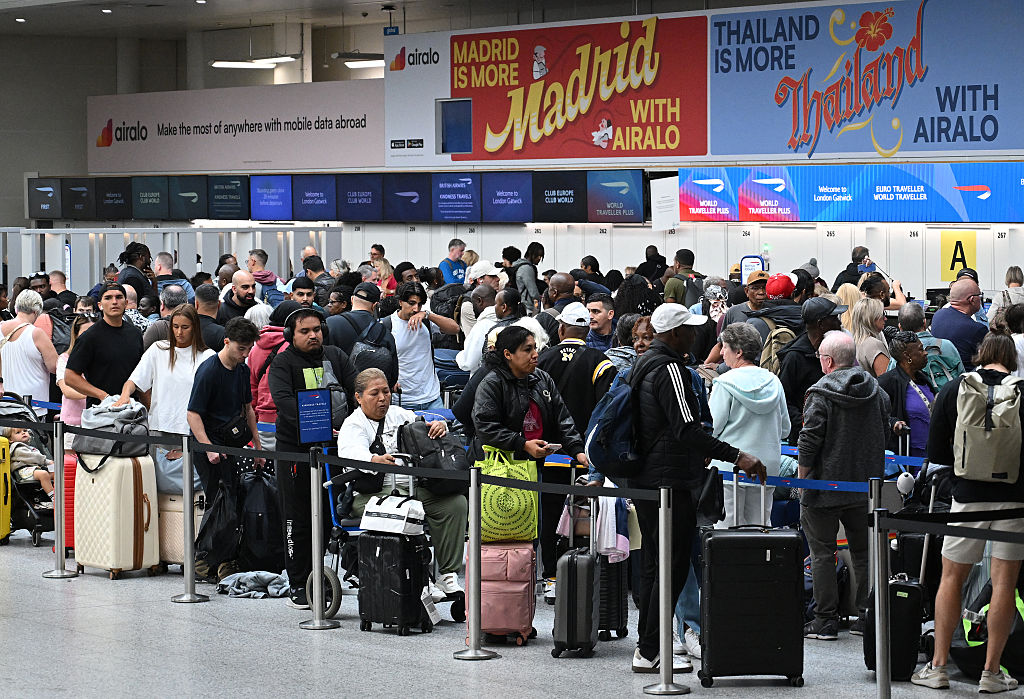
On Wednesday (September 9), major airports in the UK have resumed flight operations, but the chaos caused by the previous day’s air traffic control system failure continues to linger. Aviation data company Cirium reported that approximately 2,000 flights to and from UK airports were affected over the course of Tuesday and Wednesday, disrupting travel plans for hundreds of thousands of passengers. The UK Transport Minister has summoned the head of the air traffic control company to explain the cause of the malfunction.
According to Reuters, the UK’s air traffic service provider, NATS, experienced a major technical failure on Tuesday, affecting major airports including Heathrow, Gatwick, Manchester, and Stansted.
While the system has now been restored and NATS has ruled out a cyber-attack, investigations are still ongoing to determine the root cause of the issue.
Despite the air traffic control system being repaired, flight operations could not immediately return to normal. Cirium stated that around 30% of scheduled departing flights in the UK were grounded on Tuesday, followed by approximately 5% on Wednesday, with a total of about 2,000 flights to and from UK airports affected over the two days. According to BBC citing Cirium data, over 1,750 flights were canceled on Tuesday, with an additional 153 canceled on Wednesday.
On Tuesday, British Airways canceled or diverted 100 flights, with 190 flights still canceled on Wednesday. Ryanair canceled 260 flights on Tuesday, impacting approximately 48,000 passengers. The company estimated losses of around £3 million due to this incident.
The previous day’s mass flight cancellations and diversions have disrupted aircraft and crew positioning. Even though the air traffic control system has been restored, airlines still need to rearrange aircraft and personnel, leading to delays and cancellations spilling over to the next day.
Heathrow Airport advises passengers to confirm their flights with the airlines before heading to the airport, a similar reminder issued by Gatwick Airport.
On Wednesday, UK Transport Minister Heidi Alexander met with NATS CEO Martin Rolfe to demand an explanation for the recent system failure.
Alexander urged NATS to ensure lessons are learned from the incident and to ensure that the systems supporting the operation of the UK aviation industry function correctly.
The government’s inquiry stems from a series of major technical issues within the UK air traffic control system in recent years. In August 2023, a fault in NATS’ flight planning system caused widespread aviation chaos, with airlines estimating losses of around £100 million. In July 2025, the radar-related technical issues disrupted operations at major airports like Heathrow.
NATS and Ryanair have differing views on whether this recent incident is related to the 2023 malfunction. Rolfe previously stated that this was a unique issue in NATS’ 50-year history and not akin to the 2023 incident, with no network attack involved.
However, Ryanair’s CEO Michael O’Leary told Reuters that NATS had informed the airline that the current suspension was due to the same underlying issue as the major malfunction in 2023.
O’Leary described this incident as a “complete rerun” of the 2023 disruption and once again called for Rolfe’s dismissal.
Tensions between Ryanair and NATS have long existed. The airline is seeking compensation from NATS for the 2023 air traffic control failure and requesting further investment to enhance system performance and increase staffing.
NATS, a public-private partnership, has shareholders including the UK government, pension funds, and airlines such as British Airways and easyJet. Ryanair criticizes NATS for distributing dividends to shareholders in recent years without establishing sufficiently reliable primary and backup systems.
Once again, Ryanair has targeted Rolfe. O’Leary demanded the dismissal of the CEO who has led NATS since 2015.
While major airports in the UK have resumed flight operations, the residual effects of the earlier flight cancellations and diversions causing discrepancies in aircraft and crew positions have yet to be fully resolved.