
The National Museum of History plays a central role in the long process of promoting transitional justice and organizing historical archives. However, when political power transitions intersect with the decryption of archives, questions from the outside often arise: Will the National Museum of History become a tool for the “ruling class” or “victors” to rewrite history?
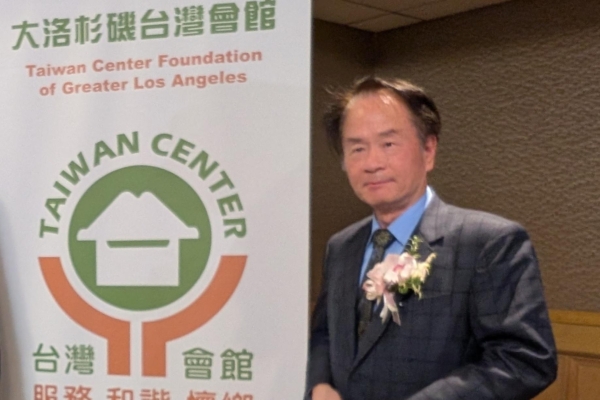
The director of the National Museum of History, Chen Yi-shen, is about to step down on September 14 after more than 7 years in office. He attended the annual meeting of the Taiwan Center in Los Angeles on August 22 (Saturday) and delivered a keynote speech on “From Survival to Development: The Role of Taiwanese Americans in the Democratization Process of Taiwan.” In an interview with Epoch Times, he put forward a very clear position – history should not serve the victors. Chen emphasized that the duty of the National Museum of History is to restore the truth and disclose documents, rather than subjectively select or politically settle history.
With the implementation of the “Political Archives Act,” many files hidden in the intelligence system have been gradually transferred to the Archives Administration. However, the decryption process has not been smooth sailing. Chen candidly admitted that during President Tsai Ing-wen’s tenure, he privately reported to the president that political documents were heavily redacted and obscured, bluntly stating that “printing them out is meaningless.”
At that time, units such as the National Security Bureau and the Investigation Bureau often used existing regulations (such as the “Intelligence Personnel Work Law”) as reasons to obstruct decryption. Only through communication with the then-Secretary-General of the National Security Council, Gu Li-hsiung, and legislative amendments in the Legislative Yuan, was the “priority of transitional justice” gradually established, preventing outdated laws from hindering the disclosure of the truth in a new era.
Despite this, the handling of archives still faces many awkward and challenging situations, such as the revelation of “line-man” identities. The exposure of many “line-man” identities from the martial law era includes even members within the Democratic Progressive Party or those still in office. This shows that transitional justice is not simply used to settle scores with specific political parties; once the information is revealed, even the ruling party itself faces scrutiny.
The environment under the martial law system is very complex, with each individual facing different situations and degrees of becoming a “line-man,” requiring relevant institutions for transitional justice to make thorough assessments and handle them objectively. Chen emphasized that the severity of each piece of information should be treated differently.
Regarding the controversies surrounding Taiwan’s status or historical events, Chen believes that whether deep-blue or deep-green, they often cling to their own standpoint, only willing to select fragments that fit their own views, while ignoring the “continuity” and “contextuality” of history.
He exhorted, “We cannot remain in the era of the Encyclopedia Britannica or the Cairo Declaration; history is a dynamic evolution.” From the Chinese Civil War after World War II, the Korean War, to the changes in US-Taiwan policy, the historical scene is filled with dynamic advances and retreats and considerations of realpolitik. Chen stressed that the best remedy to break free from the blue-green opposition is to return to the data and historical scene.
Chen emphasized that the establishment of Taiwan’s subjectivity is not a mere imagination or wishful thinking but the inevitable result of historical development. Currently, the National Museum of History has a vast number of decrypted political archives, “just supplying master’s and doctoral students in history departments for their theses would be endless.” Only through solid academic research based on historical materials can the answers naturally emerge.
Providing an example, Chen mentioned that after years of litigation, historical artifacts such as Chiang Kai-shek’s and Chiang Ching-kuo’s diaries were returned from Stanford in the United States to Taiwan during his tenure and are now being sequentially opened for research after sorting and digitization, similar to the Lee Teng-hui database.
“History helps different political positions find common experiences of the past.” Chen stated that public discussions in Taiwanese society often fall into polarization, overlooking the changes in history. For instance, the meaning of the “Republic of China” in the 1950s as opposed to the 1990s is vastly different, and this is not subjective imagination but accompanies the development of democracy, interpretations by the Grand Justices Council, “Taiwan’s democratic movement has actually brought nationalization.”
Personally for Chen Yi-shen, his “national history perspective” has also gradually evolved, from the impact of the Formosa Incident to Taiwan’s lifting of martial law, one by one, historical archives being disclosed have formed the current framework.
When it comes to explaining “what Taiwan is” to overseas Taiwanese youth or American society, Chen believes that Taiwan’s history is rich in depth and diversity. He analyzed that Taiwan has a history of suffering, resistance, and survival, a process of democratization pains, and a journey of seeking survival and development under pressure from China. Therefore, “what Taiwan is” is not just a geographical or political issue.
“Taiwan has undergone a history of war, the Cold War, human rights, democratization, and the life experiences of its people,” Chen said. From the 1950s onwards, featuring the sacrifice of Chinese Nationalist Air Force pilots, Taiwan-US anti-communist cooperation, to the Formosa Incident in December 1979, overseas humanitarian rescue, transitioning to the semiconductor boom in the 1980s and 1990s, the period covers the Cold War and history of alliances, human rights and democratization waves, as well as technological and economic rise.
For the United States, Taiwan was an ally during World War II and the Cold War, standing at the forefront against communism with the sacrifice of pilots like the “Black Cat Squadron,” jointly weathering the storms of the Cold War era.
From the Formosa Incident to the lobbying of overseas Taiwanese American communities, pressures exerted by the US Congress and State Department, ultimately led to Chiang Ching-kuo’s openness in his later years and Taiwan’s democratization.
In the 1980s and 1990s, Taiwan’s semiconductor industry gradually grew, making Taiwan an integral part of the global supply chain. To this day, Taiwan holds a significant position in contemporary technology and economics.
Chen mentioned the establishment of the Japanese American National Museum by the Japanese American community in the United States as an example, illustrating how Japanese immigrants incorporated the history of suffering in concentration camps and stories of transitional justice into mainstream American narratives. He hopes that Taiwanese American communities can also unite and tell Taiwan’s “war stories, democratic stories, and technological stories” to mainstream American society, truly showcasing Taiwan’s value to the world. ◇